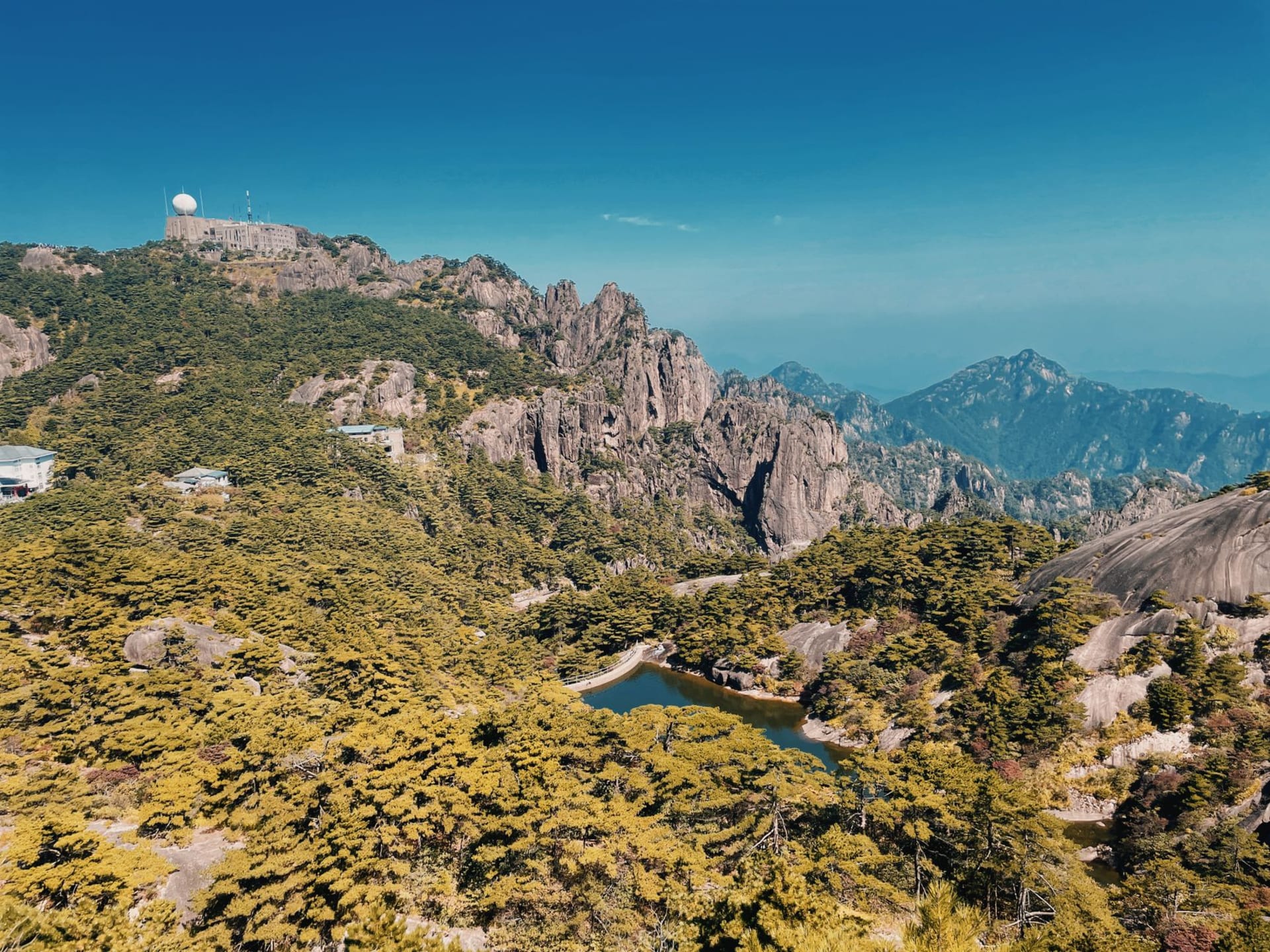
Huangshan
"I have seen these mountains in a hundred paintings my whole life, and standing inside one at dawn I finally understood the paintings were the realists."
There is a particular kind of landscape that Chinese ink painters have been drawing for over a thousand years — improbable spires of rock floating above a layer of cloud, with a single gnarled pine clinging to a ledge in the foreground — and most of my life I assumed it was a stylised convention, an artistic shorthand rather than a place. Then I climbed Huangshan at four in the morning, watched the sun come up over the Beihai cloud sea, and realised the painters had been documentary realists all along. The Yellow Mountains, in southern Anhui province, are the single most beautiful landscape I have seen in China, and that is a high and crowded bar.
The climb and the cloud sea
There are two ways up: a cable car, or your own two legs on a stone staircase of some sixty thousand steps, every one of them cut and laid by hand into the granite. We took the cable car up and walked the high trails, which I recommend to anyone who is not specifically training for misery. The summit area is not a single peak but a connected ridge-world of named crags — Lotus Peak, Bright Summit, the Celestial Capital — linked by paved paths that cling to cliff edges, dive through rock tunnels, and occasionally hang out over several hundred metres of nothing on a railed walkway bolted to a vertical wall.
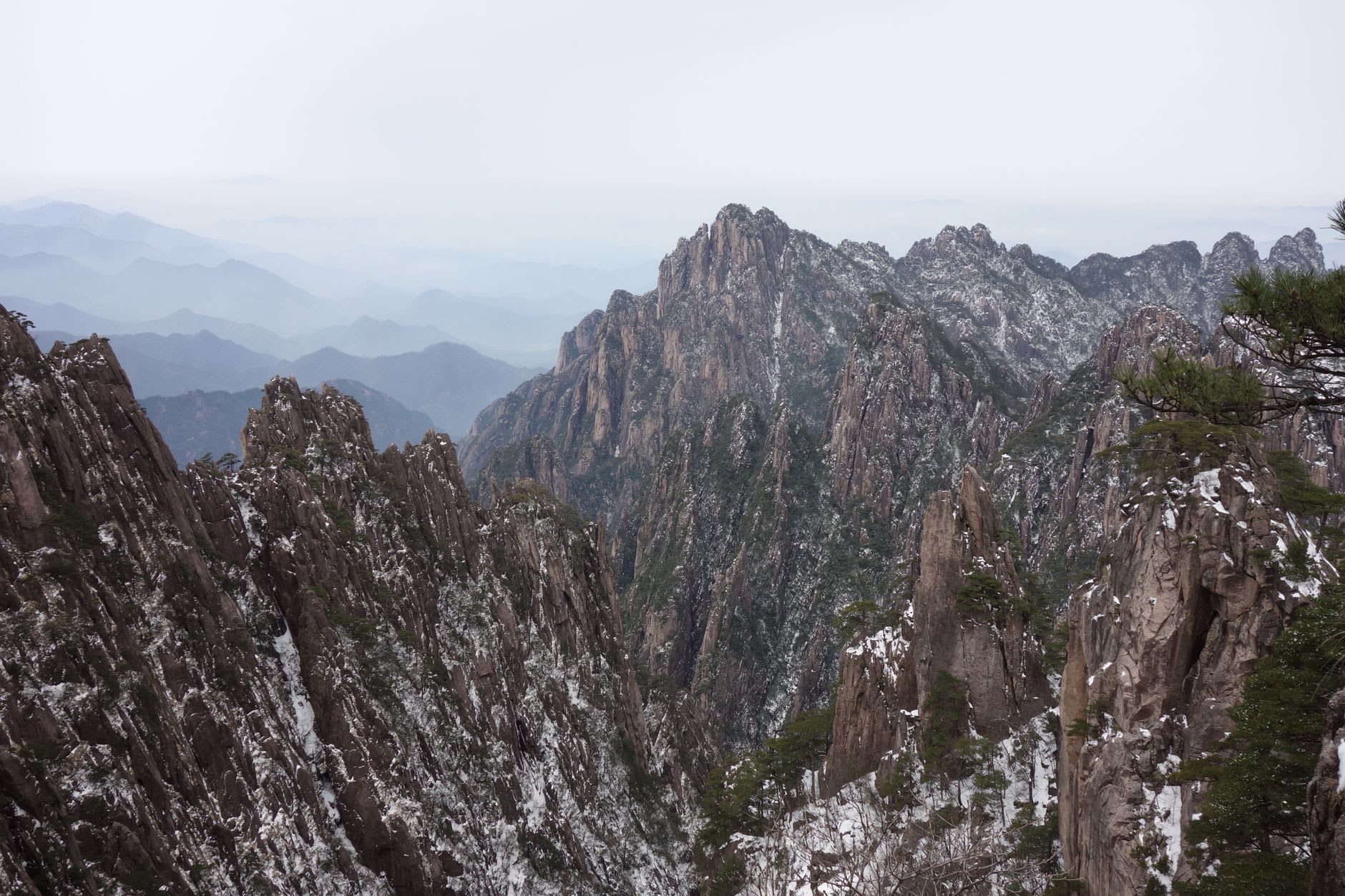
The cloud sea is the thing. When conditions are right — and they often are, because the mountain makes its own weather — the valleys fill with a flat white ocean of cloud, and the peaks become islands. We stayed overnight at one of the summit hotels specifically to be in position for sunrise, sharing a frankly heroic 4:30am crowd of Chinese tourists in rented padded coats all shuffling toward the same eastern viewpoint. And then the sun came, the cloud sea turned gold and pink, the silhouettes of the famous twisted pines sharpened against it, and even the most jaded part of me went quiet. It is worth the cold, the crowd, and the staircase.
The pines, the crowds, and accepting both
Huangshan’s pines are characters in their own right — the Welcoming Pine near the Jade Screen has been a national symbol for centuries, and the trees grow in impossible places, horizontally out of sheer rock, shaped by wind into exactly the asymmetric forms the painters loved. The flip side of all this beauty is that you will never have it to yourself. This is one of China’s most beloved domestic destinations, and on a clear-weather weekend the staircases can become a slow human conveyor belt. I made my peace with it: the crowds are part of the place’s meaning, generations of pilgrims and poets and now selfie-takers all drawn to the same rocks for the same reason.
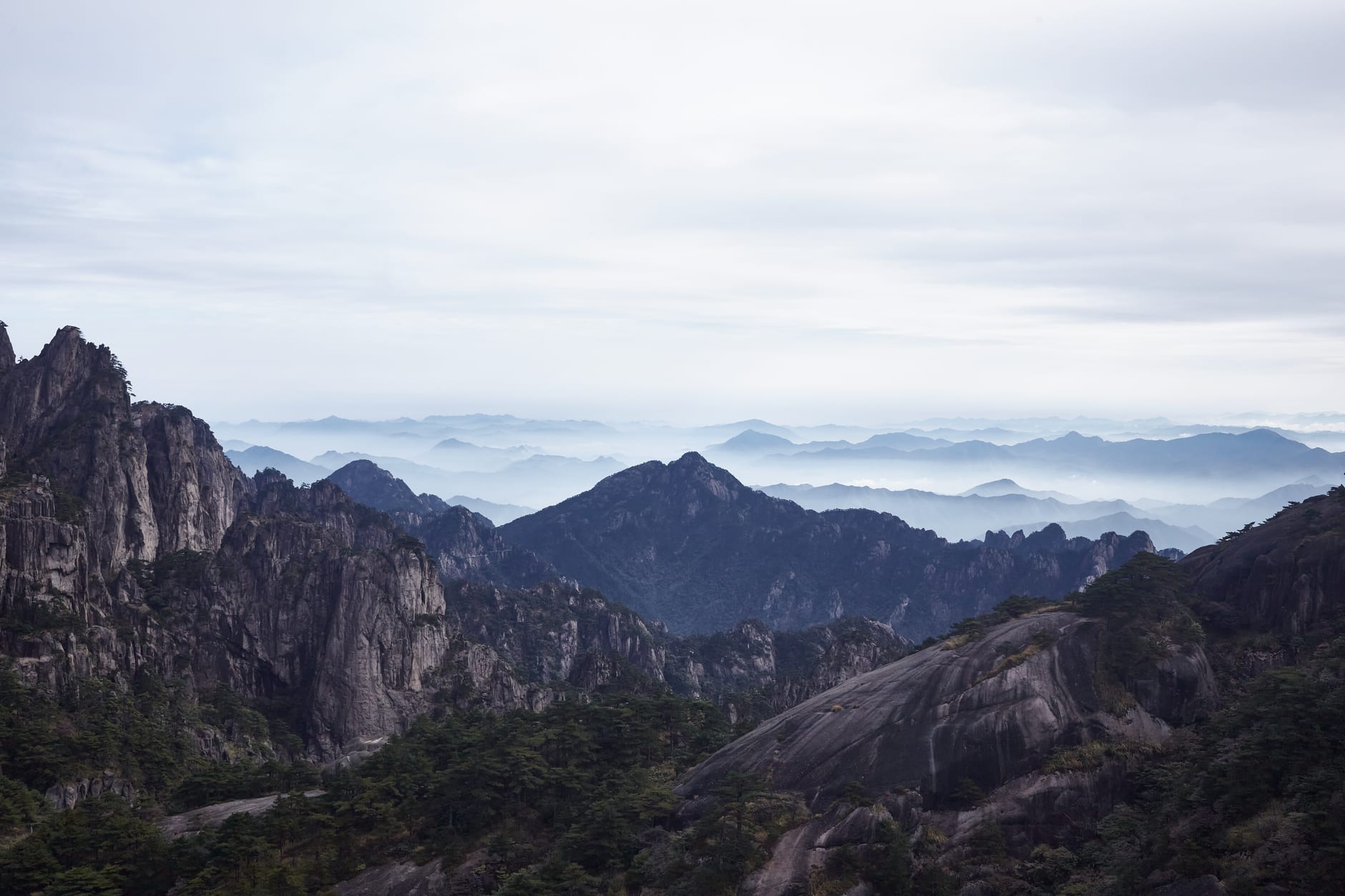
A practical word: stay on the mountain overnight if you possibly can. The summit hotels are expensive and basic for the price, but being up top for both sunset and sunrise — and seeing the day-trip crowds drain away in late afternoon — completely changes the experience. Book far ahead, especially around Chinese holidays, when the mountain is best avoided entirely.
When to go
Spring and autumn give the best balance of clear views and cloud seas; late autumn is gorgeous and less humid. Winter brings spectacular snow and rime ice on the pines but real cold and possible closures. Avoid Chinese national holidays at all costs — the crowds become genuinely overwhelming. Base yourself in the old town of Tunxi (Huangshan City) at the foot of the range, and bring layers; the summit is many degrees colder than the valley.