Cavalcante
"Cavalcante is what the Chapada looked like before anyone figured out how to market it. Something about that is worth paying attention to."
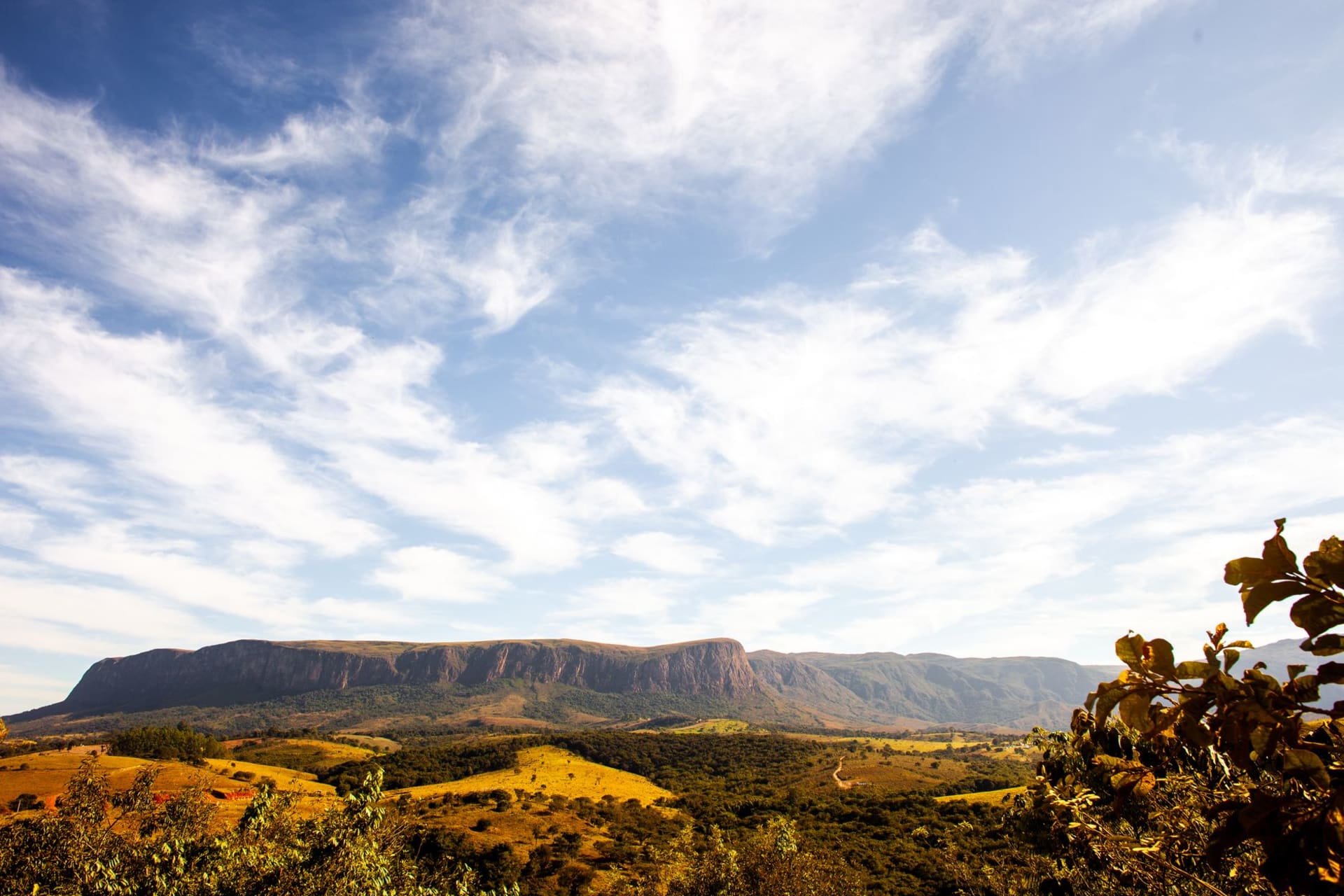
The road from Alto Paraíso to Cavalcante takes two and a half hours on a highway that cuts through the heart of the Chapada, the landscape spreading flat and ancient on both sides, an occasional fazenda gate the only mark of human occupation for long stretches. I arrived on a Wednesday in late June to find the main square almost empty — a few men under the shade trees with coffee, a woman sweeping the steps of the baroque church, a dog asleep in the sun on the exact center of the street. There was a particular quality to the quiet. Not the curated calm of São Jorge, which receives enough visitors to have developed a relationship with being observed. This was the quiet of a town that doesn’t know you’re watching.

The church of Nossa Senhora d’Abadia do Cavalcante sits at the center of town and dates to the eighteenth century, when this part of Goiás was mining country — gold and diamonds drawn from the rivers of the plateau by Portuguese colonial labor and the labor of enslaved Africans brought here against their will. The church is simple inside, the white walls faintly yellow in the afternoon light that comes through the two small windows, the altar modest enough that you notice the flowers placed freshly in front of it. The history of this region is one of extreme violence and extreme endurance, and that story is present in the architecture in a way I couldn’t quite articulate — in the proportion of the doorways, in the thickness of the walls, in the particular stillness of the interior.
Cavalcante is the northern gateway to the Kalunga quilombola territory, one of the largest communities of descendants of escaped enslaved people in the Americas. The families who managed to reach these remote cerrado valleys in the seventeenth and eighteenth centuries created communities that have survived, with extraordinary continuity, into the present. The town’s connection to the Kalunga is not merely historical — many residents have family in the quilombola communities, and the annual Romaria de Muquém festival in August brings thousands of people to the region in a pilgrimage that merges Catholic and African spiritual traditions in ways that Brazilian scholars have spent decades trying to describe accurately.

The practical life of the town centers on a small daily market where local farmers sell produce from the cerrado and surrounding fazendas — pequi, jatobá pods with their floury interior, wild honey sold in unlabeled glass jars, dried herbs whose names I wrote down phonetically and couldn’t find in any reference later. Lunch at the single sit-down restaurant in the main square cost me nine reais for a plate of rice, black beans, slow-cooked beef, and fried banana that was as good as anything I ate during the entire Chapada trip. The owner came out to ask where I was from, told me about her daughter in Goiânia, asked if I was going to see the falls at Santa Bárbara. I said yes. She nodded like that was the right answer.
When to go: Cavalcante functions year-round, though the wet season (November–March) can make the dirt roads leading to nearby attractions impassable. August brings the Romaria festival and the highest visitor numbers of the year. May through July is the sweet spot: dry roads, accessible waterfalls, the town at its most ordinary and unhurried.