Americas
Chapada dos Veadeiros
"Nothing I'd read prepared me for how quiet and ancient this plateau actually felt."
I arrived in Alto Paraíso de Goiás on a bus from Brasília at dusk, the road cutting through three hours of cerrado scrubland that most Brazilians write off as ugly. They’re wrong. The cerrado at golden hour — that twisted, fire-adapted vegetation with its improbable flowers and red laterite soil — has a strange, insistent beauty. By the time I reached the edge of the Chapada, I understood why the Kayapó people considered this plateau sacred ground.
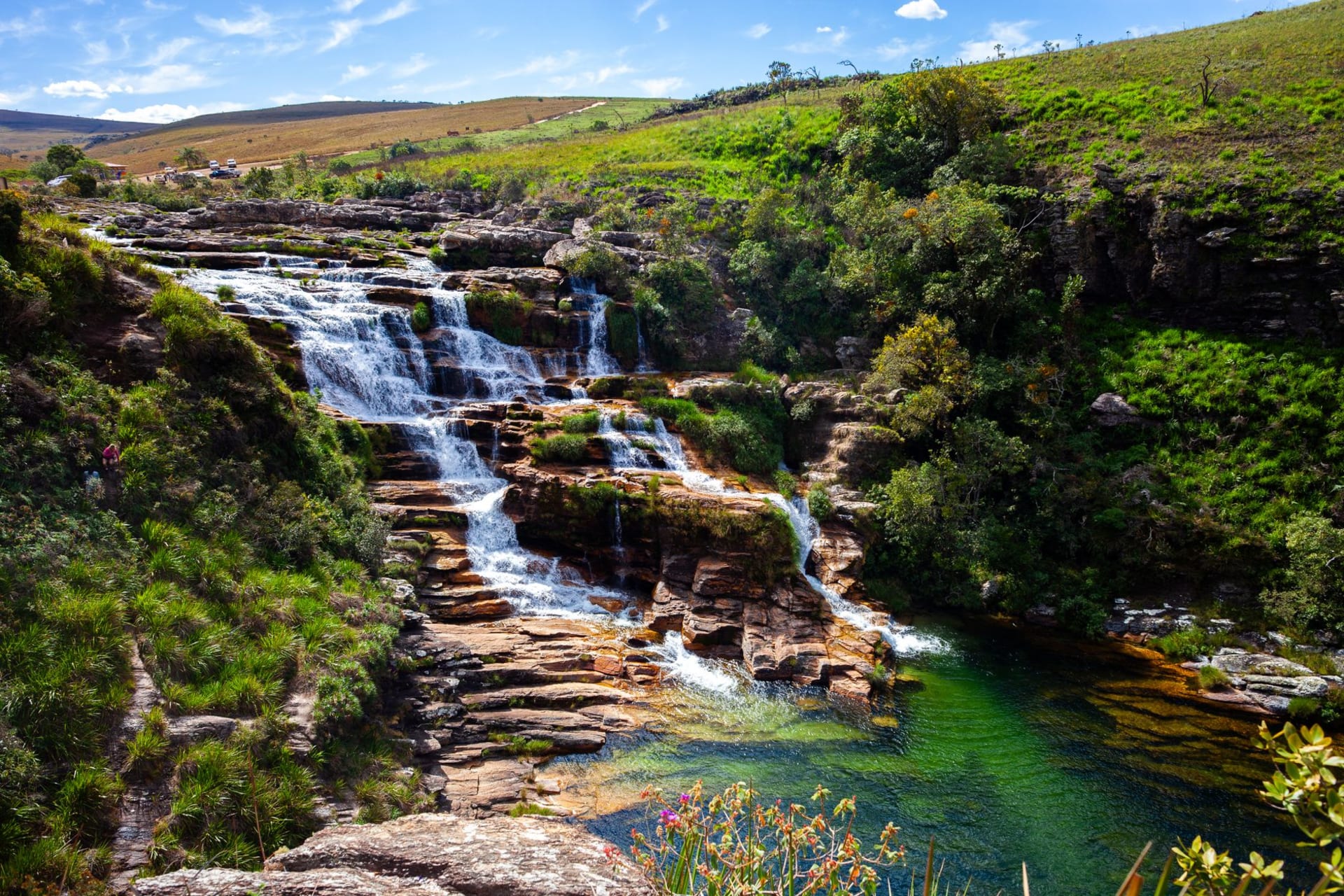
The waterfalls are what bring most visitors, and they earn the journey. Cachoeira dos Couros drops in a series of natural slides into pools so clear you can count the pebbles six meters below the surface. Cariocas waterfall is bigger, more dramatic, the kind of thing that makes you sit on a rock for an hour without realizing it. But the Chapada’s real secret is the canyon trails — the Vale da Lua, where millions of years of river erosion have carved the riverbed into formations that look lunar, extraterrestrial, nothing like anything else I’ve seen in South America. You walk through it barefoot at low water, the smooth rock warm under your feet, and the scale of geological time becomes briefly comprehensible in a way that’s slightly uncomfortable.
The town of São Jorge is where you actually want to stay — not Alto Paraíso, which is more convenient but blander. São Jorge is a village of 800 people at the park’s edge, its main street unpaved, its restaurants serving simple Goiás food: pequi rice, slow-cooked beef, corn porridge, caldo de cana from a machine on the sidewalk. The energy is calm in a way that resort towns never manage to fake. People move slowly. The Wi-Fi is poor and nobody seems distressed about it.
When to go: May through September, during the dry season, when water levels drop and the swimming holes become navigable. The rains from November to March close some trails and make the rock surfaces dangerously slippery. July is peak season and busy by local standards — still nothing compared to any beach destination.
What most guides get wrong: They treat the Chapada as a day-trip extension of a Brasília itinerary. Three days is the minimum to feel it properly; five is better. The park is larger than it appears on maps, trails require guides for the deeper canyons, and the point is not to collect waterfalls like stamps — it’s to let the slowness of the place work on you.