Cânions I e II
"You walk flat cerrado for an hour and then the ground just ends. The scale of what's below takes a moment to process."
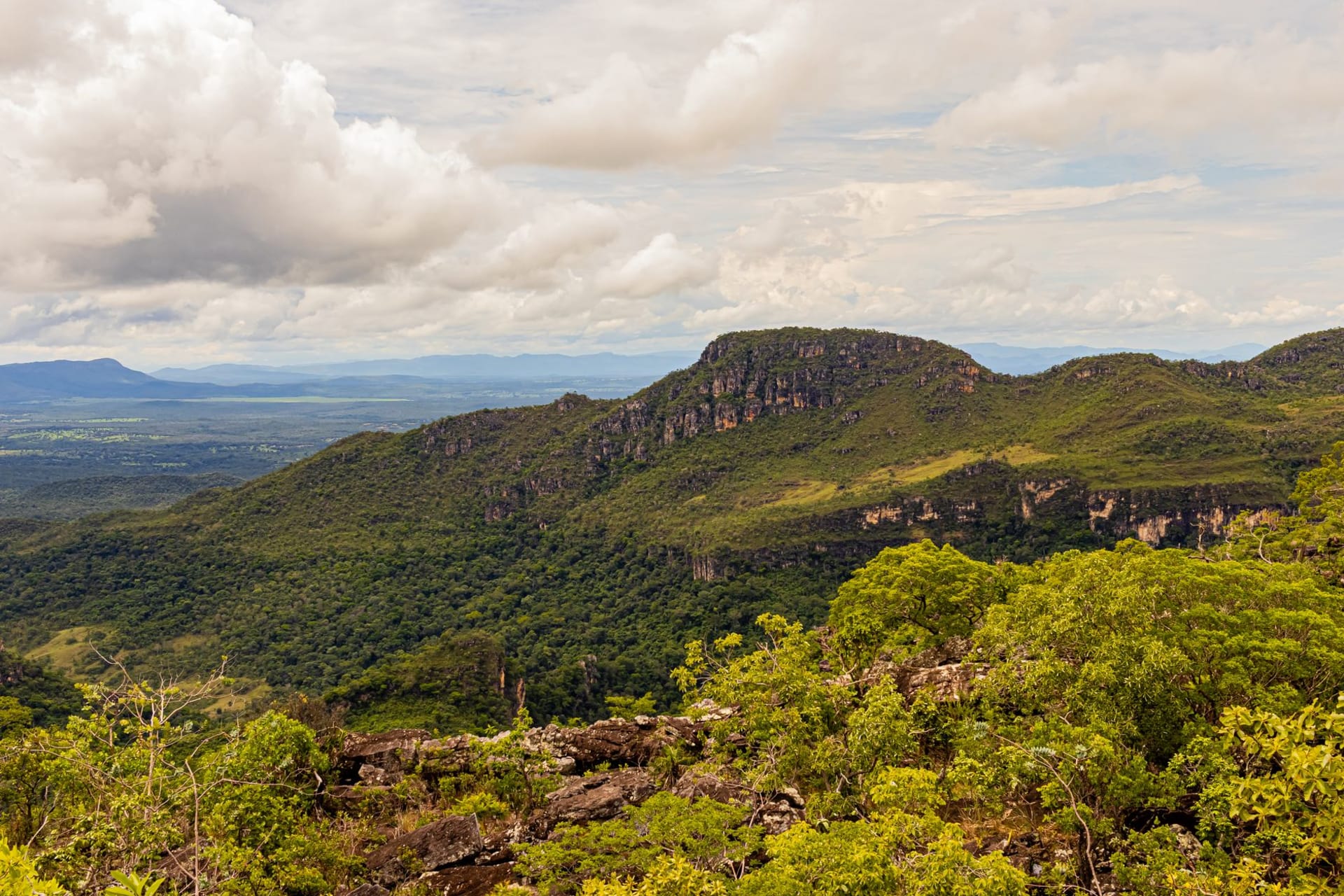
The surprise of the canyon trails is the flatness that precedes them. You walk for an hour through open cerrado — the plateau unrolling in every direction, featureless except for the twisted silhouettes of the trees, the sky enormous overhead — with no visual preparation for what comes next. Then the ground ends. The canyon drops away so suddenly and so far that your body registers it before your eyes do, a slight involuntary pull backward at the edge. Below, two hundred meters down, the Rio Preto threads between the canyon walls in a ribbon of deep turquoise. The scale is difficult to calibrate at first. The trees on the canyon floor look like moss.

The park offers two canyon circuits, called simply Cânion I and Cânion II, both requiring guides and running in the dry season only. The shorter circuit follows the plateau rim above the first canyon system, with viewpoints looking down into the gorge at various angles — the light changes significantly as you move and the canyon reads differently from each point, sometimes like a wound in the rock, sometimes like an invitation. The longer circuit descends into the canyon itself, reaching the riverbank and following the Rio Preto to a series of waterfalls that include Cariocas. I did the full circuit in six hours with a guide from São Jorge who grew up in the valley and pointed out plants the way a city person points out landmarks.
The cerrado ecology of the trails deserves its own attention. Most visitors are focused on the waterfall destinations and move through the plateau vegetation impatiently, as if it were only transit between the real sights. This misses something worth noticing. The cerrado is the world’s most biodiverse tropical savanna — more plant species per square kilometer than the Amazon, more endemic species than nearly any other biome on Earth. Walking slowly, you start to see the architecture of it: the barbatimão with its bark that smells faintly of medicine, the buriti palms following the underground water lines like green arrows pointing to sources, the ipê trees that flower so extravagantly in August that they look like they’re on fire from a distance.

The late afternoon light on the return journey from the canyon is worth staying for if your stamina holds. The quartzite walls turn from red to deep amber as the sun drops, and the cerrado grasses go golden in a way that temporarily resolves the question of whether this landscape is beautiful or merely strange. For the last twenty minutes of the walk back, with the light doing what it does to the rock and the grass and the enormous sky, I stopped finding the question interesting because the answer was obvious.
When to go: Cânion I and II are accessible only in the dry season — May through September. Guides are mandatory and can be arranged through the park administration or through pousadas in São Jorge. Start by seven in the morning to complete the full circuit before the afternoon heat peaks, and bring more water than you think you need: the plateau shade is minimal and the trail offers no reliable water sources.