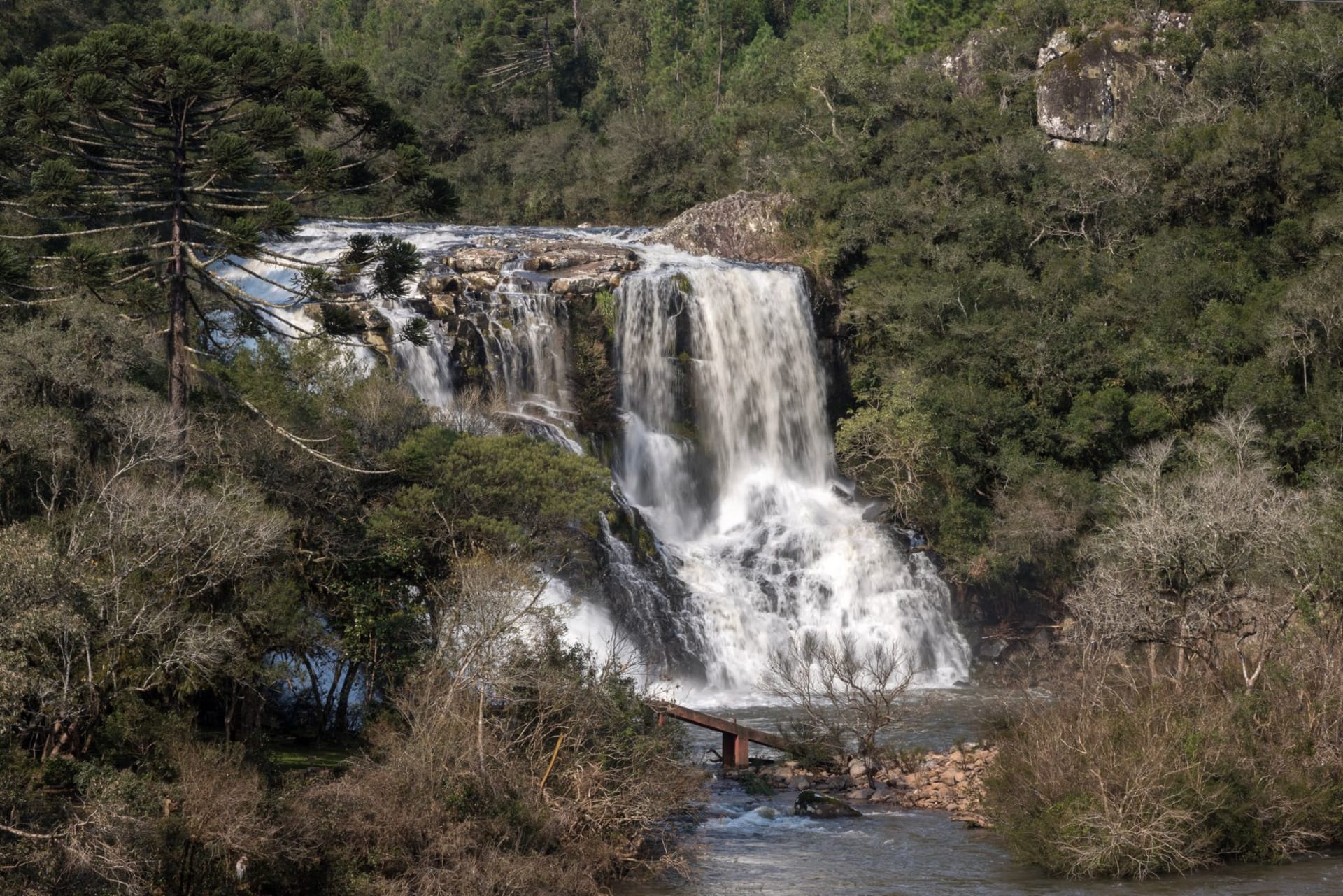
Cachoeira Santa Bárbara
"Three hours of walking for twenty minutes at the falls. I would do it again without changing a single ratio."
The consensus among people who have been to many of the Chapada’s waterfalls is that Santa Bárbara is something different. Not louder, not taller, not even necessarily more impressive in any measurable dimension — but differently beautiful, in a way that seems to require the walk to get there. I heard this from my guide in São Jorge, from a woman at the Cavalcante market, from a trail runner I shared a pousada breakfast with who had visited seventeen times. By the time I started the three-hour walk from Cavalcante on an early July morning, the anticipation had reached a pitch that usually guarantees disappointment. It didn’t.
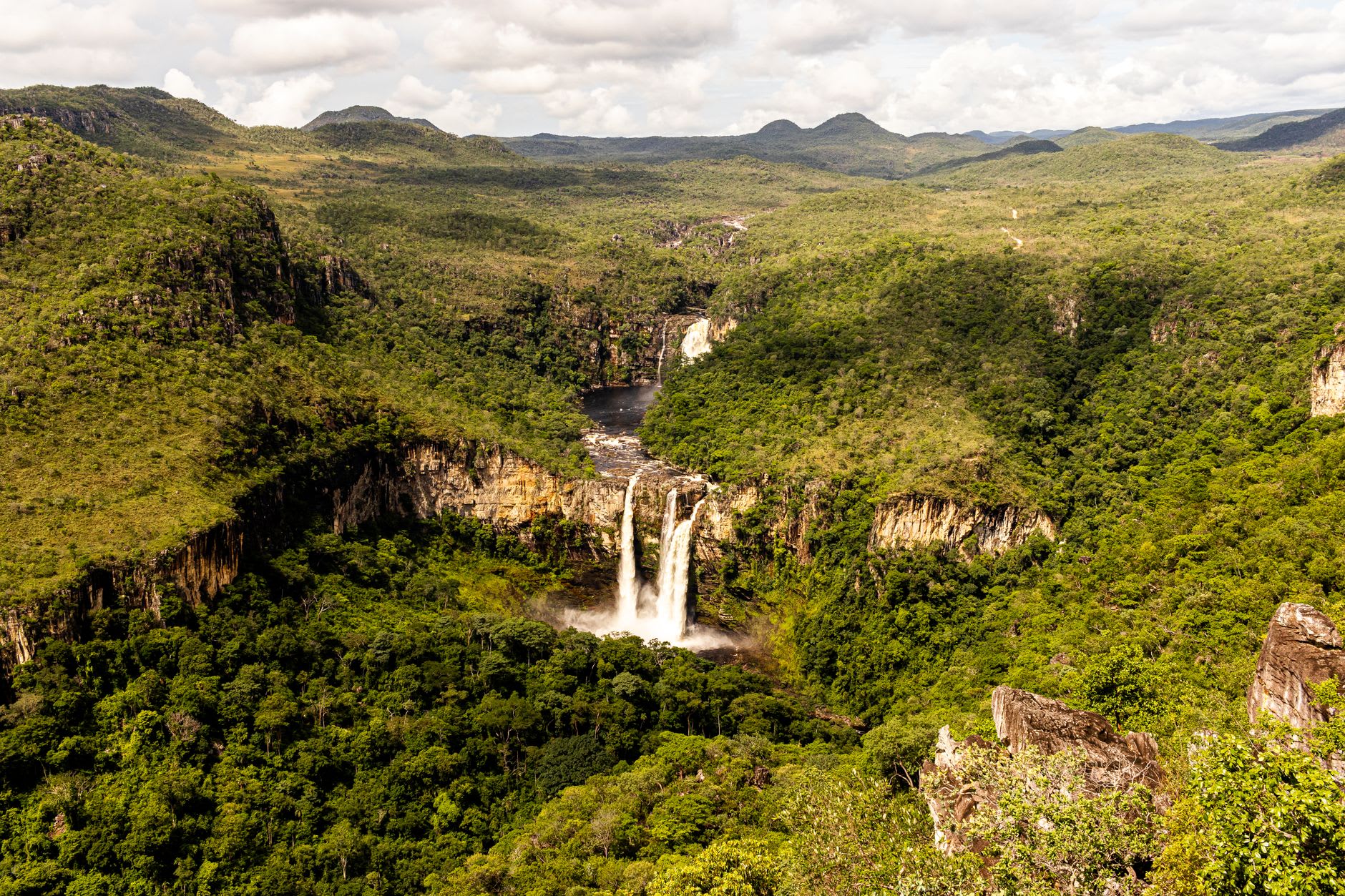
The falls are tiered — three or four distinct drops depending on the season and how you count them — each feeding the next, each with its own character. The uppermost tier is narrow and vertical, a white column dropping into the first pool. The middle tier spreads wide across an apron of red quartzite in a fan of white water that you can walk into from the side, the rock slippery and warm under your feet. The lowest tier creates the largest pool, deep turquoise and wide enough that you can swim across it and feel the cold deepen as you move toward the falling water. I did this without a plan and arrived at the base of the lowest falls treading water, looking back across the pool at the red canyon walls and the cerrado above, and had a moment that I would describe as approximately religious if that word didn’t carry so much freight.
The quartzite here is particularly vivid — a deep rust-red that runs to almost purple in the shadows and reflects in the pools as a warm orange. Against the white water and the specific turquoise of the pools, the colors are so saturated they read as artificial even in direct sunlight. I took photographs that no one believed were unfiltered. The canyon walls on either side rise high enough to hold the late morning shade until around ten o’clock, which is the best time to arrive: cool air, diffuse light, the colors not yet bleached by the full tropical overhead.

The walk back to Cavalcante carries a different quality than the walk out. You’re slower, obviously, and the afternoon light comes at the cerrado from a different angle and makes the landscape look briefly like something from a painting school you can’t quite name. The tiredness and the beauty combine into a mood that I associate specifically with places that require physical effort to reach. Something about earning the view changes the view. I’m aware that this is a sentiment everyone who has ever gone hiking has expressed, and I believe it anyway.
When to go: Dry season only — May through September. The walk to Santa Bárbara requires a guide hired in Cavalcante; the trail is not marked and passes through private land with gates that only locals know how to open. Start early: the three-hour walk is exposed to sun from mid-morning and the return in afternoon heat is significantly harder than the outbound.