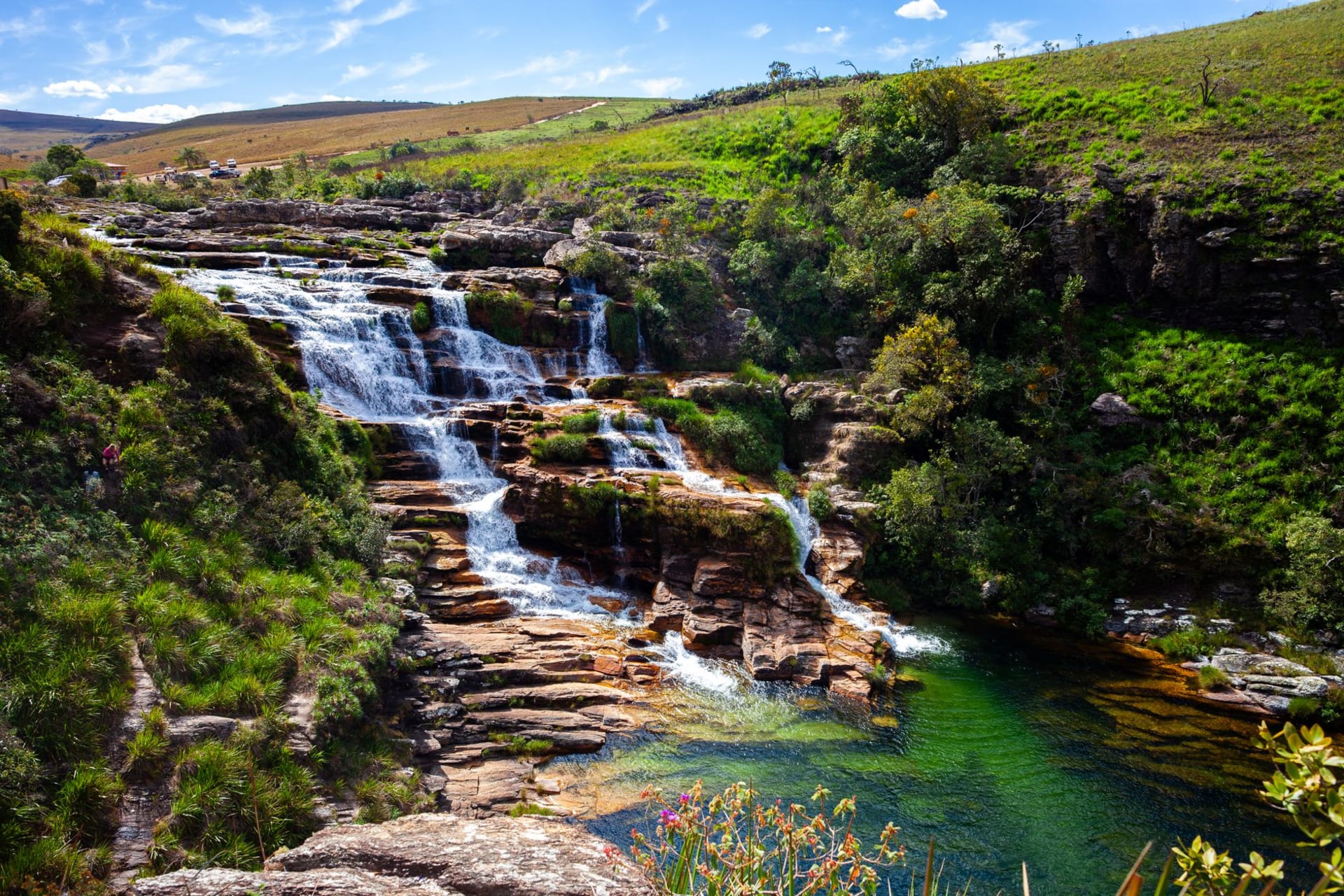
Cachoeira Cariocas
"The sound reaches you before you see it, and you keep walking toward it the way you'd walk toward something you're not sure is real."
I heard the Cariocas falls about fifteen minutes before I saw them. The cerrado trail was quiet in the late morning heat — just the rasp of cicadas and the crunch of red gravel underfoot — and then, gradually, a low continuous roar began to undercut everything else. It grew as I walked. By the time the canyon opened ahead and I saw the full curtain of white water dropping into the gorge below, the sound was large enough to feel physical, a pressure against the chest. I sat on a boulder at the edge and stayed there for more than an hour without making a conscious decision to do so.
The falls are wide and multiple — the river splits across the canyon lip and drops in two or three braided streams that merge in the pool below. The walls of the canyon are red quartzite, the same 1.8-billion-year-old rock that appears everywhere in the Chapada, and the color contrast between that deep rust, the white water, and the turquoise of the pool is the kind of composition that landscape photographers chase. I am not a landscape photographer, but I took forty-three photographs and none of them got it right, which I eventually decided was the point. Some visual experiences exist specifically to fail at reproduction.
The pool at the base of the falls is deep enough to swim in and the water is cold in the way that mountain water is cold — an active, shocking cold that makes you gasp on entry and feel extraordinary for exactly as long as you’re in it. I swam to the wall of falling water and let it push me back. A group of students from Goiânia were jumping off a ledge to my left, each jump accompanied by a collective shriek from those still on the rock, each swimmer surfacing with a huge smile. The pleasure was entirely contagious.
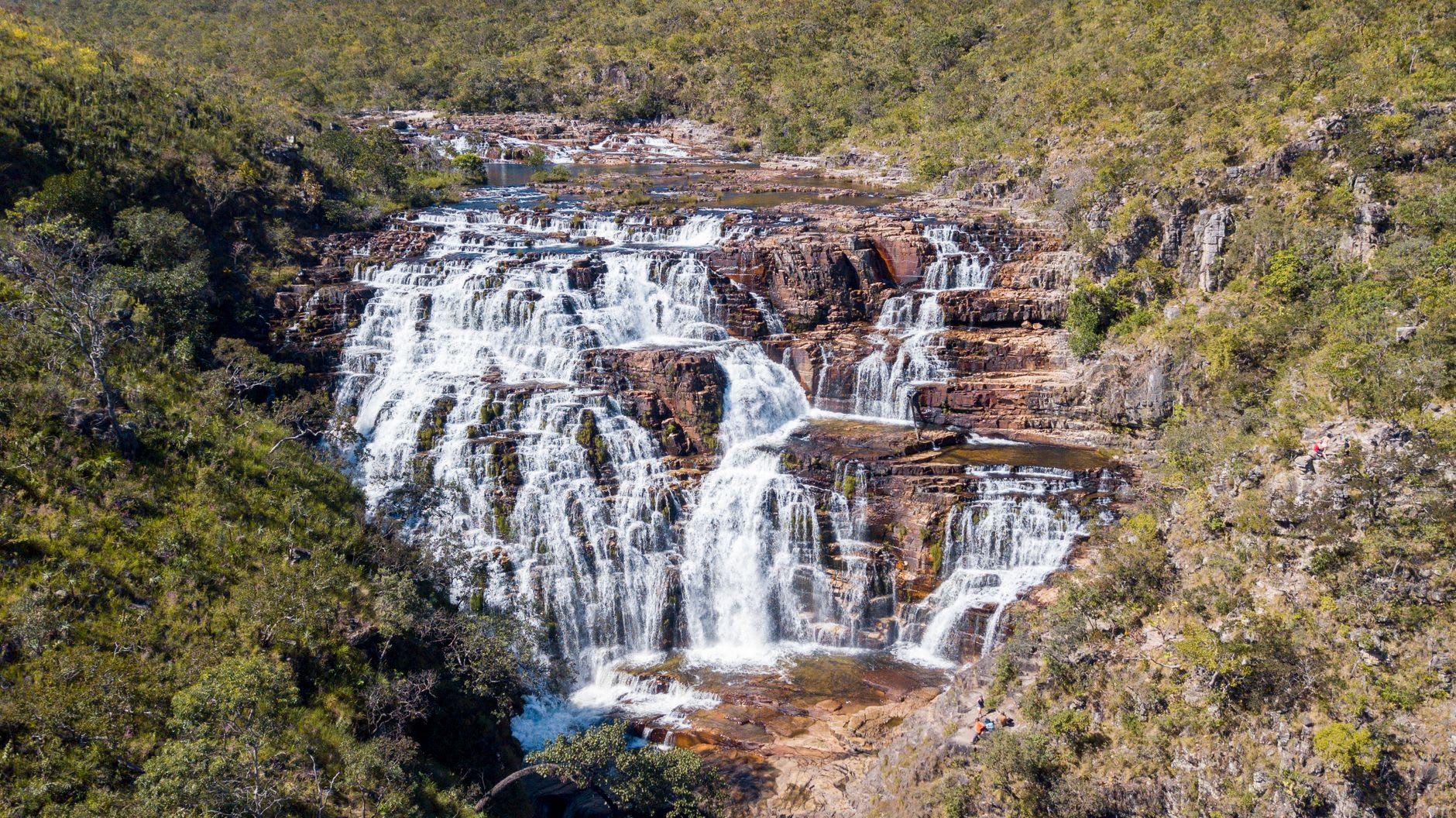
What the Cariocas falls have that some of the Chapada’s smaller waterfalls don’t is scale sufficient to alter the weather around you. The mist the falls generate drifts back over the canyon rim and keeps the vegetation immediately around the viewpoint noticeably cooler and more humid than the open cerrado just meters away. It was the first time in the Chapada that I felt genuinely cold in daylight, standing at the edge of the canyon in wet clothes with the mist coming back over me. The contrast with the dry heat of the trail ten minutes prior was so extreme that I stood there deliberately, not wanting to leave the micro-climate.
When to go: The dry season (May–September) is when the trail is safe and the pool accessible, but the falls themselves are actually more dramatic in the shoulder of the wet season (late April, October) when water volume is high. During peak wet season the canyon floods and the trail becomes treacherous. July is the busiest month; arrive at opening to have the falls to yourself for the first thirty minutes.