
Morro do Pai Inácio
"From the top, you understand the Chapada in a single glance — it is not a forest, it is a table."
The trail up Morro do Pai Inácio takes about an hour and involves more scrambling than walking, with fixed rope assists on the steeper sections and a final approach across open sandstone that requires choosing your footholds with some care. I went at four in the afternoon, following the advice of a guide in Lençóis who told me the sunset from the summit was the kind of thing that reconciles people to the existence of photographers. He was right, though I would phrase it differently: the sunset from Morro do Pai Inácio is the kind of thing that makes you want to be a better writer, because the available vocabulary seems inadequate.
The mesa is one of those geological formations that seems too symmetrical, too composed to have happened by accident. It rises from the surrounding plateau — itself already elevated — in a near-perfect flat-topped column, its sides near-vertical, its summit a smooth expanse of bare sandstone roughly the size of several football pitches. From the top, the Chapada unfolds in every direction: the undulating plateau to the east, the deep cuts of the valleys to the west where the land drops away, the distant blue silhouettes of other mesas marching toward the horizon. In the late afternoon light, the sandstone turns amber, then orange, then deep rust. Other visitors around me went very quiet.
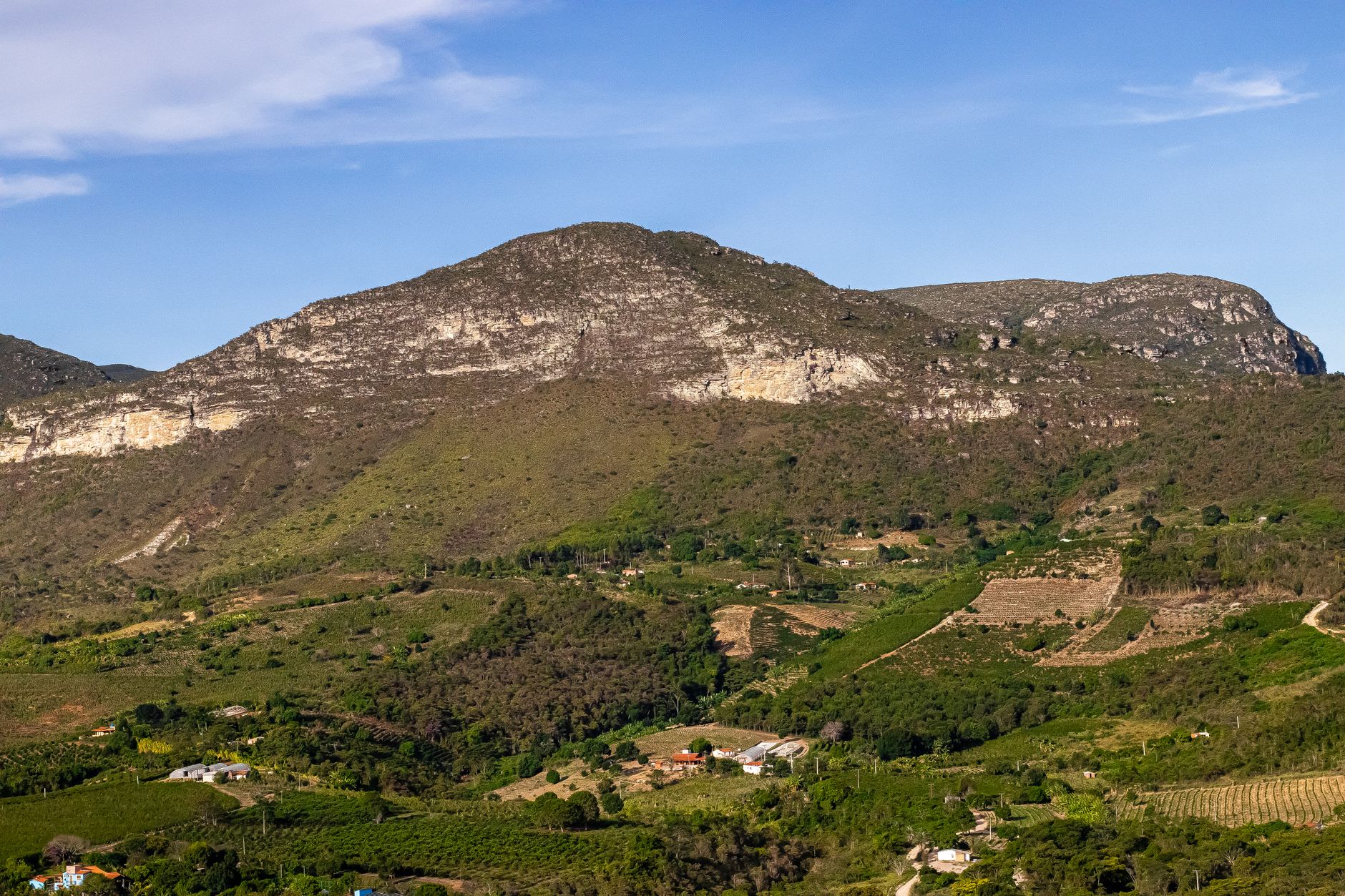
The legend attached to the mountain is one of those stories that every guide tells and no two guides tell the same way. There was a man named Pai Inácio — Father Ignatius — a slave who ran from a nearby fazenda with the fazendeiro’s wife and was chased to the summit of this mesa, where, rather than surrender, he jumped. Some versions of the story say he survived. Most don’t. The mountain keeps his name, which feels like an appropriate memorial: to stand in a country whose landscape was shaped in large part by enslaved people, and to have one of its most visible landmarks carry the name of a man who chose the cliff rather than the chains.
The sunrise is apparently as good as the sunset, which means an early start from Lençóis in the dark. I went for sunset and stayed until the stars came out, which I had not planned. The sky at altitude in Chapada Diamantina is extraordinary — no light pollution for a hundred kilometres in most directions — and the Milky Way was visible by eight o’clock, thick and slightly smudged across the center of the sky as if someone had dragged a finger through spilled salt.

When to go: Any time of the dry season (June through September), though July and August bring the most visitors — arrive early or late to avoid tour groups. The summit is fully exposed with no shade; bring water and a hat. The trail is doable year-round but becomes slippery in the wet season and the views are often cloud-obscured. For the best sunset colours, go in late June and July when the atmosphere is clearest.