Americas
Chapada Diamantina
"I swam inside a mountain and came out wondering why I'd waited so long."
I arrived in Lençóis on a bus from Salvador that took seven hours along a road that seemed designed to test your commitment. The town itself is small, colonial, and slightly dusty — the kind of place where every guesthouse doubles as a trailhead and the main street smells of coffee and red earth. Within twenty minutes of dropping my bag, I was walking into the cerrado scrub with a local guide named Marcos who spoke no French, minimal English, and communicated primarily through enthusiastic pointing. That turned out to be exactly enough.
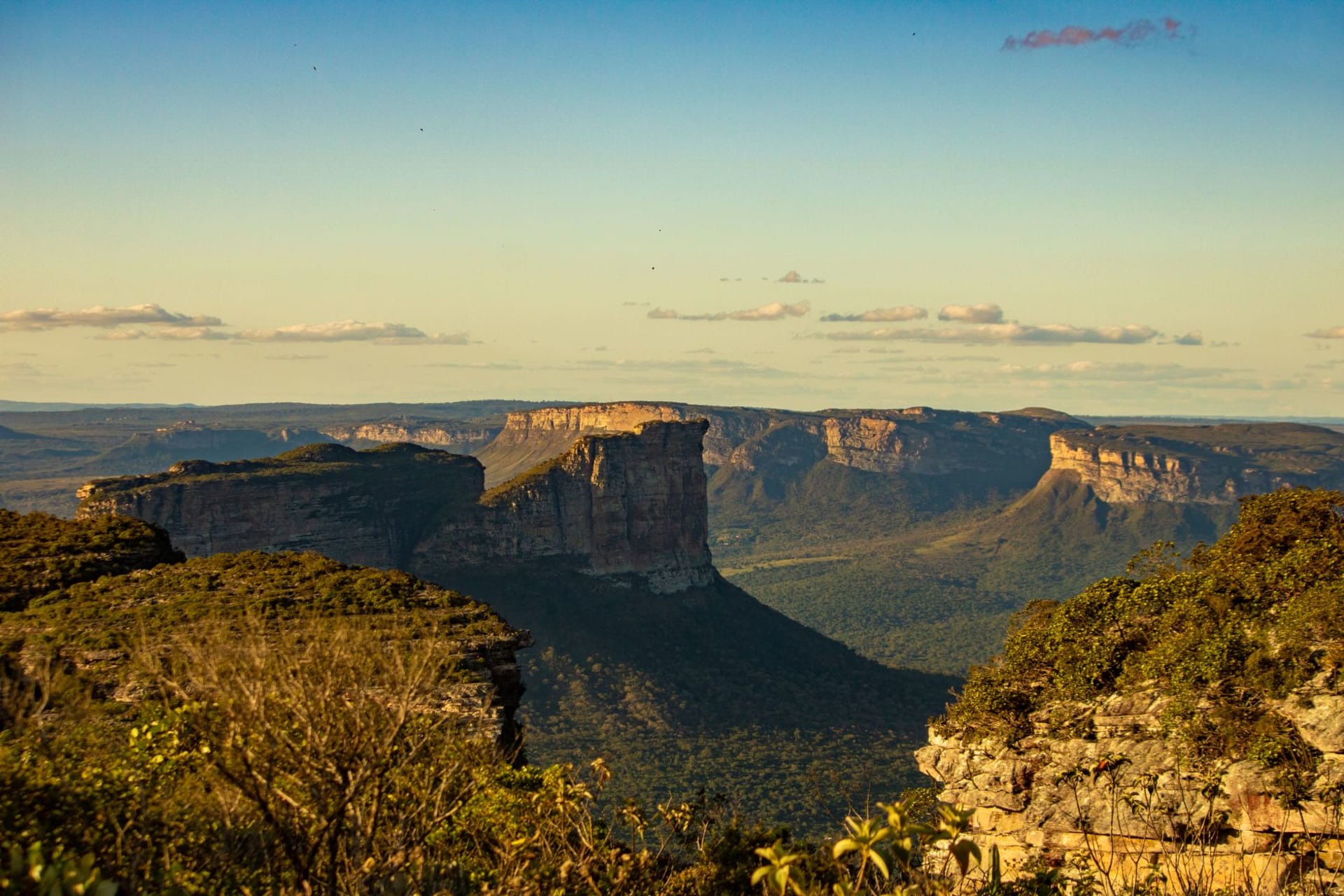
Chapada Diamantina is not a single place so much as a national park the size of a small country, built on a tableland that juts up from Bahia’s interior like a geological argument. The landscape does things you don’t expect from Brazil: it’s cool in the mornings, sometimes genuinely cold at night, and the vegetation is that sparse, gnarled, otherworldly cerrado that looks like a David Lynch set compared to the lush Atlantic Forest everyone imagines. The waterfalls — Cachoeira da Fumaça plunging 340 metres into mist, Riachinho threading through smooth quartzite — are real and spectacular, but the detail that wrecked me was Poço Azul. You descend into a cave through a crack in the hillside, step into a natural pool, and the water below you is lit from within, blindingly turquoise, so clear you can count the pebbles fifteen metres down. I floated there for a long time feeling like I was inside a gemstone.
The food is Bahian with a sertanejo accent — moqueca, yes, but also goat stewed with dried cactus, cassava in every form, and a caldo de feijão that a woman called Dona Raimunda served out of a pot the size of a truck tyre at the market in Lençóis on Thursday mornings. Eat that. Skip the tourist restaurants near the square. Hire a local guide for the longer trails — not because the park is dangerous, but because without someone who knows where the trail splits, you will spend three hours walking the wrong way toward a plateau that is, admittedly, also beautiful.
When to go: June to September is the dry season — trails are accessible, waterfalls are full from the rains just ended, and the light in the late afternoon turns the sandstone canyon walls amber. Avoid January and February; flash floods close trails and some caves fill completely.
What most guides get wrong: They sell Chapada Diamantina as a detour from Salvador, a two-day side trip on the way to something else. It isn’t. The park rewards slowness — a week minimum, ideally ten days. The people who see it properly are the ones who stay long enough to get bored of the obvious spots and then stumble into the ones nobody photographs.