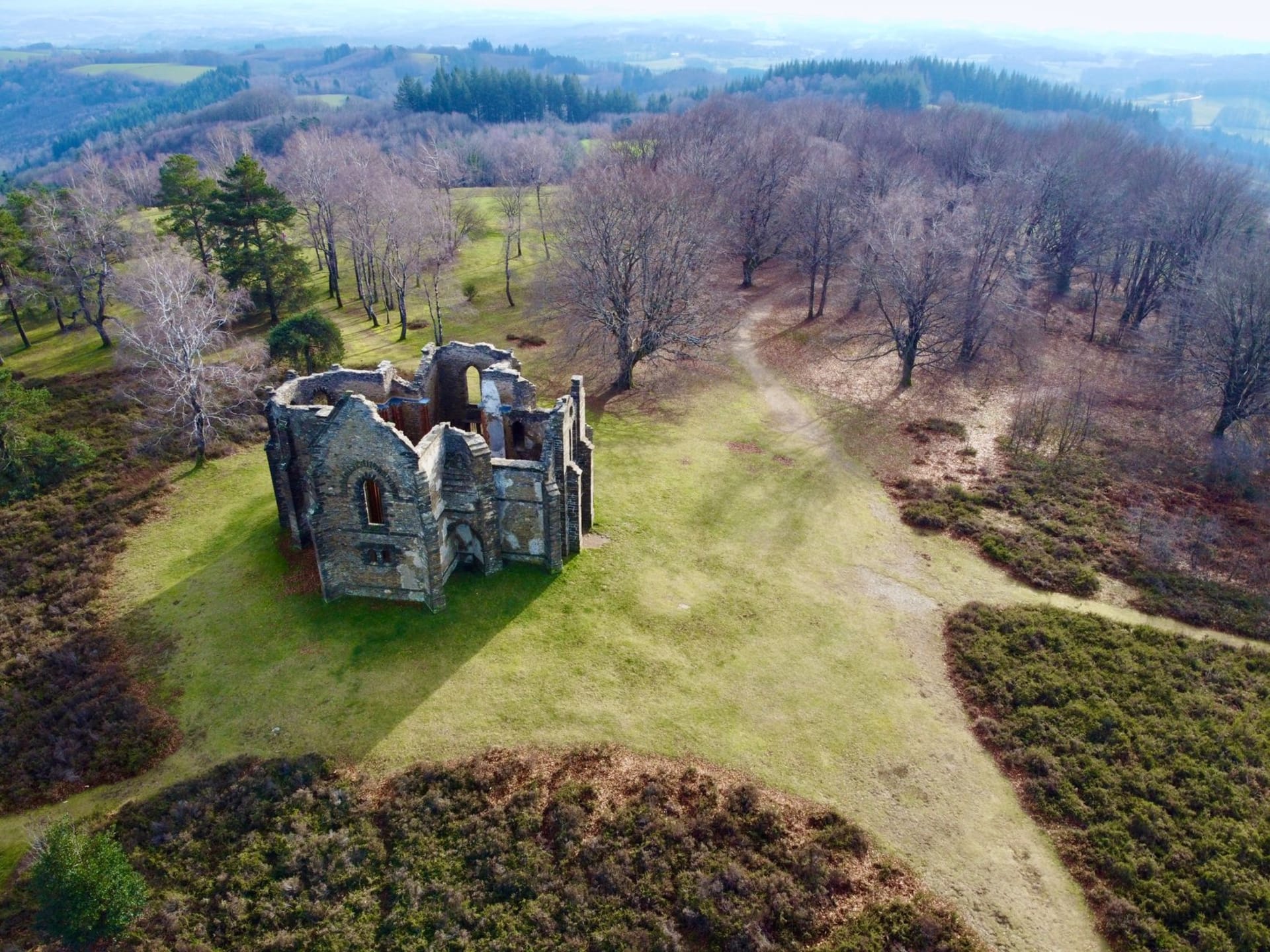
Colombey-les-Deux-Églises
"As a Frenchman I felt I owed this village a visit, and I am glad I stopped resisting."
I had spent two days in the vineyards around Épernay, and like most people I think of Champagne as bottles and chalk cellars and the Marne. But the historic province of Champagne runs much further southeast, into the gentler, more forested country of the Haute-Marne, and there sits a village that has nothing to do with wine and everything to do with how France thinks about itself. Colombey-les-Deux-Églises is where Charles de Gaulle made his home, and as a Frenchman of my generation — raised on the myth, skeptical of it, and ultimately unable to escape it — I felt I owed the place a visit.
The cross on the hill
You see it before the village: an enormous Cross of Lorraine, more than forty meters tall, planted on a wooded ridge above the rooftops. It is unapologetically monumental, the kind of gesture that would feel absurd anywhere else but somehow fits here. Lia, who is not French and watches French self-regard with affectionate amusement, raised an eyebrow and said it was very on-brand. She was not wrong. At its base is the Mémorial Charles de Gaulle, a serious and surprisingly good museum that walks through the twentieth century with de Gaulle at its center — the wars, the Resistance broadcast from London, the Fifth Republic, the long retreats to this exact village to write and brood.
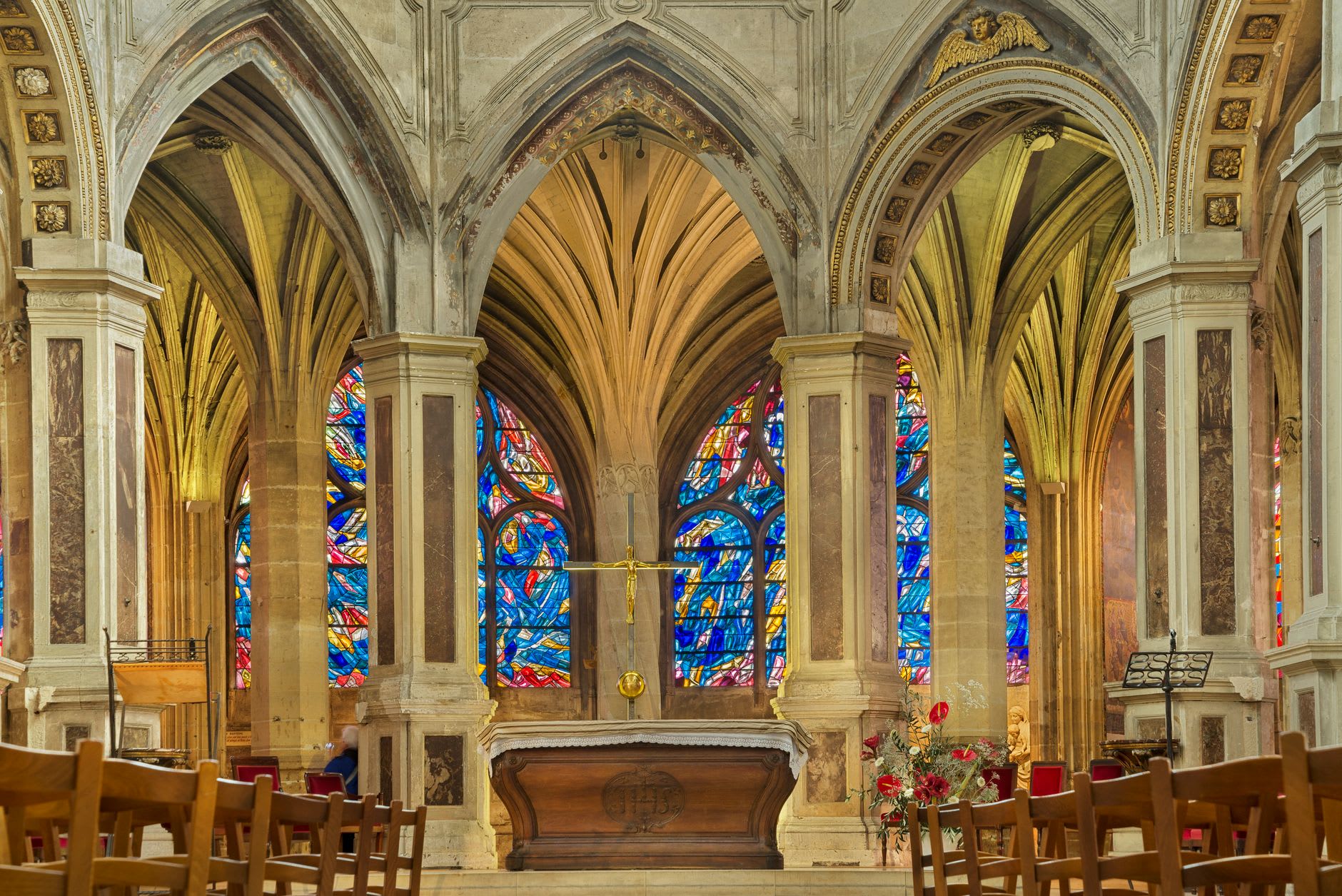
What struck me was not the grandeur but the choice of place. De Gaulle could have lived anywhere. He bought a modest manor here, La Boisserie, in 1934, and returned to it whenever politics would allow — and even when it would not. The house is open to visitors and is exactly as unflashy as the legend insists: a study with a view over the garden, where he wrote his memoirs, and the small octagonal corner room where he was working on the evening he died in 1970. I am wary of political pilgrimage, but standing in that room, looking out at the same trees, I found the whole performance of the man briefly dropping away.
The village itself
The village below is tiny and ordinary in the best way — a real place, not a stage set. There is the parish church where de Gaulle attended Mass, and his grave in the small cemetery beside it, which is genuinely modest. He insisted on being buried among the village dead, under a plain stone with no titles, beside his daughter Anne, who had Down syndrome and whom he adored. The grave gets a steady trickle of visitors who leave flowers and stand for a moment and move on. I stood there longer than I expected to.
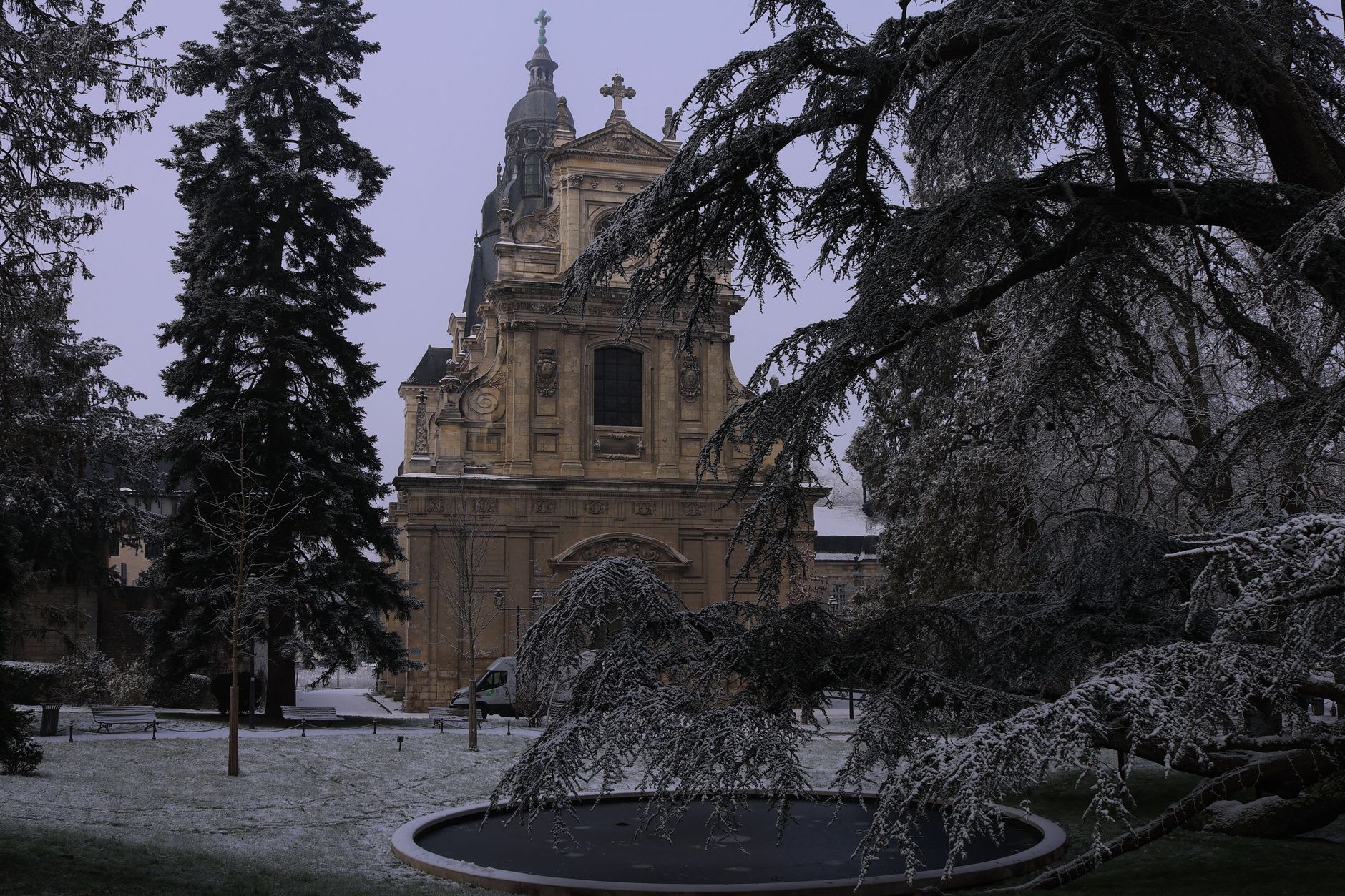
Afterward Lia and I ate lunch at one of the two restaurants in the village — andouillette, which she gamely tried and then quietly abandoned, and a good local cheese — and drank, fittingly, a glass of Champagne from the southern Aube vineyards not far away. The village makes its living partly from the steady flow of visitors, but it has not been swallowed by them. It remains a working Haute-Marne commune that happens to carry an enormous weight of national memory.
Go for the museum, which is excellent, and stay for the strange quiet of the place. You don’t have to revere de Gaulle to find Colombey moving. You only have to be interested in how a country decides which of its stories to carve in granite, and which to leave under a plain village stone.