A cotton-town on the banks of the Chari, where the Sahara finally gives way to green, humid, forested Africa.
By the time Lia and I reached Sarh, we had spent nearly a week convincing ourselves that Chad was one long, flat, sand-colored idea. Then the bus dropped south past Sahr’s outskirts, the air turned thick and green, and the Chari River appeared, wide and brown and moving fast, and I remember actually laughing out loud. Nobody had told me the south of this country looked like this. Sarh sits right on that river, and it’s Chad’s third-largest city, but it feels nothing like the capital — slower, wetter, more tropical, closer in spirit to the forests of the Central African Republic just beyond it than to the Sahara up north.
We stayed near the old colonial quarter, in a guesthouse with a corrugated roof that Lia swore rattled every time a truck went by loaded with raw cotton. That wasn’t an accident of location — Sarh was built as Fort-Archambault in 1901 by French colonial forces, a military post first, then an administrative one, and it only became Sarh after independence in 1960. Cotton is still the reason the city exists in any economic sense; it’s Chad’s agricultural belt down here, and you feel it in the warehouses, the trucks, the smell of raw fiber baking in the sun.
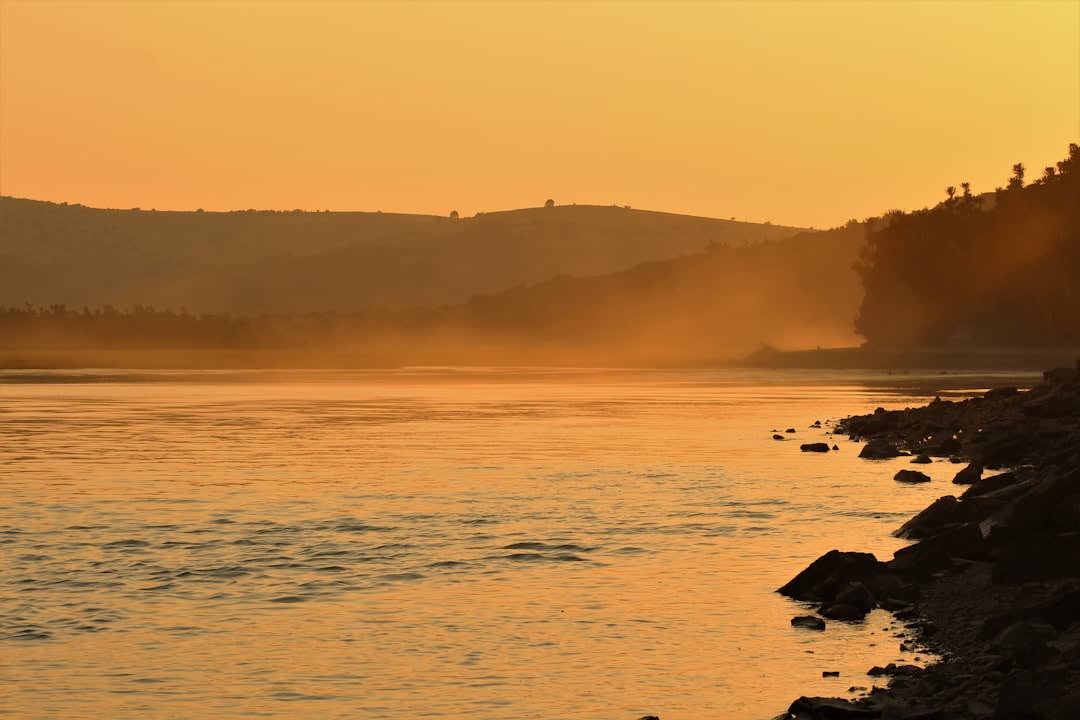
One evening we walked down to the riverbank as fishermen were coming in, and I sat there with a bottle of warm Coca-Cola watching pirogues slide past in the last orange light, thinking about how differently this city reads on paper — “cotton processing town,” “administrative post” — versus how it actually feels standing there, humid air on your skin, kids shouting from a footbridge. Lia found a woman grilling fish over charcoal near the market and we ate standing up, hands greasy, laughing about nothing in particular.
We didn’t have time to push on to Sena Oura National Park, which sits further south as the gateway into the forested savanna bordering the Central African Republic — that’s the real reason most travelers pass through Sarh at all, as a staging point before heading into that wilder country. I regret it a little, honestly, and it’s the first thing on my list if I ever come back this way.
When to go: Aim for November through February, when the drier, cooler season settles over southern Chad — the rest of the year the roads south of Sarh turn to mud and the humidity becomes its own kind of obstacle.
Keep exploring
More from Chad
 chad
chad Tibesti Mountains
The most remote highland on earth — volcanic craters, Toubou nomads, and a silence so total it functions like a presence.
Explore chad
chad Zakouma National Park
One of Central Africa's last intact savannas — where elephant herds of hundreds move through acacia woodland and conservation actually worked.
Explore chad
chad Abéché
The ancient sultanate capital of the east — Arabic scripts on mud walls, incense in the souks, and seven centuries of Saharan trade history still breathing.
Explore chad
chad Bardaï
The only real settlement in the Tibesti — a date-palm oasis surrounded by volcanic peaks, home to the Toubou and almost no one else.
Explore chad
chad Ennedi Plateau
A sandstone labyrinth in the Sahara's heart where prehistoric painters left their hands on rock that no fence has ever touched.
Explore chad
chad Fada
A sand-blown outpost at the edge of the Ennedi — where the last paved road ends and every journey north becomes an act of faith.
Explore