Marble Mountains (Ngũ Hành Sơn)
"Five hills, five elements, and one very out-of-shape Frenchman climbing all of them before lunch."
Five limestone peaks named for the elements, riddled with cave shrines and ringed by a marble-carving village that's worked the stone for centuries.
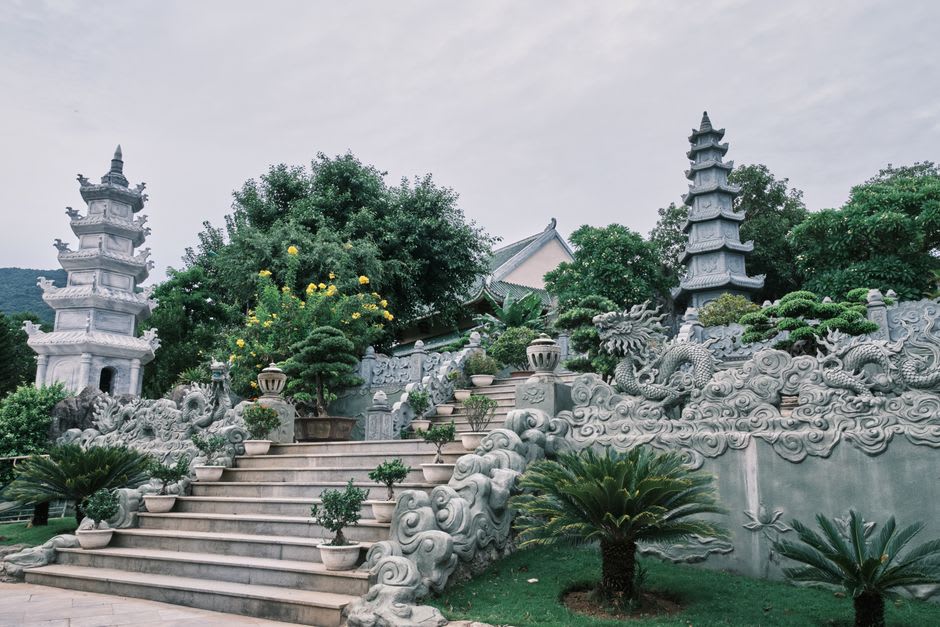
We’d been in Đà Nẵng three days before Lia noticed them out the window of our café — five grey humps breaking up the flat green rice country south of the city, too abrupt to be natural-looking even though they very much are. Kim, Thủy, Mộc, Hỏa, Thổ: metal, water, wood, fire, earth. Someone centuries ago looked at these limestone outcrops and decided they each carried the weight of one element, and by the time we’d climbed the first staircase into Thủy Sơn, the biggest and most-visited of the five, I understood the impulse. The rock does something to the light. It’s damp and cool inside the caves even when it’s roasting outside, and there’s a mineral smell that clings to your clothes for the rest of the day.
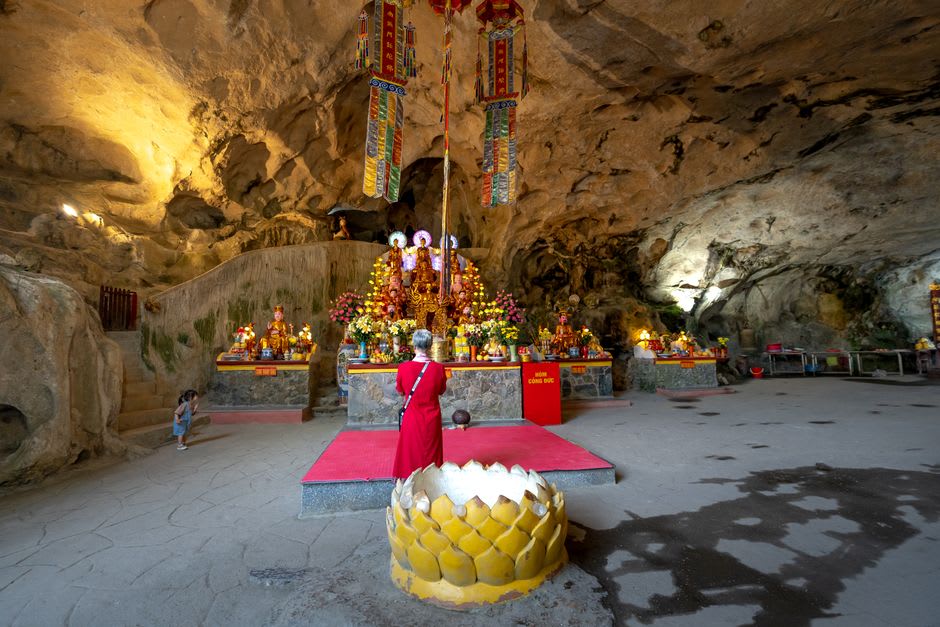
Thủy Sơn is the one everyone means when they say “the Marble Mountains” — a whole hillside honeycombed with Buddhist sanctuaries, and stairs that switchback up through openings in the rock so narrow we had to turn sideways with our daypacks. The one that stopped me cold was Huyền Không Cave: you walk in through a low, dark passage and the ceiling suddenly opens into a natural skylight, this single shaft of sun dropping straight down onto a Buddha shrine carved into the stone below, incense smoke curling up into the beam like it was choreographed. I’ve seen a lot of temples by now. That one I just stood in for a while without taking a photo, which for me is saying something.
At the base of the hills there’s a whole village of stone carving workshops, and this is where the “marble” in the name gets literal — quarrymen have been pulling stone out of these mountains since the 18th century to feed exactly this trade, though these days most of the raw material gets trucked in from elsewhere because the government banned quarrying the mountains themselves. We wandered past workshop after workshop, guys in dust masks chiseling out Buddhas and lions and koi fish twice their own size, the whine of grinders never quite stopping. Lia bought a small jade-green elephant from a woman whose family, she told us through her son translating, had been carving on that same street for four generations. It’s on our shelf in Mexico now, looking a little out of place next to the talavera.
What sat with me longer than the carving or the caves, honestly, was learning what these hills were used for during the war — Viet Cong fighters hid in the same caves we’d just climbed through, ran a field hospital inside the rock, close enough to the American air base that the US and South Vietnamese forces mounted whole operations named after the mountains themselves trying to root them out. Standing in that same cool dark with a shrine glowing under its shaft of sunlight, it’s hard to hold both histories in your head at once, but I think that’s the point of a place like this. It doesn’t ask you to pick one.
When to go: aim for February through May — the air is cooler and drier, the stairs are a lot more forgiving without the summer humidity pressing down on you, and the light through Huyền Không Cave seems sharper before the haze of the wet season rolls in.
Keep exploring
More from Central Vietnam
 central-vietnam
 Mỹ Sơn
Cham Hindu temple ruins reclaimed by jungle that most visitors blow past on the way to somewhere more famous.
Explore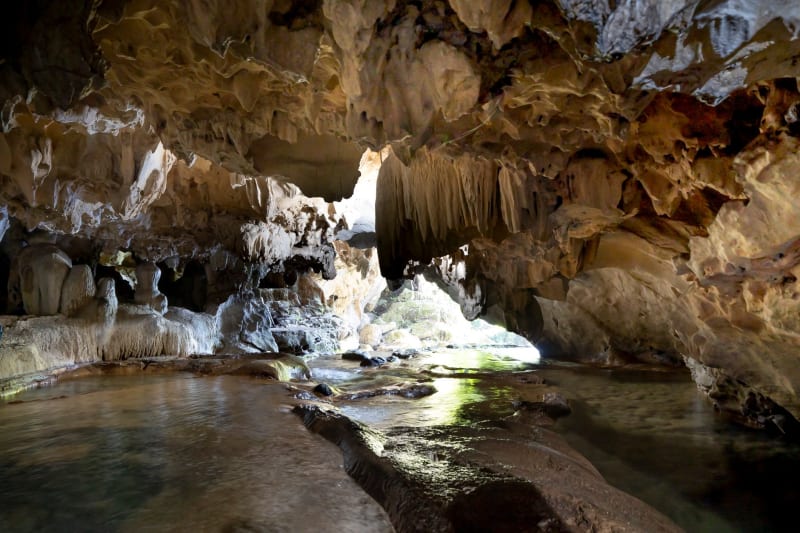 central-vietnam
 Phong Nha
A cave system so vast that clouds form inside it, in a karst landscape that makes the surface world feel like a temporary arrangement.
Explore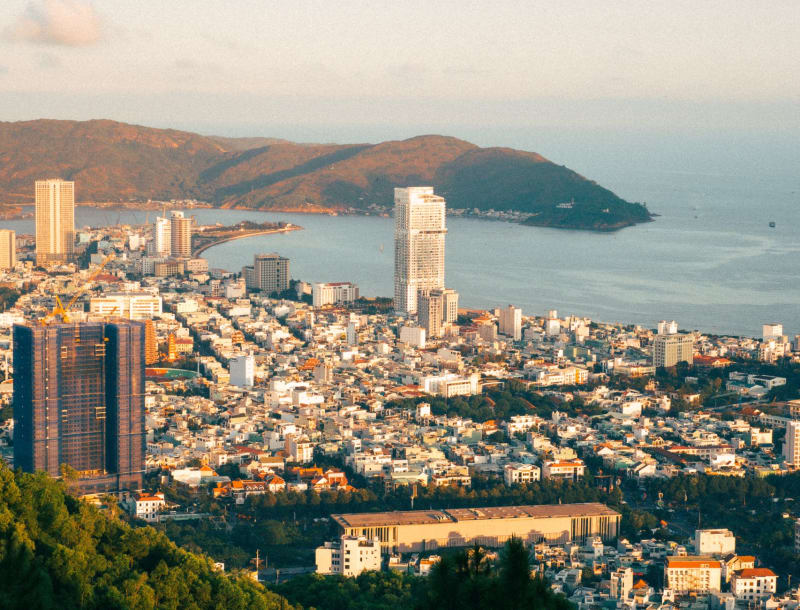 central-vietnam
 Quy Nhơn
A working fishing city on the south-central coast that skipped the tourist circuit and kept all the best seafood for itself.
Explore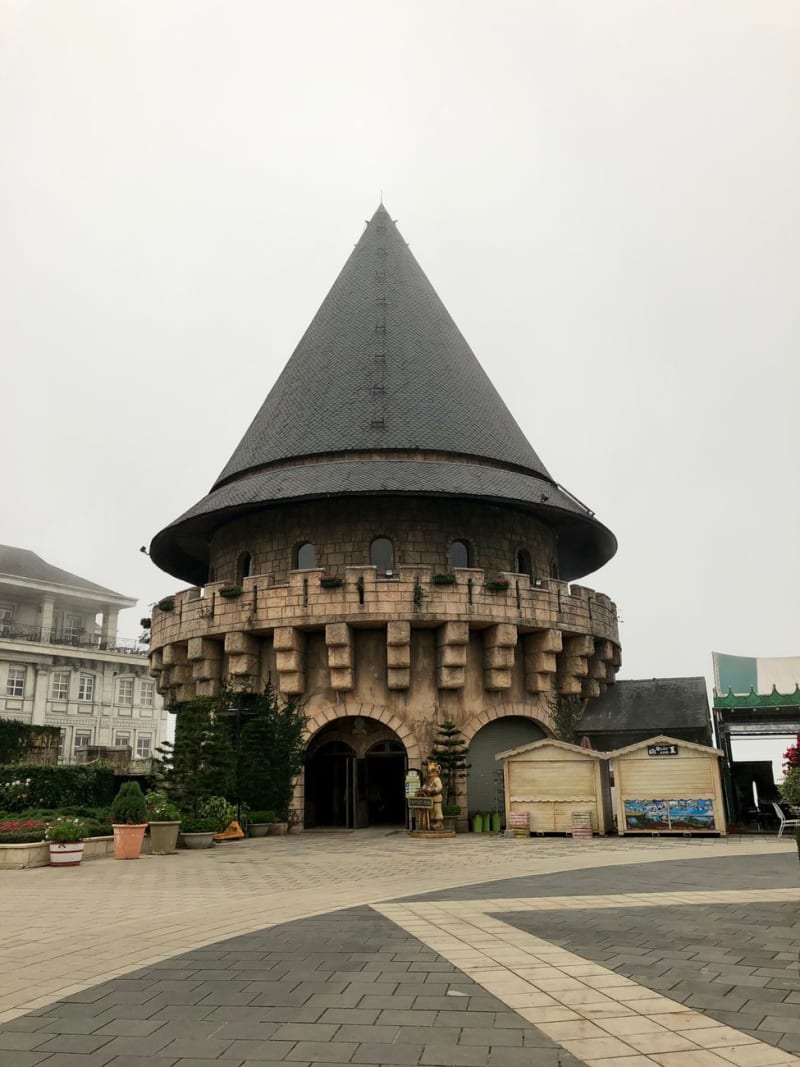 central-vietnam
 Ba Na Hills
A French colonial hill station turned surreal mountaintop theme park above Da Nang, home to the famous Golden Bridge held up by two enormous stone hands.
Explore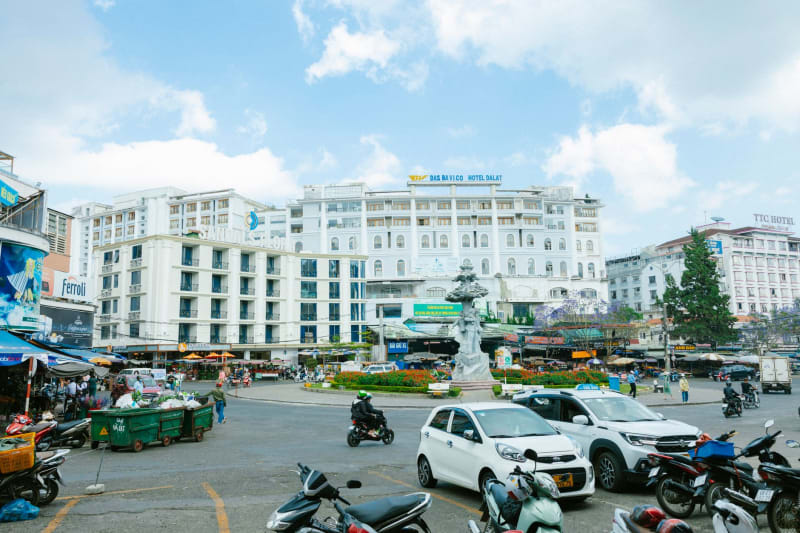 central-vietnam
 Bạch Mã
A cloud-wrapped national park where French colonial villas slowly surrender to fern and the waterfalls descend into valleys with no names.
Explore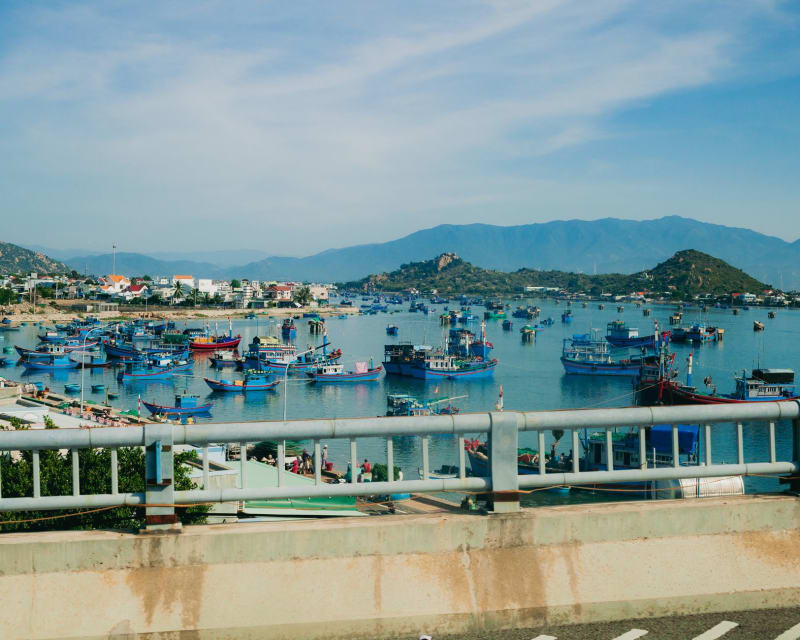 central-vietnam
 Cù Lao Chàm
A marine-protected island chain where the motorbikes stop, single-use plastic is banned, and the sea goes back to being just the sea.
Explore