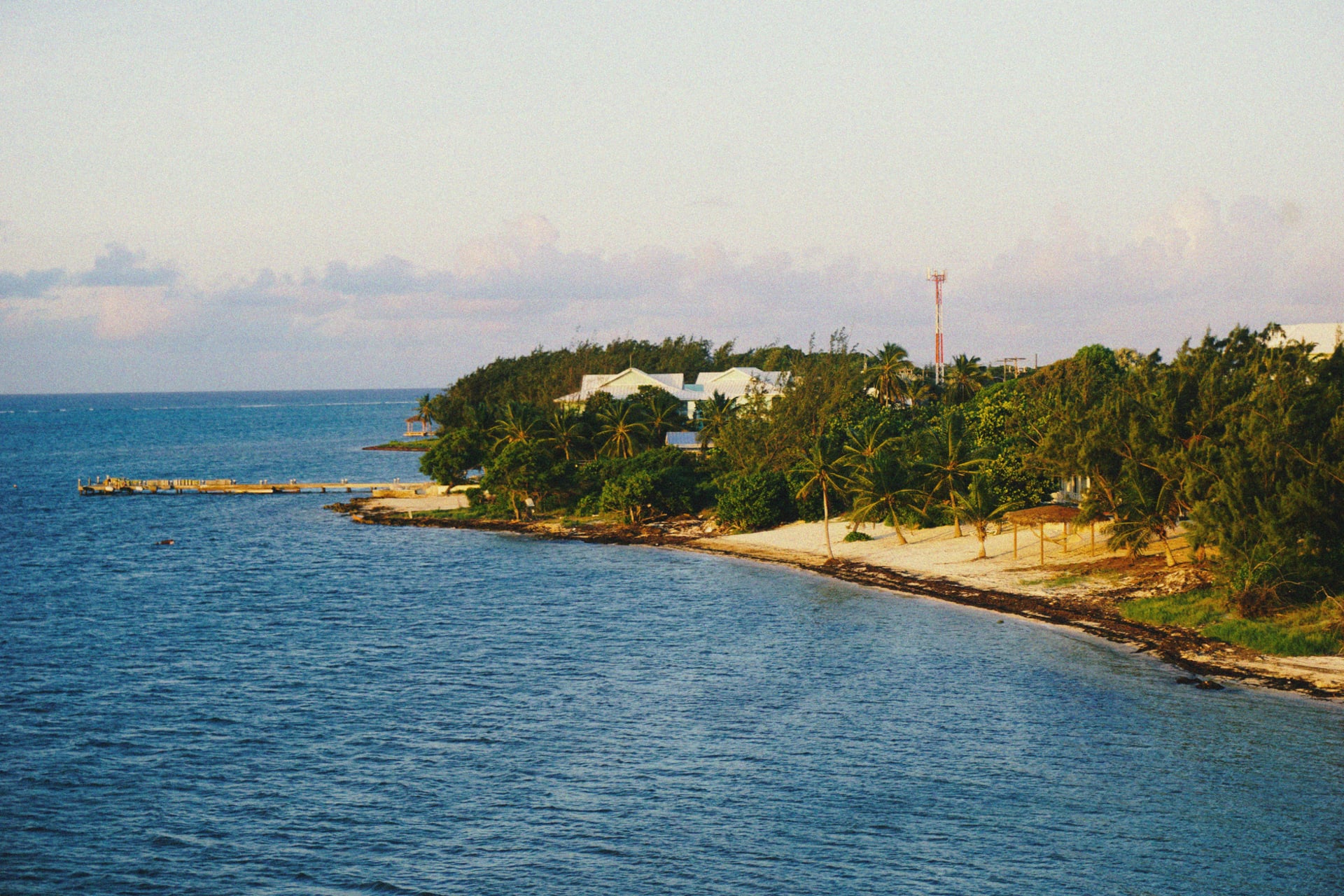
I rented a car on my third morning, which was later than I should have. The road east from George Town follows the south coast and the development thins steadily — the large hotels first, then the smaller condominiums, then the private houses, then the guest houses, then almost nothing at all — and at some point along the way the island shifts from the place that everyone writes about to the place that actually exists. I kept driving until I reached the blowholes.
They are nothing dramatic from the road: a pull-off on the south coast, a short walk across a flat shelf of ironshore — that grey, Swiss-cheese limestone that lines much of the eastern coast — and then the Atlantic swells arrive from the open ocean and push through the natural holes in the rock and throw water fifteen or twenty feet into the air with a sound like something enormous exhaling. On the morning I went, the swell was running at about two meters and the spray was landing well back from the edge, soaking anyone who stood close enough to properly feel it. I stood close enough. I stood there for a long time watching a phenomenon that requires no explanation and accepts no improvement.
The East End community is scattered along the coastal road: small wooden houses painted in colors that have faded to something more interesting than their original intent, fishing boats pulled up above the waterline in yards, a rum bar that I stopped at that had three customers and a television showing a cricket match that all three were ignoring in favor of an argument about fishing conditions. I had a beer and listened to the argument without being invited to join it, which felt like the appropriate level of participation. The rum here is local and poured with a generosity that suggests the measures in use predate any regulatory guidance on the matter.
The beaches on the east end are different from Seven Mile — exposed to more wind and occasional swell, with rougher sand and lines of seagrass at the water’s edge. They are not the Caribbean postcard. What they offer instead is emptiness: on the afternoon I walked down to a beach marked on no map I had, there were no other people at all. The water was still clear — Cayman’s clarity is non-negotiable even on the rough side — and the ironshore gave way to a pocket of sand where the coral had broken down over centuries into something almost as fine as the west coast.

There are good dive sites on the eastern wall — less famous than the west wall, consequently less trafficked — and the diving here has a different character: stronger currents, more pelagic life, the occasional wall section that drops away so dramatically it produces a mild vertigo even for someone comfortable underwater. East End dive operators run smaller operations with a more local character than the large outfitters near Seven Mile Beach. The briefings tend to be more conversational than procedural.
When to go: The east side is best in winter and spring when the Atlantic swell is manageable. Summer and fall can bring rough conditions on the exposed south and east coasts. The blowholes are most spectacular when a moderate swell is running — too calm and they barely work, too rough and you cannot safely approach. Late morning, when the offshore breeze steadies, is the best time for the beach pockets and for the light falling on the ironshore.