Caribbean
Cayman Islands
"The water here is so clear it feels like a moral obligation to get in."
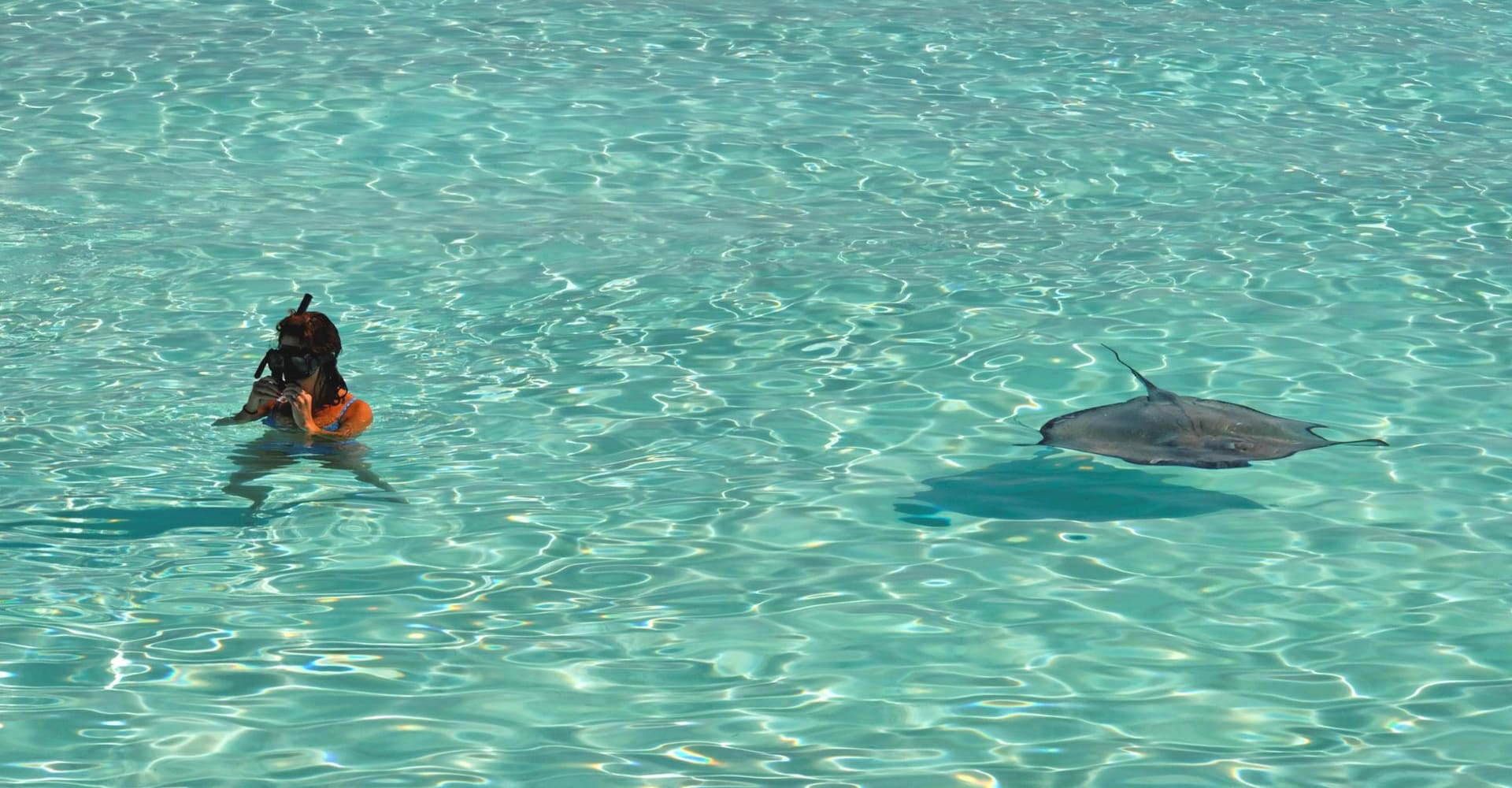
The Cayman Islands do not fit neatly into any mental category I had for the Caribbean. I arrived expecting a manicured resort corridor with good diving bolted on — which is not entirely wrong, but it misses the stranger, more interesting version of the place. Grand Cayman is the most prosperous island in the Caribbean basin, built on two pillars that have nothing to do with each other: offshore banking and stingrays. The first has produced a capital city, George Town, that could pass for a cleaned-up stretch of Fort Lauderdale, complete with liquor stores the size of supermarkets and dive boats departing at six-thirty in the morning. The second has produced Stingray City, a sandbar twelve feet deep where southern stingrays gather because decades of fishermen cleaned their catch there, and where tourists now wade in and hand-feed squid to the descendants of those original visitors. It sounds like a zoo. It is not. These animals are wild, the water is improbably clear, and the experience of having a three-foot stingray glide over your feet remains genuinely disorienting in the best way.
Seven Mile Beach, which stretches along the western coast of Grand Cayman, is the kind of white-sand corridor that makes Caribbean clichés feel earned. I have been to a lot of Caribbean beaches and this one is genuinely exceptional — the sand is powdered coral, the color of the water shifts from pale mint in the shallows to electric blue offshore, and the bottom stays sandy and calm even in moderate swell. What surprised me was the food. I expected resort buffets and fish and chips. What I found was a local fish fry at Camana Bay on Thursday evenings, jerk chicken smoking over coal drums, fresh conch ceviche served in the shell at roadside stands, and a Caymanian turtle stew that I tried at a family-run spot east of George Town that tasted of nothing else I have eaten in the Caribbean. The turtle population is farmed and the ethics are complicated, but the flavors — the brine, the dark braising liquid, the chili heat — are specific to this place and nowhere else.
The diving is the reason serious underwater people come here. The walls off the north side of Grand Cayman drop to several hundred feet within swimming distance of shore, and the visibility regularly exceeds thirty meters. I am a moderate diver, not a technical one, and even at sport diving depths I found the coral here in better condition than most of what I have seen in the Caribbean. The Kittiwake, a decommissioned US Navy submarine rescue vessel sunk as an artificial reef in 2011, sits in twenty meters and is one of the more interesting wreck dives I have done — large enough to feel genuinely exploratory, shallow enough to spend proper time on it.
When to go: December through April is peak season — dry, calm, the water at its most transparent. May and June are excellent, with lower crowds and still-reliable weather. Hurricane risk runs July through November, with September and October the most volatile. I went in late April and found the place starting to empty out after Easter, which was ideal.
What most guides get wrong: They sell Cayman as an expensive resort destination and leave it there. It is expensive — there is no getting around that — but the character of the place is not purely resort-driven. The east end of Grand Cayman is quieter, less developed, and more Caymanian in the sense of people actually living there rather than serving tourists. The sister islands, Cayman Brac and Little Cayman, are dramatically different — smaller, quieter, the diving arguably better. If you are treating Cayman as a beach holiday, you are paying a premium to do something you could do cheaper elsewhere. If you treat it as a diving destination with a strong food scene attached, the price starts to make sense.