Montserrat
"The mountain doesn't need the monastery to be astonishing. But the monastery doesn't hurt."
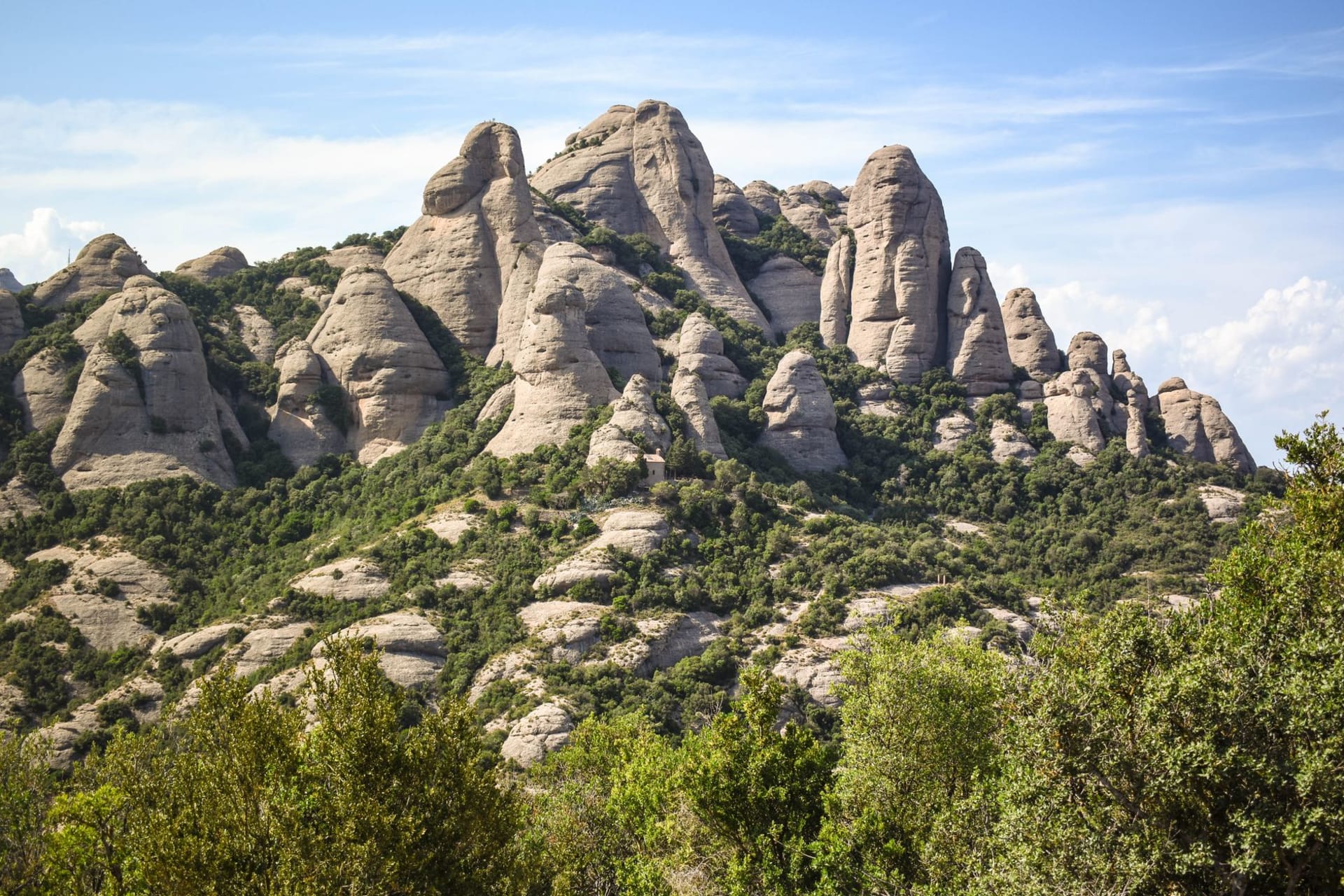
I took the rack railway up from Monistrol de Montserrat on a weekday morning in October, the carriage filling with pilgrims from somewhere in South America who were praying quietly and tourists from everywhere who were taking photographs. The railway clings to the mountain’s flank at angles that seem inadvisable, and at certain points the view opens out over the entire Catalan plain — the flatlands running west toward Lleida, a distant shimmer of the sea, the haze over Barcelona — and the combination of height and sudden perspective is dizzying in a way I hadn’t prepared for. The mountain earns its name: Montserrat means “serrated mountain,” and from below it looks like a geological accident, a cluster of pink conglomerate pinnacles that should not be standing at this angle or this height.
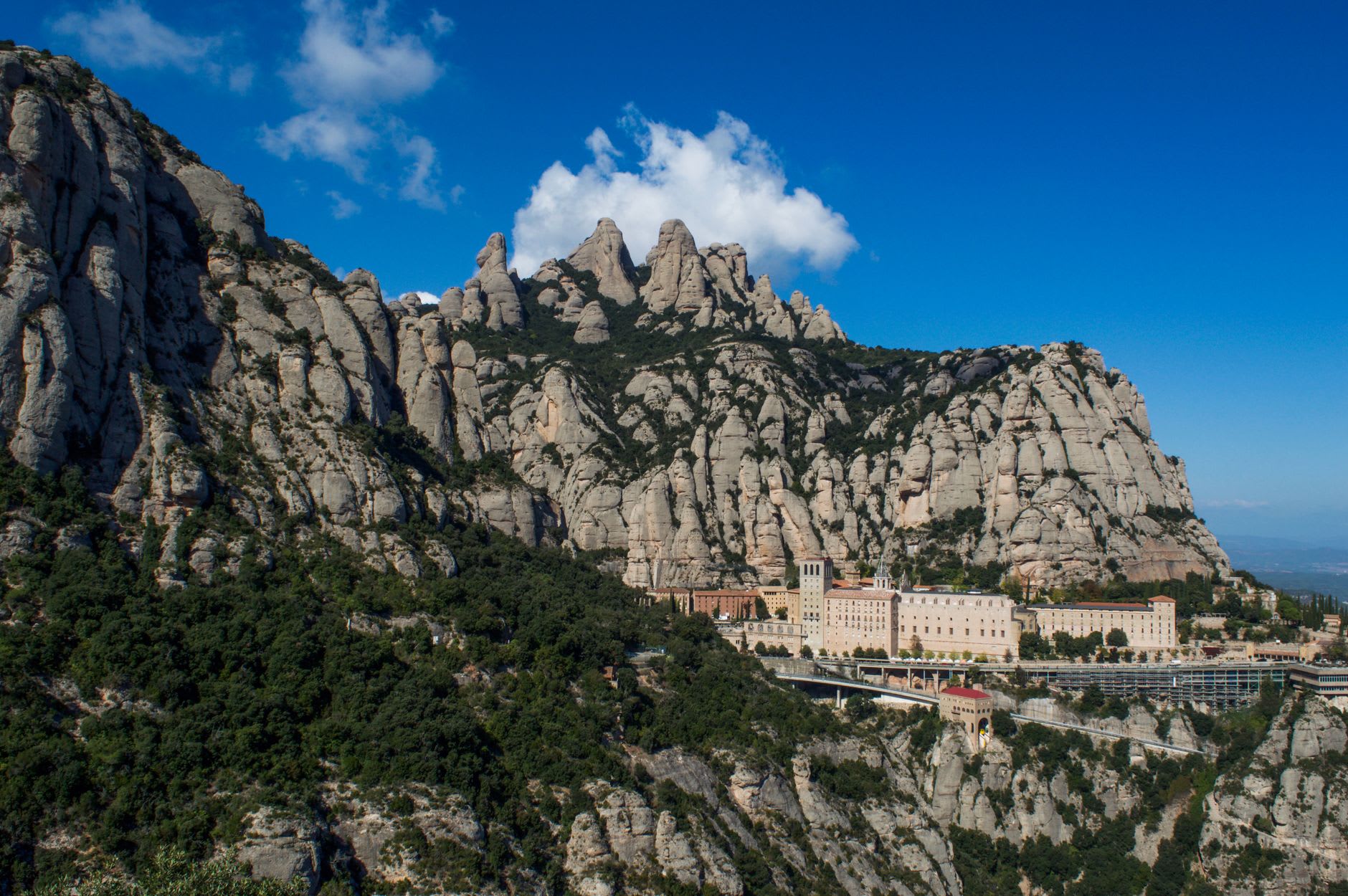
The monastery of Santa Maria de Montserrat has been here in one form or another since the ninth century, and the Benedictine monks who still live and work inside it give the place an atmosphere distinct from ordinary tourist sites. The Black Madonna — La Moreneta — is housed in the basilica behind glass and a long queue, and pilgrims come to touch the orb she holds with a devotion that is palpable and real. I am not a religious person but I found myself moved by the sincerity of it — the elderly woman ahead of me in the line who crossed herself and wept quietly into her hands. Whatever the mountain does to people, it has been doing it for a very long time. The boys’ choir, the Escolania, one of the oldest in Europe, sings at noon on most days, and I had not planned to stay for it, but I did. I stood in the basilica listening to those voices rise into the vaulted ceiling and thought: this is the right thing to be doing on a Tuesday morning.
The crowds concentrate around the monastery complex, which means the trails that branch upward from the upper cable car station are often nearly empty even in high season. The Sant Joan route climbs to one of the highest points, passing through the strange forest of pink rock pillars that look, up close, less like pinnacles and more like enormous smooth fingers emerging from the ground. The silence up there is concentrated, broken only by wind and occasionally by the bells from the monastery far below. I passed a man sitting on a rock with his eyes closed, not sleeping — just sitting with the mountain. Nobody spoke. There are also hermitages dotted along the cliff faces, some of them accessible by narrow paths, where hermits actually lived in isolation for centuries. The Sant Joan hermitage clings to the rock face at a height that makes you wonder about the practical realities of devotion.

The mountain carries political weight too, weight you can feel if you know to look for it. During the Franco dictatorship, when the Catalan language and culture were systematically suppressed, Montserrat became one of the few places where Catalan identity was publicly maintained. The monastery issued underground publications, sheltered activists, held masses in Catalan when doing so was technically illegal. The Museu de Montserrat, housed in the monastery buildings, holds an extraordinary collection that includes early Picassos and significant Catalan Modernist paintings — most of it unseen by visitors heading straight for the Black Madonna. I spent an hour in there and came out feeling I had seen a different version of the place.
When to go: Weekdays in spring (April, May) or autumn (September, October) give the best balance of access and atmosphere. Summer weekends are crowded to the point of diminishing the experience considerably. The rack railway fills early on peak days; arrive before ten or accept the queue.