Costa Brava
"The coves here don't reward laziness — and that is precisely why they remain beautiful."
I first came to the Costa Brava out of season, driving north from Girona on a gray November morning with low cloud sitting on the Pyrenees and the road mostly empty. The coastal villages I stopped in — Palafrugell, Tamariu, Llafranc — had a shuttered, exhaled quality, as though they were recovering from something. Most restaurants were closed. The beach cafes had their chairs stacked. And the sea, that famously turquoise sea, was still there doing its business, dark and restless under the clouds. I ate a bocadillo from a gas station and sat on a wall above a cove and thought: I understand now why people come back here every summer for twenty years.

The northern Costa Brava, running from L’Escala up to the French border, is the part the guidebooks always describe as “less developed” — a polite way of saying it looked at development and said no. The Cap de Creus peninsula at the far northeastern tip is Catalonia’s first natural park and the point where the Pyrenees technically end their run and the Mediterranean begins. The landscape there is lunar: white eroded rock formations, scrub vegetation that smells of thyme and rosemary when you brush it with your hand, paths winding to headlands where the wind comes in hard from the north. The tramuntana is real and regular, capable of turning a calm sunny day unpleasant in thirty minutes. When it blows, the sea develops a particular chop, and the more sheltered calas become suddenly precious.
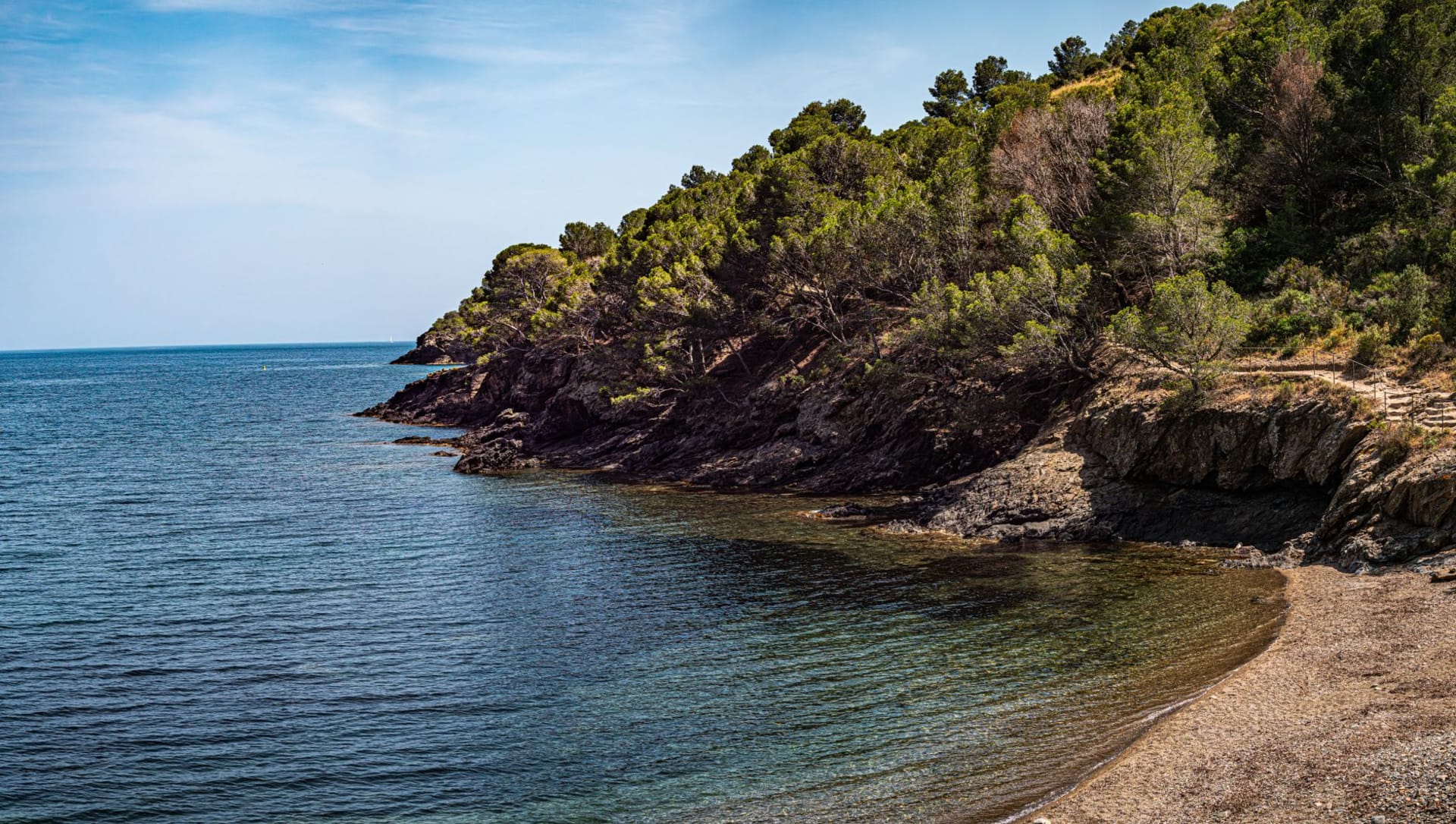
The camí de ronda, the old coastal path that traces the entire Costa Brava, is one of the best walking routes in Catalonia. It passes over headlands, drops into fishing villages, skirts private gardens where cats sleep on walls, and connects one cala to the next in a way that makes you feel like you are earning each swimming spot. The water here — and I have to say this even though it sounds like a superlative — is genuinely the kind of clear you don’t expect in the Mediterranean. You can see the sand five meters down. On calm summer days, the refraction makes everything underwater glow a specific electric blue-green that looks edited until you’re swimming in it.

Inland from the coast, the medieval villages of the Baix Empordà — Pals, Peratallada, Monells — sit on hilltops looking out over flat agricultural land toward the sea. They are the kind of places that look almost too preserved, until you notice the actual residents hanging laundry in the alleyways or arguing in Catalan outside the pharmacy. At the Mercat del Empordà in Palafrugell on Saturday mornings, the local farmers bring whatever is in season: in spring it’s peas and white asparagus, in late summer it’s tomatoes of a dozen different sizes, in autumn it’s wild mushrooms and chestnuts from the Garrotxa hills. I bought tomatoes there once that tasted so specifically of themselves that I could no longer explain why I ever bought tomatoes anywhere else.
When to go: June or September. The sea is warm enough to swim comfortably, the coastal paths aren’t gridlocked, and the restaurants are fully open but not overwhelmed. July and August are high season with prices and crowds to match. May is beautiful if you don’t mind the sea still being cold — the light is extraordinary and the calas are yours alone.