Rose Valley
"The rock was the colour of the inside of a peach, and then briefly the colour of blood, and then it was dark."
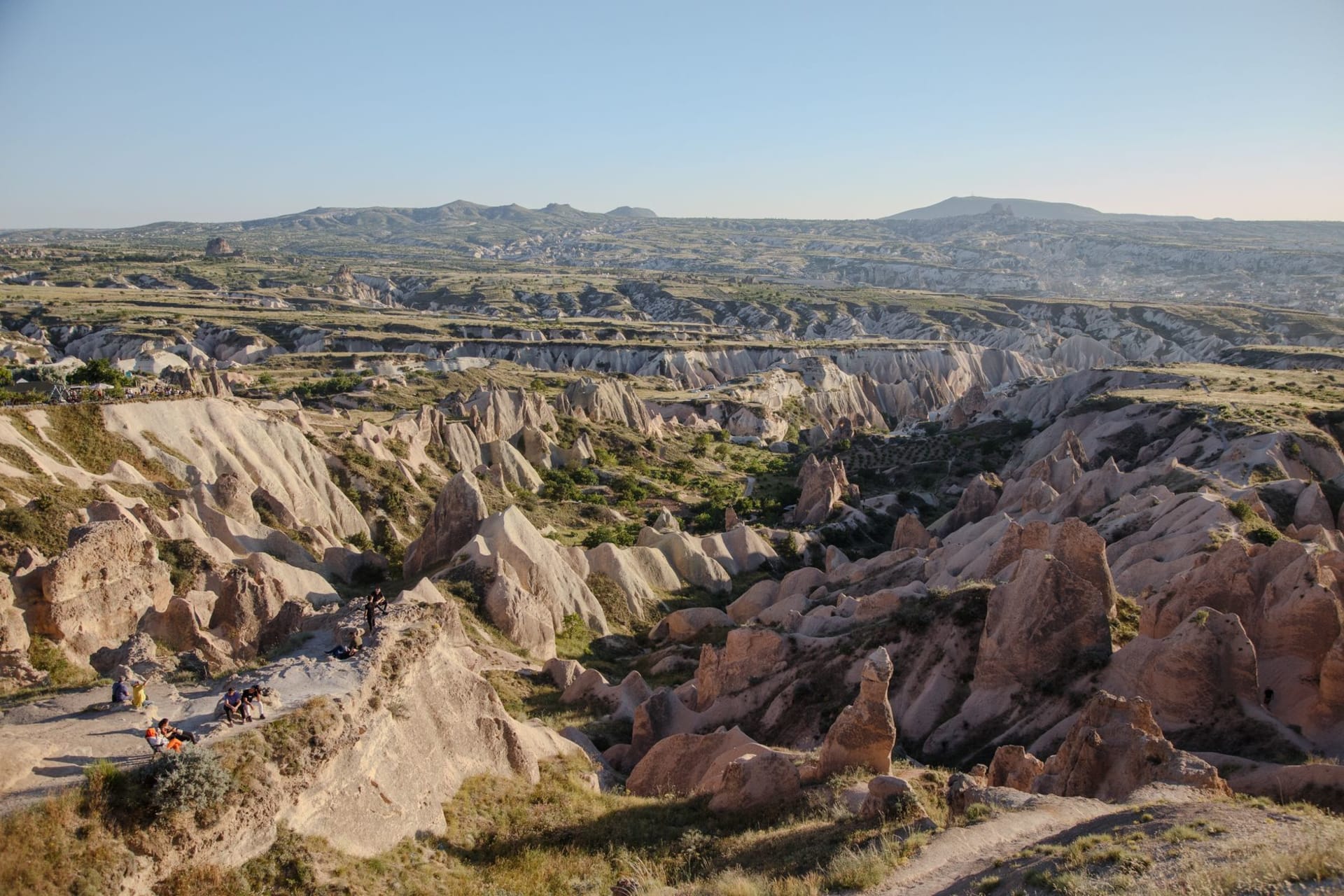
I entered Rose Valley from the Çavuşin end on a late afternoon in May, when the shadows were already getting long, and the light hit the tufa at an angle that made the rock glow. The valley takes its name from the colour of this light — or perhaps from the actual mineral colour of the rock, which contains iron oxides that shift from pale ochre through salmon to a deep warm pink as the sun drops. I walked slowly and my shadow stretched ahead of me and the chimneys changed colour every twenty minutes in a way that felt like the valley had its own internal schedule.
Güllüdere — the Turkish name — connects to the Red Valley (Kızılçukur) and together they form the best walking circuit in Cappadocia that doesn’t involve a guided tour or a ticket window. The trails are well-trodden but not paved, marked by paint on rock faces, and wind through a landscape of chimneys and cones and carved cliffs that has absorbed human presence without being organised by it. The Byzantine cave churches along the route have not been polished for tourism the way the Göreme Open Air Museum has — some are simply doorways cut in a cliff face that open into a dark interior with a carved altar and frescoes barely visible on the curved walls.

I found one church about forty minutes into the walk by noticing a carved cross above a low doorway in the cliff face. Inside, the ceiling was painted with apostles in circular medallions — faded to ghosts, but the composition still readable. There was no sign. No admission ticket. No other people. I sat on a carved stone bench and listened to nothing in particular and felt the particular quality of luck that comes from walking somewhere without a plan and finding something that wasn’t on any list you had consulted.

The trail eventually opens onto the plateau above Çavuşin village, and on the way back I stopped at what may be the ideal vantage point in Cappadocia for the end of day: a flat ledge of rock above the valley where you can watch the whole progression from warm gold to pink to the deep burgundy that precedes dark. I was there with two other people — a couple who had walked up from the village below — and none of us said anything for a long time, which felt appropriate.
When to go: Late afternoon and early evening from April through October, when the light is doing what the valley was made for. Sunrise works too — the early light from the east catches the pink rock in a different way, cooler and more delicate. The trail can be muddy after rain, especially in spring. Avoid midday in summer when the heat on open rock becomes punishing.