Middle East
Cappadocia
"I watched fifty balloons rise and still couldn't believe what I was seeing."
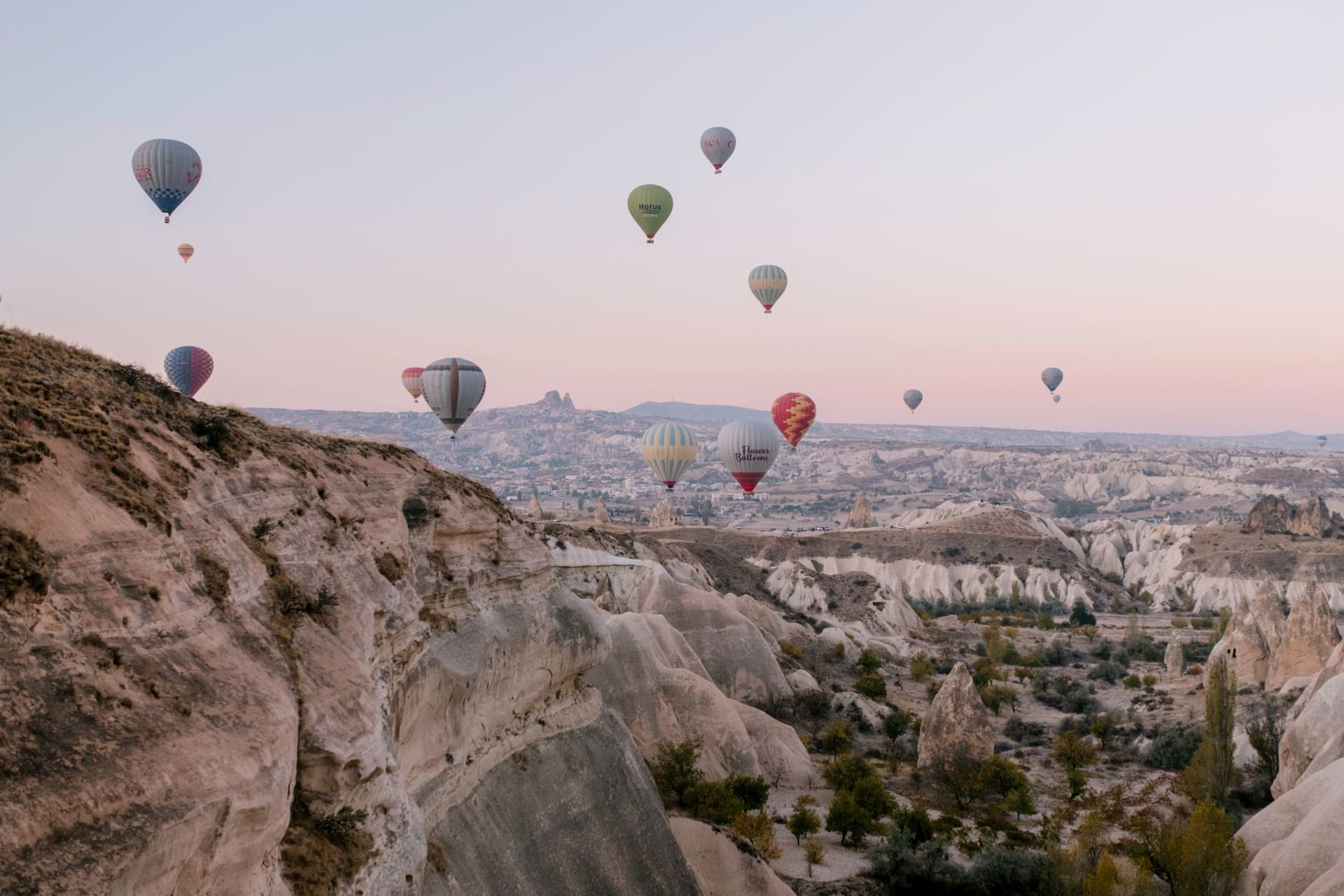
I arrived in Göreme by night bus from Istanbul, bleary and dusty, and the first thing I did was step outside the otogar at 4 a.m. because someone told me not to miss the balloons. I almost didn’t go. I’m glad I did. In the grey pre-dawn, you hear them before you see them — the deep, rhythmic roar of propane burners heating the air inside nylon envelopes the size of apartment buildings. Then one by one they rise from the valley floor, and the sky that was empty is suddenly full. Not two or three. Dozens. On a clear morning in peak season, over a hundred balloons share the airspace above the Göreme valley, and the effect is so surreal that your brain keeps refusing to process it as real.
Cappadocia is not one thing. It is a region of central Anatolia built on millennia of volcanic eruption, wind erosion, and human ingenuity. The fairy chimneys — those improbable cone-shaped columns of soft tufa rock — were formed by lava flows that buried the landscape and then eroded unevenly around harder basalt caps. Early Christians, fleeing Roman persecution and later Arab raids, discovered that the same soft rock could be carved with hand tools, and they built inside it: churches with Byzantine frescoes still sharp after a thousand years, monasteries with refectories and sleeping quarters, and beneath their feet, vast underground cities that could shelter thousands of people for months. Derinkuyu goes eleven stories down. Standing at the bottom of the ventilation shaft, looking up at a column of daylight, you understand why people chose to dig rather than run.
The food is quieter than Istanbul but no less serious. Testi kebabı — lamb or beef slow-cooked in a sealed clay pot that the waiter breaks dramatically tableside — is the dish every restaurant pitches as theatre, and it earns it. The pottery shops in Avanos are the real thing, not souvenir traps: the region has been producing ceramics for four thousand years using clay from the Kızılırmak River, and watching a master on the wheel is worth an hour of your afternoon.
When to go: April to early June and September to October offer the clearest skies for balloon flights, mild temperatures, and crowds that are present but manageable. July and August are brutally hot and packed. Winter (December to February) is cold and the balloons fly less frequently due to wind, but snow on the fairy chimneys is genuinely extraordinary and the valleys empty out almost entirely.
What most guides get wrong: They frame the balloon flight as the main event and everything else as optional. It’s the opposite. The underground cities — Derinkuyu, Kaymaklı — are among the most astonishing human constructions on earth and most visitors spend ninety minutes there before rushing to a carpet shop. Go to Derinkuyu in the morning when it opens, before tour groups arrive, and budget three hours. The silence and the scale of what people built in the dark will stay with you longer than any sunrise.