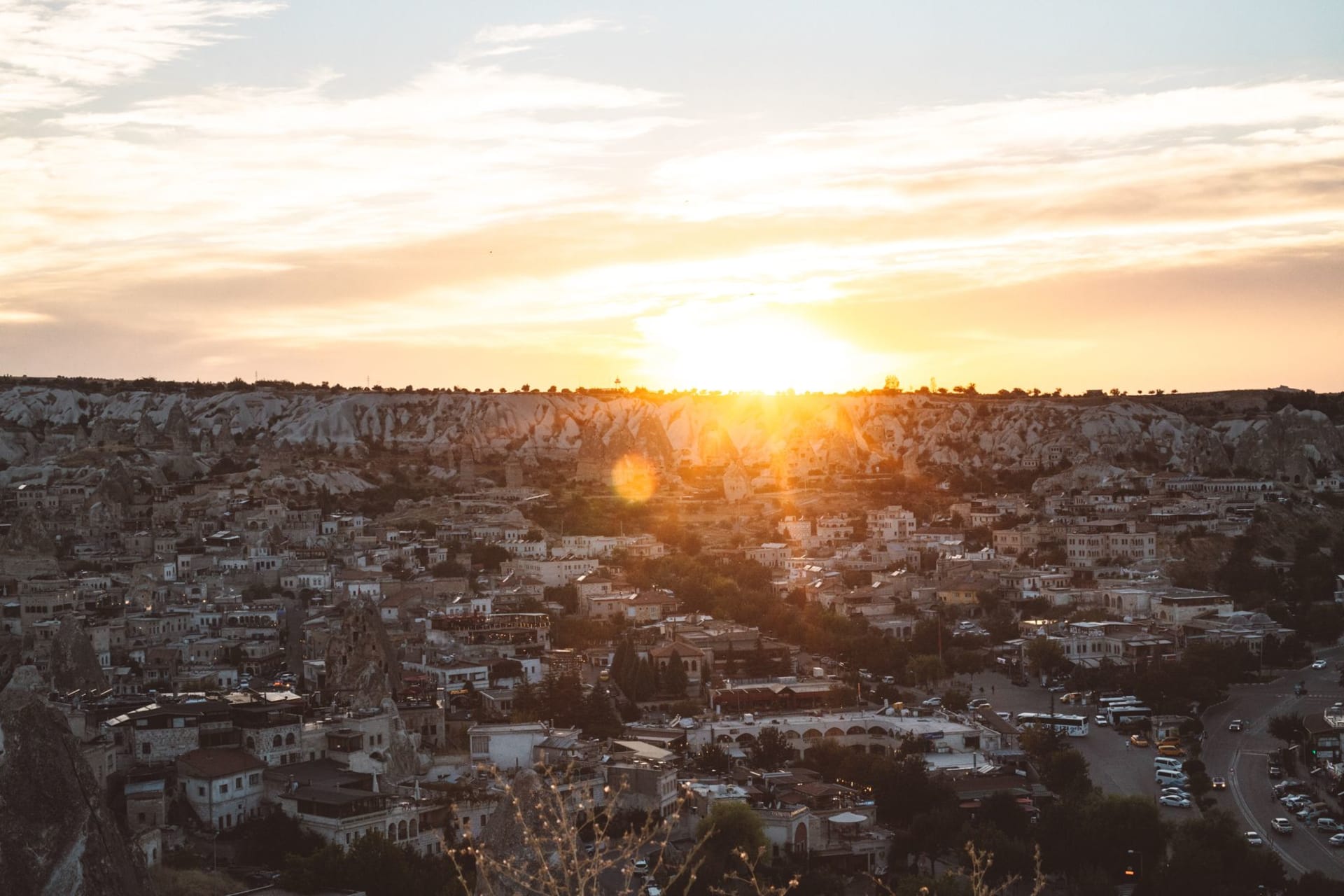
Mustafapaşa
"The church was locked but I could see through the window — the iconostasis still standing, light falling across it like a kept promise."
Mustafapaşa sits twelve kilometres south of Ürgüp and almost no one goes there, which is exactly why I went. The village was known as Sinasos until 1923, when the Greek Orthodox population — who had built the town’s remarkable mansions, churches, and schools over several centuries — were included in the population exchange between Greece and Turkey. They left, and what they built remained. The stone houses with their elaborate carved facades, the ornate wooden balconies, the two substantial Orthodox churches in the village centre: all of it sits in a mild, suspended state, inhabited now by Turkish families but still bearing the architectural grammar of its Greek builders.
I walked the main street in the early afternoon when the light was direct and the carved stone glowed white-gold. The facades here are unlike anything else in Cappadocia — instead of the raw simplicity of cave architecture, these are formal, European in aspiration, with baroque scrollwork carved into soft tufa, arched windows framed in geometric patterns, ornamental keystones bearing Greek inscriptions. They were built by families who were prosperous and cultured and who, by the standards of the Ottoman millet system, were left largely to manage their own affairs. Then they were asked to go, and they went.

The Church of Saints Constantine and Eleni stands in the centre of the village and is the largest Greek Orthodox church in Cappadocia. It is sometimes open, sometimes locked, in that unpredictable way of sacred buildings in small towns where the keyholder is also the man who runs the alimentary. When I was there a small window in the side door gave a view of the interior: the wooden iconostasis gilded and intact, icons arranged in their proper order, a carpet on the floor. Dust in the air catching the light. A place maintained — by whom and with what understanding I am not sure — but maintained.

I had tea in the only café, operated by an elderly man who spoke no English and whose Turkish I couldn’t follow, and we sat in companionable silence watching a dog sleep in the shade across the street. He brought out a plate of lokum without being asked. The afternoon was completely quiet. This village does not arrange itself for visitors. It just continues being what it is.
When to go: Mustafapaşa rewards a quiet weekday visit any time of year. Spring and autumn are most comfortable for walking the streets and exploring the architecture. Summer afternoons can be very hot, but the stone buildings stay cool. The village is most atmospheric in the early morning or late afternoon light, when the carved facades catch the sun at an angle that makes the Greek inscriptions readable.