Hout Bay
"Hout Bay has the mountains behind it and the ocean in front of it and the good sense not to make a fuss about either."
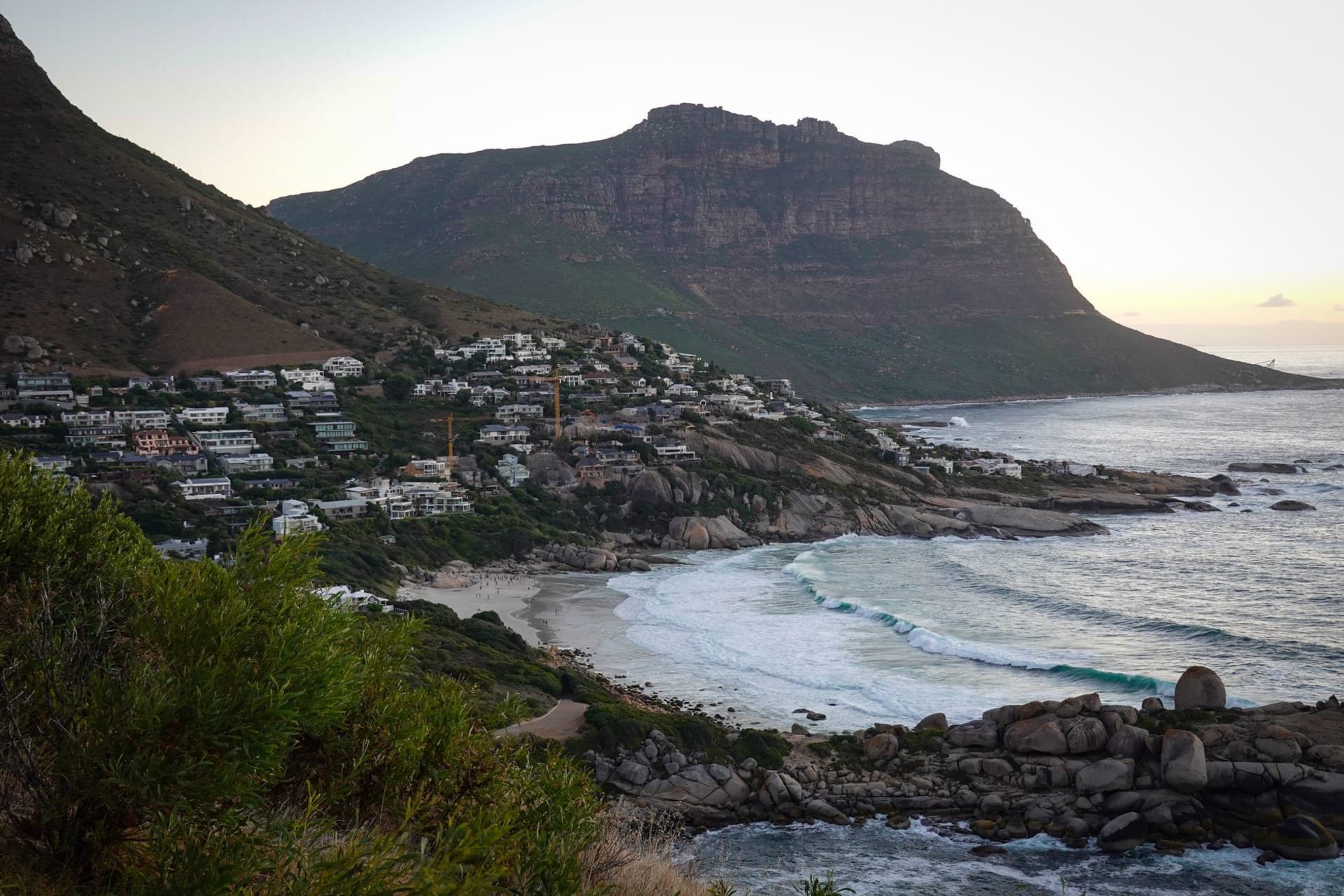
I came into Hout Bay from over the Constantia Nek, through pine forest and morning mist, and the valley opened suddenly below me — the town laid in a bowl of mountains, the blue harbor at the far end, the white houses scattered in between. It is one of the better arrival moments on the Peninsula. The town has a slightly separate feeling from Cape Town, enclosed enough by its geography to feel like its own world, and the harbor gives it an industrial seriousness that cuts through the tourism cleanly.
The harbor at Hout Bay is a working facility, not a promenade with restaurants pretending to be nautical. Trawlers come and go at unpredictable hours, and the smell of diesel and brine and fresh catch is the dominant atmosphere. Mariner’s Wharf, the fish market and restaurant complex on the waterfront, has been there since the 1980s and shows it in the best way — established, slightly rough around the edges, serving smoked snoek paté and calamari with no pretension whatsoever. The fish and chips come in a paper cone. I ate mine leaning against a bollard watching a pelican make calculations about the rubbish bins.

From the harbor you can take a boat out to Duiker Island — a flat rock barely above the waterline a kilometer offshore, colonized by Cape fur seals in numbers that are hard to process. The smell precedes the island by several hundred meters. On the rock, several thousand seals are variously sleeping, arguing, nursing pups, and falling off ledges. The noise is continuous and very loud, a kind of oceanic barracking. The boat circles the rock slowly. I’ve been on this trip twice and both times I found it simultaneously overwhelming and deeply funny — the sheer exuberance of biological success.

The town proper has spread considerably up the mountain slopes on both sides of the valley. The main street mixes local supermarkets with tourist galleries, and the weekend craft market draws buyers from across Cape Town. But the more interesting part of Hout Bay is the older section near the harbor, where the original fishing community established its architecture — long, low cottages, white-walled and green-roofed, facing the sea with a kind of modest permanence that the newer development hasn’t quite replicated.
Chapman’s Peak Drive begins just south of town, climbing the cliff face above the southern shore of the bay, and the view back to Hout Bay from the first viewpoints — the harbor below, the mountains framing it, the town scattered in the valley — makes the toll worthwhile from the first hundred meters of altitude.
When to go: Mornings are best at the harbor, when the trawlers are active and the light is sharp on the water. Summer evenings bring crowds to the restaurants, but the mountains go golden in the late light and the bay stills. The boat to Duiker Island runs weather-permitting — a choppy sea makes the crossing uncomfortable, though the seals have no opinion on the matter.