Africa
Cape Peninsula
"The end of the world, except it isn't — it's just the beginning of the ocean."
The first time I drove the Cape Peninsula, I almost missed Cape Point entirely because I pulled over on the M65 near Scarborough and couldn’t get back in the car. The ocean below was the color of slate and the color of jade, and the wind was doing something violent to the fynbos on both sides of the road, and there wasn’t another person in sight. I stood there for thirty minutes. That’s the Peninsula: it keeps stopping you.
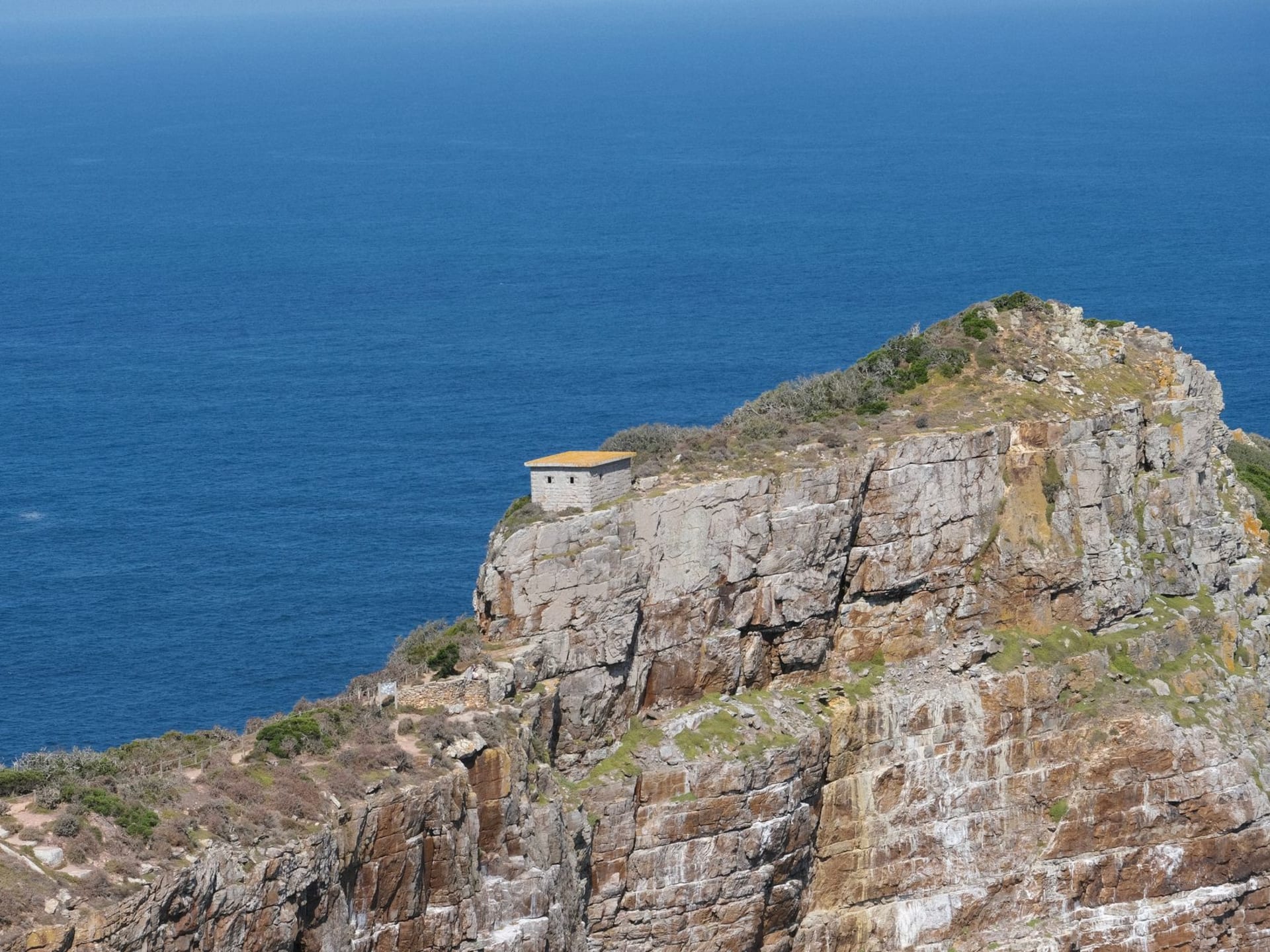
The route from Cape Town to Cape Point is roughly seventy kilometers each way, but it bears no relationship to a highway drive. Chapman’s Peak alone — the cliff road blasted into the mountain above Hout Bay — deserves an hour. Then you reach Boulder’s Beach, where a colony of African penguins has colonized a suburb so completely that residents have to check under their cars before reversing. The penguins are neither afraid nor impressed. They have the energy of small, tuxedoed bureaucrats, and they smell exactly as you’d expect. Further south, the Cape of Good Hope — the southwestern tip of the continent, though not technically the southernmost point — hits differently than any landmark I can think of. The sign, the tourists, the photo queue: fine, do all that. But then walk ten minutes east along the cliff path until you’re alone, and sit with the fact that the next landmass south is Antarctica.
The food on the Peninsula is incidental to the experience, but Kalk Bay is the exception. This fishing village midway along the False Bay coast has a main street dense enough with good things — fresh snoek from the harbor, oysters at Harbour House, rooibos soft-serve at a kiosk I’ve never been able to find twice — that it’s worth building a half-day around. The train from Cape Town to Kalk Bay, running along the False Bay waterfront, is one of the better rail journeys I know.
When to go: October through March for warm, stable days and the best light on the cliffs. The Peninsula’s weather is famously changeable year-round — Cape Town locals say you get four seasons before lunch — so pack a windproof layer regardless of the forecast. Whale season in False Bay runs July to November, which makes the winter months worthwhile despite the grey.
What most guides get wrong: They treat the Peninsula as a day-trip checklist: penguin photo, Cape Point selfie, back by dinner. The place rewards slowness. Sleep one night at the end of the road — Kommetjie or Scarborough — eat cheap fish, walk the Lighthouse Trail at dawn when the tour buses haven’t arrived, and you’ll understand why some people come here intending to visit and end up staying considerably longer.