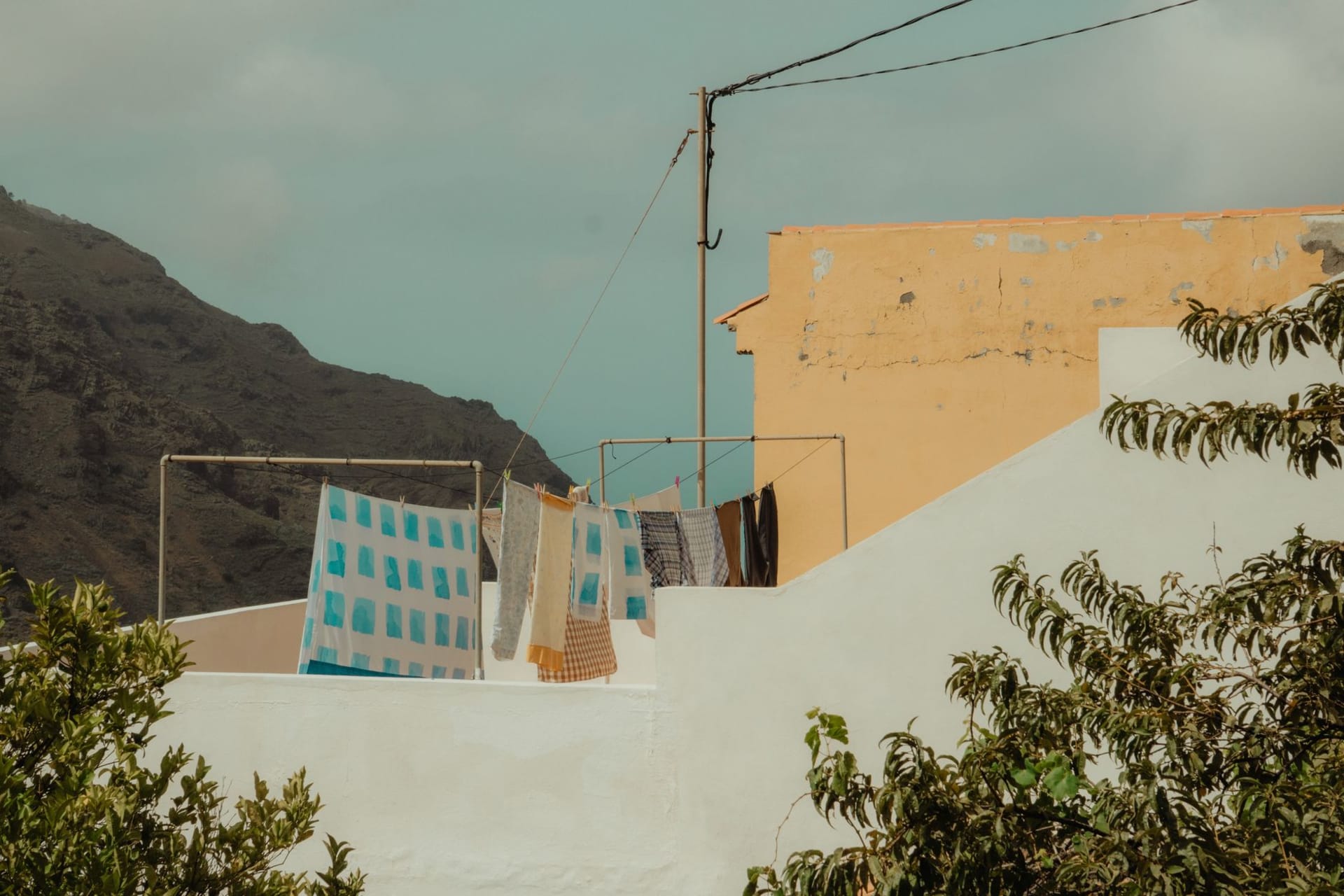
Valle Gran Rey
"Valle Gran Rey drops you into the ocean before you've finished being amazed by the valley."
The road into Valle Gran Rey is one of the finest road experiences in the Atlantic islands: a series of tunnels and hairpin bends that drop you through a vertical landscape in stages, each turn revealing a new depth of the valley, each tunnel emerging into a different quality of light. I’d driven through similar landscapes in the Moroccan Rif and in parts of Madeira, but this felt more contained, more theatrical, the cliffs rising sheer on both sides in banded layers of basalt that geologists can read like a calendar of eruptions.
The valley floor, when you finally reach it, is covered in banana plantations — the small, intensely flavoured plátanos canarios that European regulations protect under a designation of origin and that taste nothing like the commercial bananas sold everywhere else. The terraces that hold the plantations are ancient, hand-built from volcanic stone, maintained by farmers whose families have worked this valley for centuries. In the late afternoon the light catches the banana leaves and turns the whole valley a particular shade of wet gold that has probably not changed much in the past five hundred years.

At the valley mouth the village of La Playa sits on a narrow shelf of land between the cliff and the ocean. The beach is black volcanic sand, the waves are substantial — this coast faces the open Atlantic with nothing between it and the Caribbean — and the light on the water in the morning is extraordinary, a deep luminous green where the swells catch the shallows before breaking. I swam most mornings at the small natural pool beside the main beach, where the waves lose enough energy to make the swimming possible, and watched pelicans working the outer breaks in a line.
The valley earned a reputation in the 1970s and 1980s as a refuge for European alternatives — artists, hippies, people escaping something — and traces of that remain in the form of vegetarian restaurants, yoga classes advertised on hand-lettered signs, and a general atmosphere of unhurried non-judgment that is rare in the Canaries or anywhere else. The food has evolved: the best restaurant I found served Gomeran goat cheese with mojo amarillo and a glass of the local palm honey fermented into something tart and alive, and the owner turned out to have been there since 1979 and to have opinions about everything.

The Silbo Gomero — the whistling language that Gomerian farmers developed to communicate across the valley’s deep ravines — is still taught in schools here and occasionally audible when two people on opposite hillsides decide that shouting won’t carry but a whistle might. I heard it once, early on the third morning, a long descending phrase answered by a shorter one from somewhere invisible above the banana terraces. I had no idea what was being said. I stood and listened anyway.
When to go: November through April for the best conditions: warm enough to swim, cool enough to hike the valley walls, the banana harvest underway. July and August are hot and the valley fills with visitors from the ferry. Spring is excellent and often overlooked.