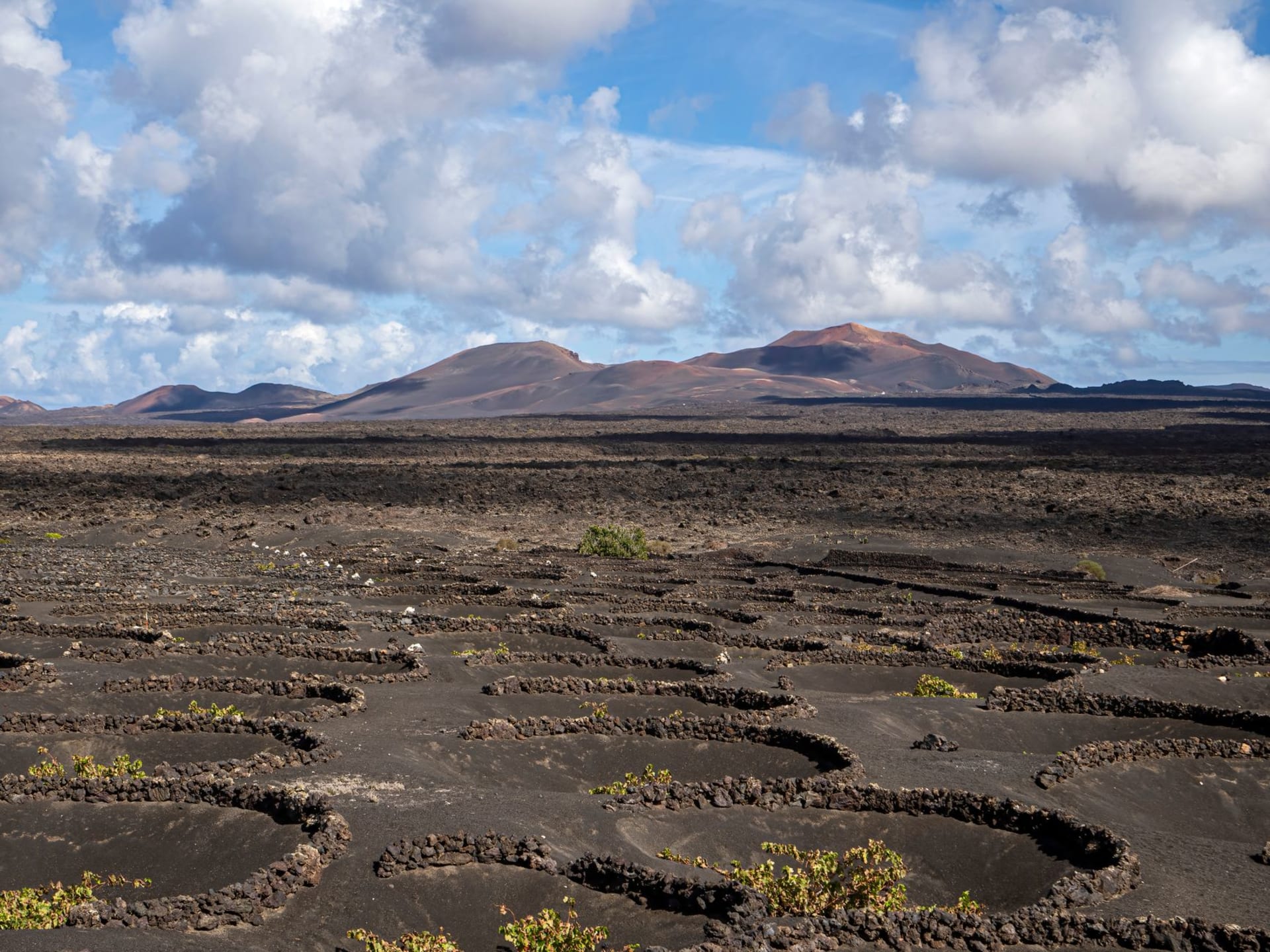
Timanfaya National Park
"The earth at Timanfaya is still hot. That fact keeps surprising you, no matter how many times you're told."
A park ranger pushed a stick into the gravel at the edge of the path and within thirty seconds it was smoking. Another poured a bucket of water into a crack in the rock and it shot back as steam with a sound like a pressure valve releasing. These are the standard demonstrations at Timanfaya, designed for tourists, and they worked on me completely. The ground here has been at temperatures between two and six hundred degrees Celsius since the Timanfaya eruptions of 1730 to 1736, a six-year volcanic event that buried eleven villages and a quarter of the island under lava, and it has not cooled since. The earth is alive underfoot in a way that has nothing metaphorical about it.
Lanzarote is the most geologically extreme of the Canary Islands, and Timanfaya is its dramatic centre. The landscape that the 1730 eruptions produced — and that subsequent smaller eruptions added to — is made of volcanic material so recent that it looks freshly poured: smooth ropy pahoehoe lava in some places, jagged aa lava in others, cinder fields the colour of dried blood, calderas with interiors so steep and dark they seem to have no bottom. Almost nothing grows here. The few plants that have colonised the edges of the lava fields look like they arrived by accident and are still considering whether to stay.
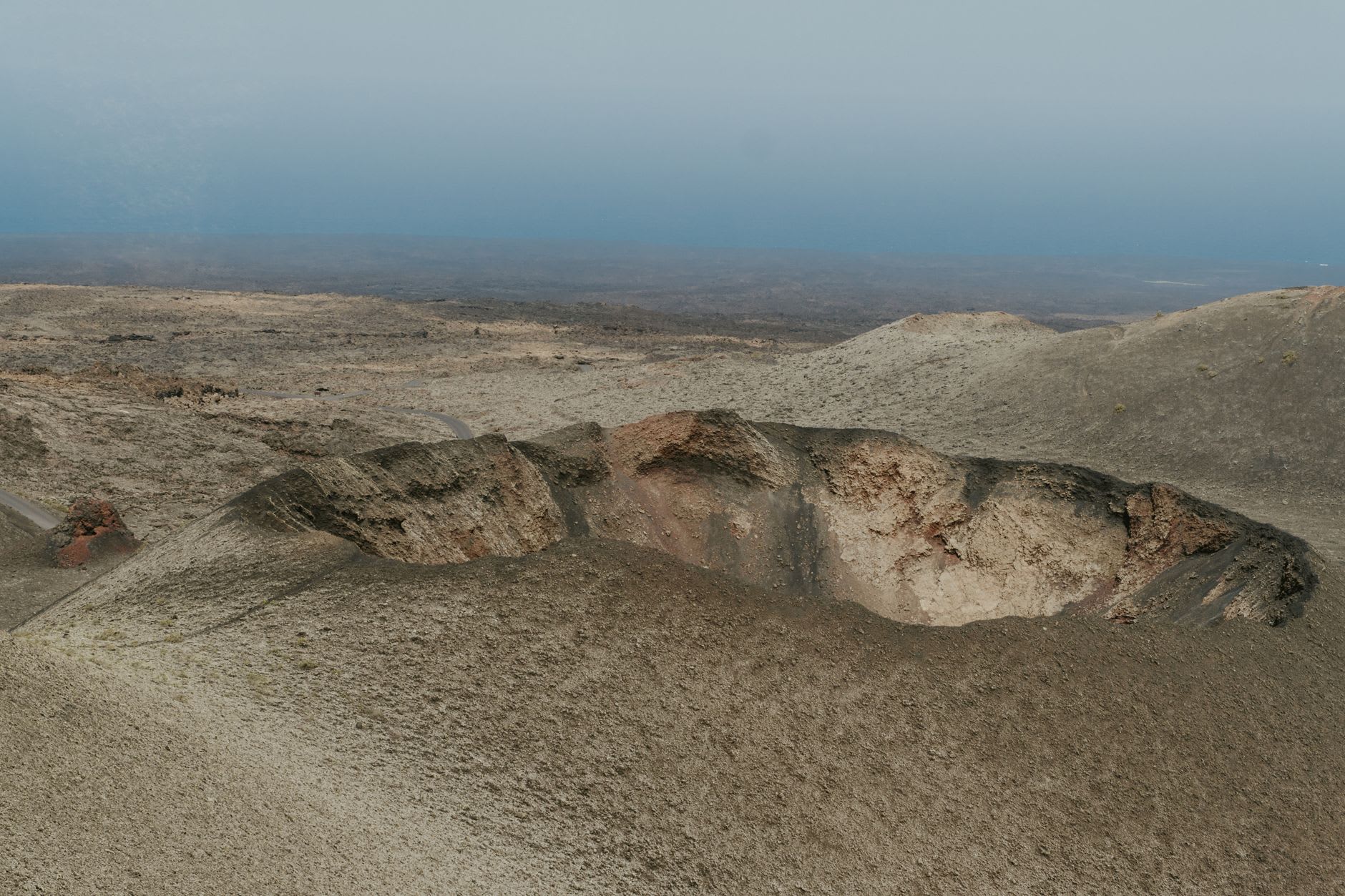
Access to the park’s interior is restricted — you can only tour it by the park’s own buses, which follow a route called the Ruta de los Volcanes through the most spectacular terrain. This is, for once, a restriction that actually improves the experience: the buses stop frequently, the guides are well-informed, and the absence of cars means you can hear the wind and your own footsteps and the occasional crack of cooling rock. On a clear day, the colours are extraordinary: fifty shades of red and black and ochre against a sky of an almost aggressive blue, the ocean visible on three sides glittering at the bottom of the cliffs.
The artist César Manrique — a native of Lanzarote who spent his career arguing that the island’s volcanic identity was its greatest asset and should be protected rather than built over — left his mark everywhere here. His most theatrical intervention is the Jameos del Agua, a lava tunnel that runs under the sea and whose interior lake contains a species of blind albino crab that exists nowhere else on earth: Munidopsis polymorpha, adapted over millennia to permanent darkness. I went at night, when the tunnel is lit and the effect is genuinely uncanny, the white crabs visible on the lake bed in the lamplight like something from a painting of the underworld.

On the way out I stopped at the El Diablo restaurant, which sits inside a volcanic crater and uses the geothermal heat — through a metal grid above a crack in the lava — to grill the food. This is architecture as geology: the cooking fuel is the earth itself. The chicken was fine. The location was unforgettable.
When to go: October through April for the clearest light and manageable temperatures. Summer is hot and the park gets crowded by midday. Go early morning — the buses start at nine — and the low-angle light turns the lava fields into something magnificent.