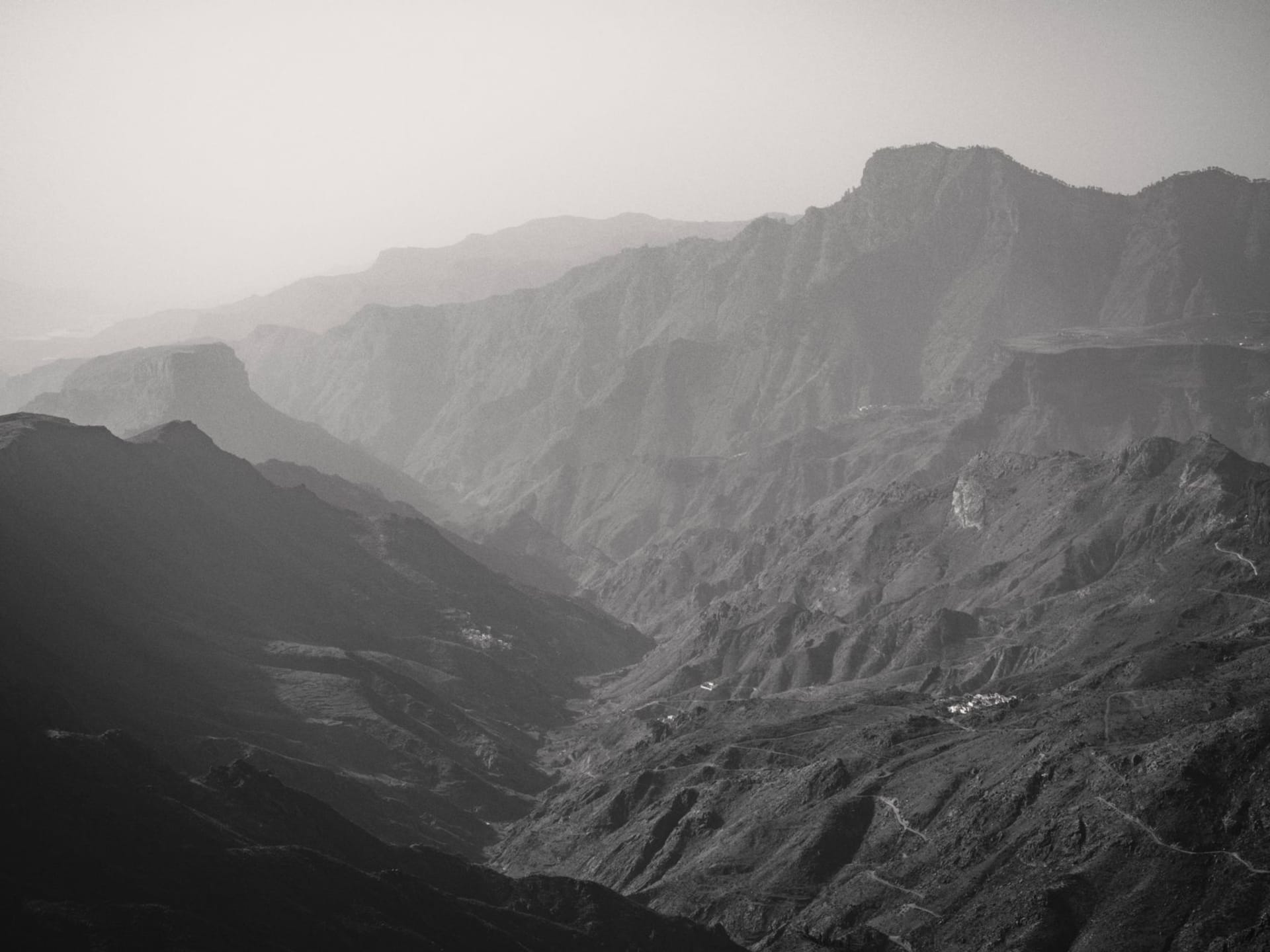
Tejeda
"Tejeda in February is the prettiest thing the Canaries do and almost no one is watching."
A mountain village on the rim of Gran Canaria's ancient caldera where almond trees bloom in February and the whole island spreads below in a panorama that feels almost theatrical.

I got to Tejeda the slow way, which is the only sensible way: driving up from the coast through a succession of microclimates, the temperature dropping two degrees for every five hundred meters, the vegetation shifting from cactus and agave to pine to almond trees arrayed in pale pink along the roadside like something from a Japanese painting. It was early February and the almonds were in full bloom — Tejeda’s famous fiesta of flowering trees that brings a small wave of visitors and then recedes, leaving the village to itself again.
The village sits on the rim of a vast ancient caldera, and the geography makes you catch your breath repeatedly. From the church square you can see Roque Nublo — a basalt monolith that stands seventy meters high on the ridgeline above the village — and Roque Bentayga, the great ceremonial rock of the indigenous Canarios, and beyond them the cloud layer over the ocean. The Canarian interior has this quality of stacking landscapes vertically until the eye gives up counting.

I stayed two nights at a small rural hotel run by a family that had been in the village for generations. The grandmother made bienmesabe — an almond cream sauce that the Canarians spread on everything from ice cream to fresh cheese — and left a small jar of it on the breakfast table each morning. The almonds for it came from their own trees. You could taste the altitude in the sauce, something mineral and slightly bitter underneath the sweetness, and I thought about how long a family has to stay in one place before the food starts tasting of the land they’re standing on.
The hike up to Roque Nublo takes about forty-five minutes from the road and arrives at a plateau below the monolith where the wind is almost always present and the view extends, on a clear day, from Teide on Tenerife to the southeast coast of the island. I was up there on a Tuesday afternoon in light cloud and had the plateau entirely to myself for an hour. A raven worked the thermals below the rock face, riding updrafts with a casualness that made the altitude seem trivial. I ate an orange and watched it.

The village restaurants serve the kind of food that has no relationship to tourist menus: kid goat slow-cooked with thyme, potatoes from the local terraces, fresh cheese with a layer of mold on the rind that means it came from somewhere real. The wine is from Bentayga, the island’s highest-altitude denomination, dry and slightly smoky and served in carafes without ceremony.
When to go: February for the almond blossom — it peaks in the second week and can be gone by the first of March. March through May for hiking weather: cool, clear, the wildflowers still in force. Summer is hot and dry; the village retreats indoors by noon.
Keep exploring
More from Canary Islands
 canary-islands
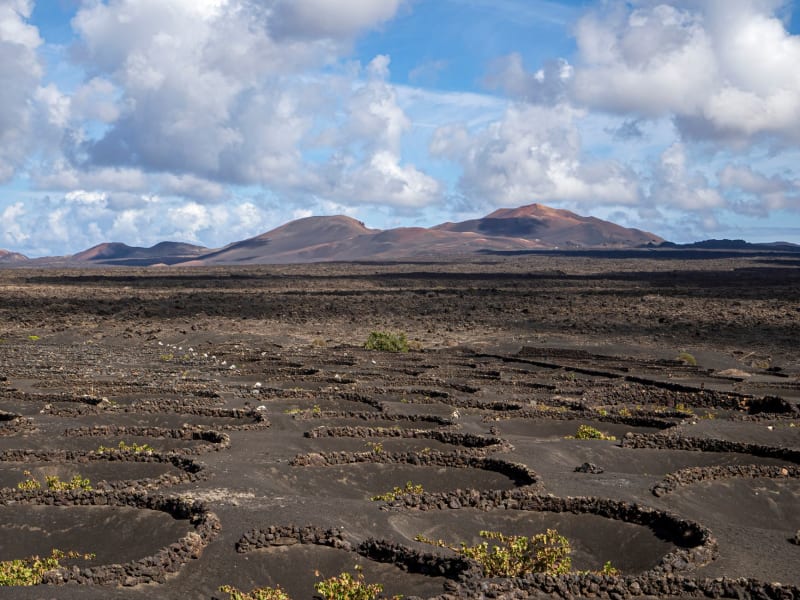
 Timanfaya National Park
Lanzarote's volcanic fire park, where the ground still burns two hundred years after the eruptions and the landscape looks assembled from another planet's geology.
Explore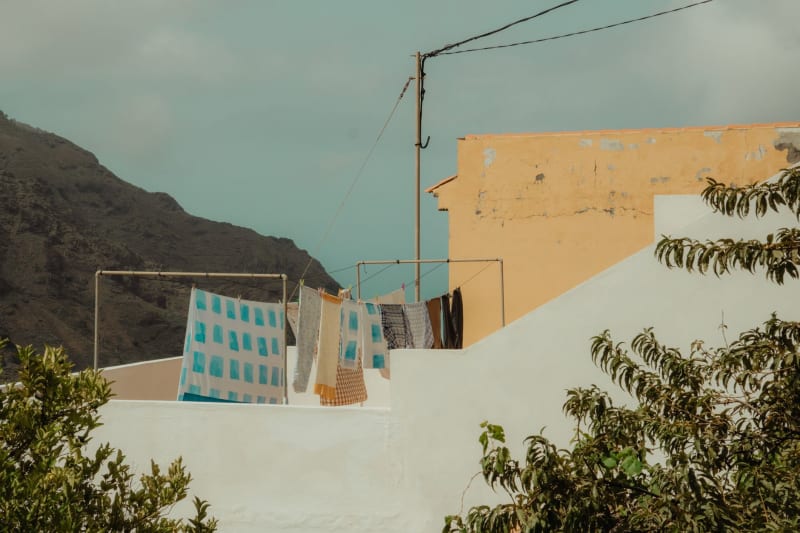 canary-islands
 Valle Gran Rey
La Gomera's deepest valley, where banana terraces cascade to a black-sand coast and the Atlantic arrives hard enough to remind you that this is the edge of Europe.
Explore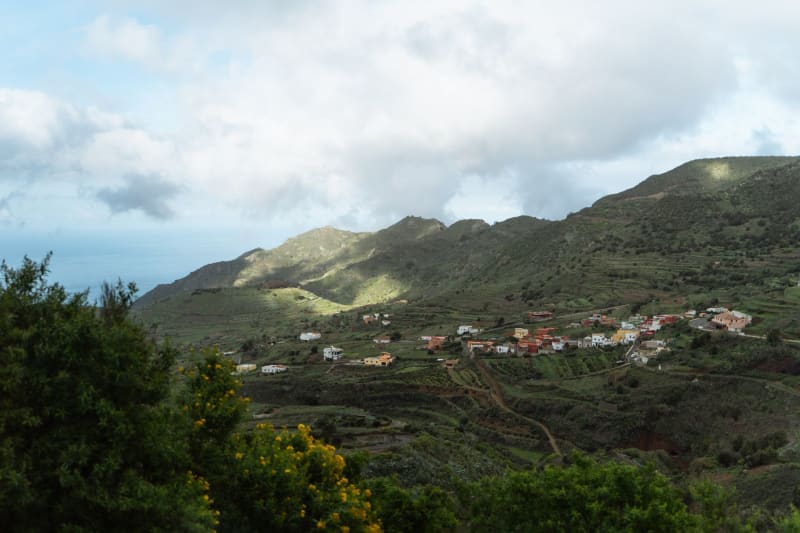 canary-islands
 Anaga Rural Park
The oldest corner of Tenerife, where laurel forest older than the ice age drips with moss and hidden beaches appear at the end of vertiginous paths.
Explore canary-islands
 Corralejo
A wind-scoured dune town on Fuerteventura's north coast where the ferry to Lobos Island leaves twice an hour.
Explore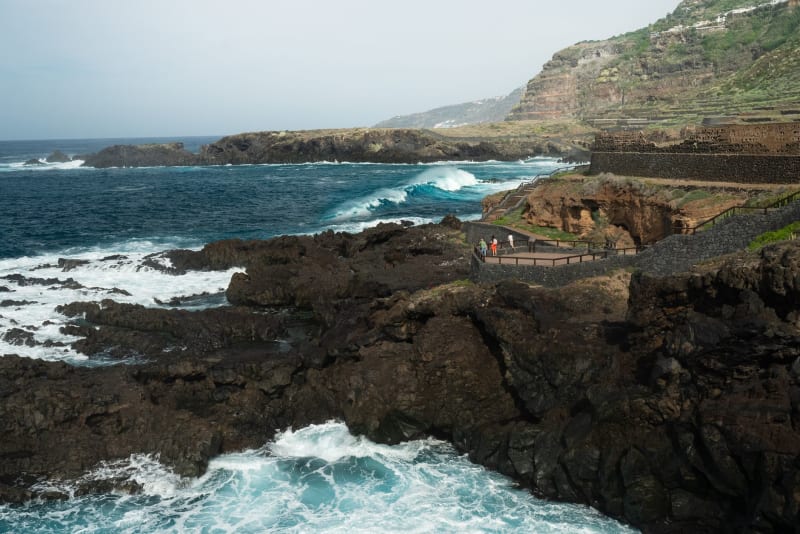 canary-islands
 El Hierro
The smallest and most remote Canary Island, a UNESCO Biosphere Reserve running partly on renewable energy, where the silence at night is the most complete I have ever heard.
Explore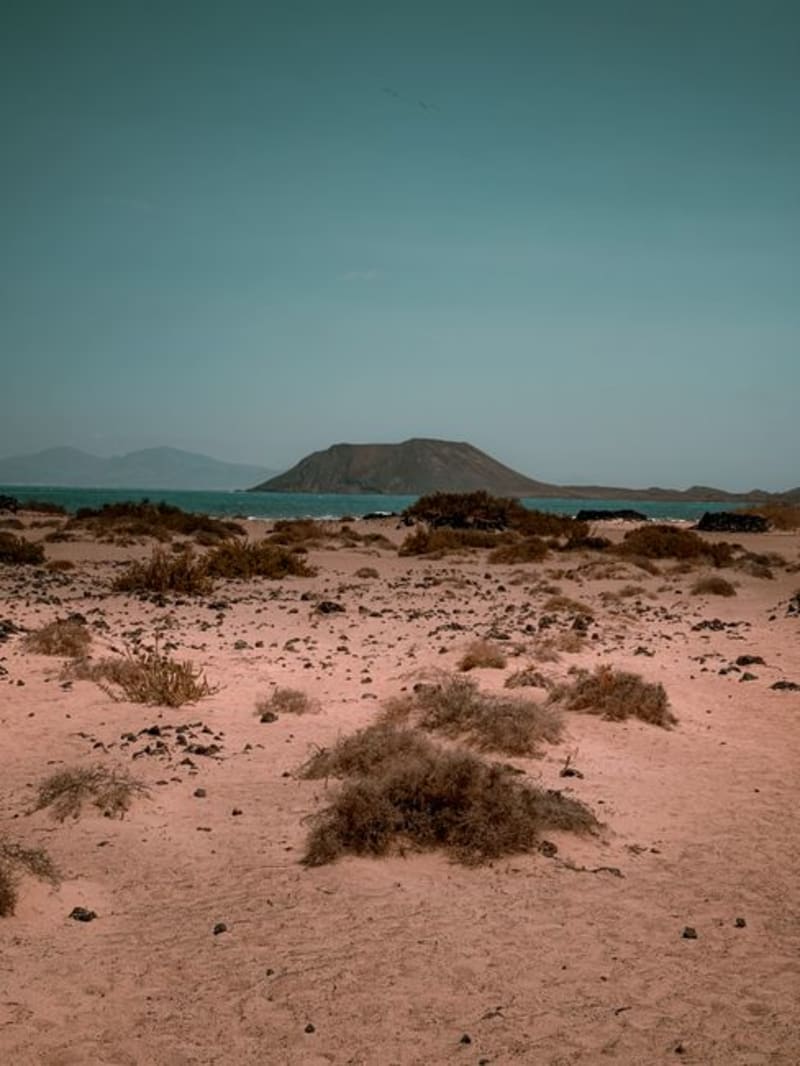 canary-islands
 Fuerteventura
A wind-scoured island of Saharan dunes and turquoise lagoons, closer to Africa than to the Europe it belongs to.
Explore