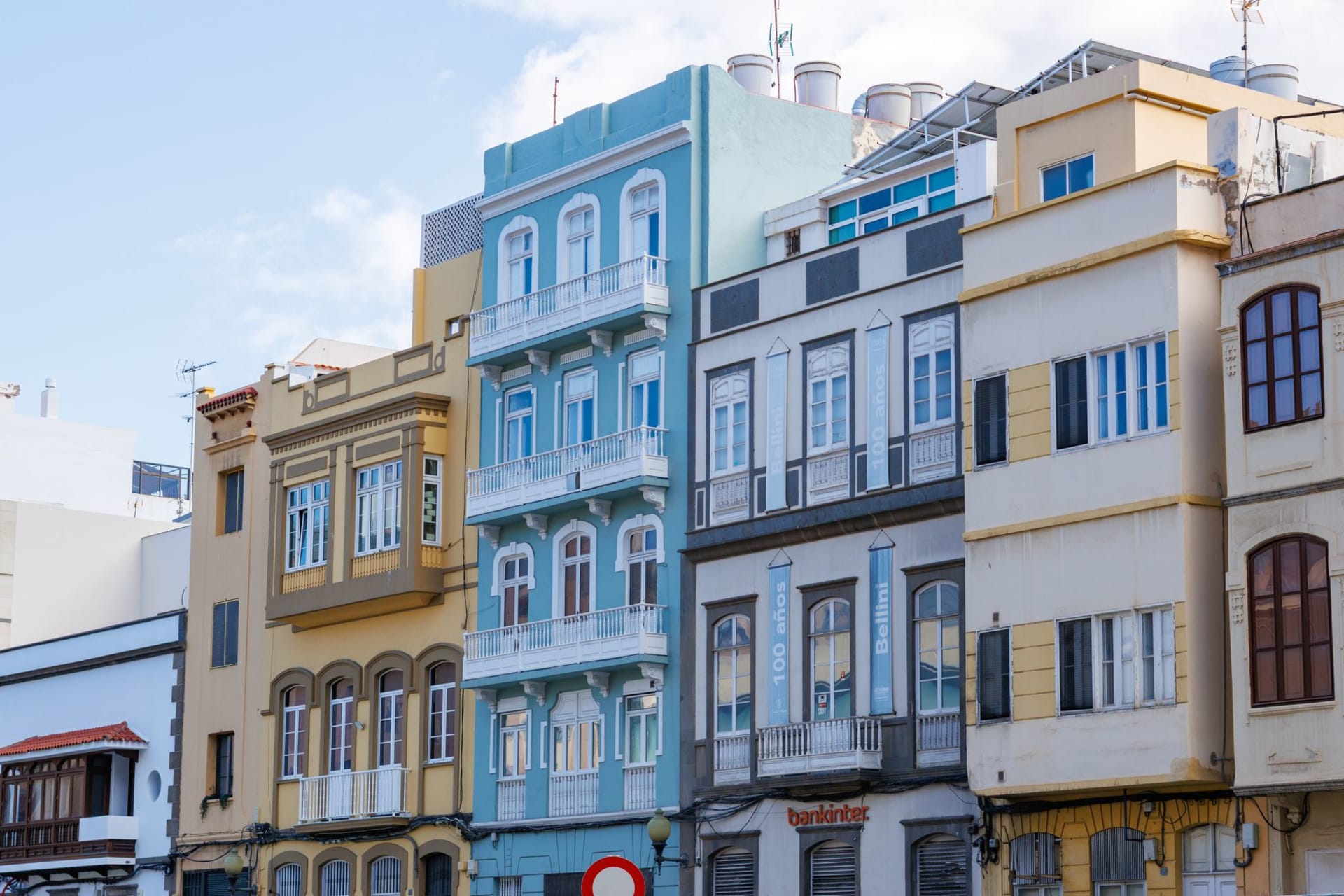
Las Palmas de Gran Canaria
"Las Palmas smells like port cities always smell — diesel, fish, something frying — and somehow it works."
I arrived by ferry from Tenerife, which is the right way to arrive in Las Palmas: the approach from the water shows you a city built on trade, its port enormous and industrial and surprisingly beautiful in the early morning when the container ships sit in the mist and the city rises white and vertical behind them. The ferry terminal is not picturesque. But ten minutes by taxi and you’re in Vegueta, where everything changes.
Vegueta is the oldest European urban settlement in the Canary Islands, and it has the kind of historical density that makes you feel slightly vertiginous walking through it. The streets are narrow and cobbled and lined with colonial mansions built in that particular Canarian style — thick stone walls, carved wooden balconies, interior courtyards with orange trees. Christopher Columbus stayed here in 1492, on his way west, and the house where he slept is now a small museum. I spent an hour in it, less interested in Columbus than in the colonial furniture and the courtyard, which had a frangipani tree in the center that had probably been there for two hundred years.
The Cathedral of Santa Ana anchors the quarter with a facade that took four hundred years to complete, which explains why it looks slightly confused about its own architectural period. Inside, the light falls through high narrow windows in shafts that move across the stone floor as the morning progresses. There’s a free art museum attached that almost nobody goes to and that contains some genuinely interesting work — Canarian modernism, mostly, portraits of fishermen and market women painted with the kind of unsentimental attention that real artists reserve for people they actually know.
Las Palmas earns its place as a city, not a resort. The Triana neighbourhood has bookshops and fabric shops and a covered market where the stalls sell smoked paprika and fresh goat cheese and the honey that bees make from the island’s endemic flowers. I ate at a small restaurant on Calle Mayor de Triana where the day’s fish had been written on a blackboard and the woman running the kitchen came out to explain that the cherne — wreckfish — had come in that morning and she’d cooked it simply, with olive oil and local potatoes, because that was the only thing to do when the fish was this fresh.
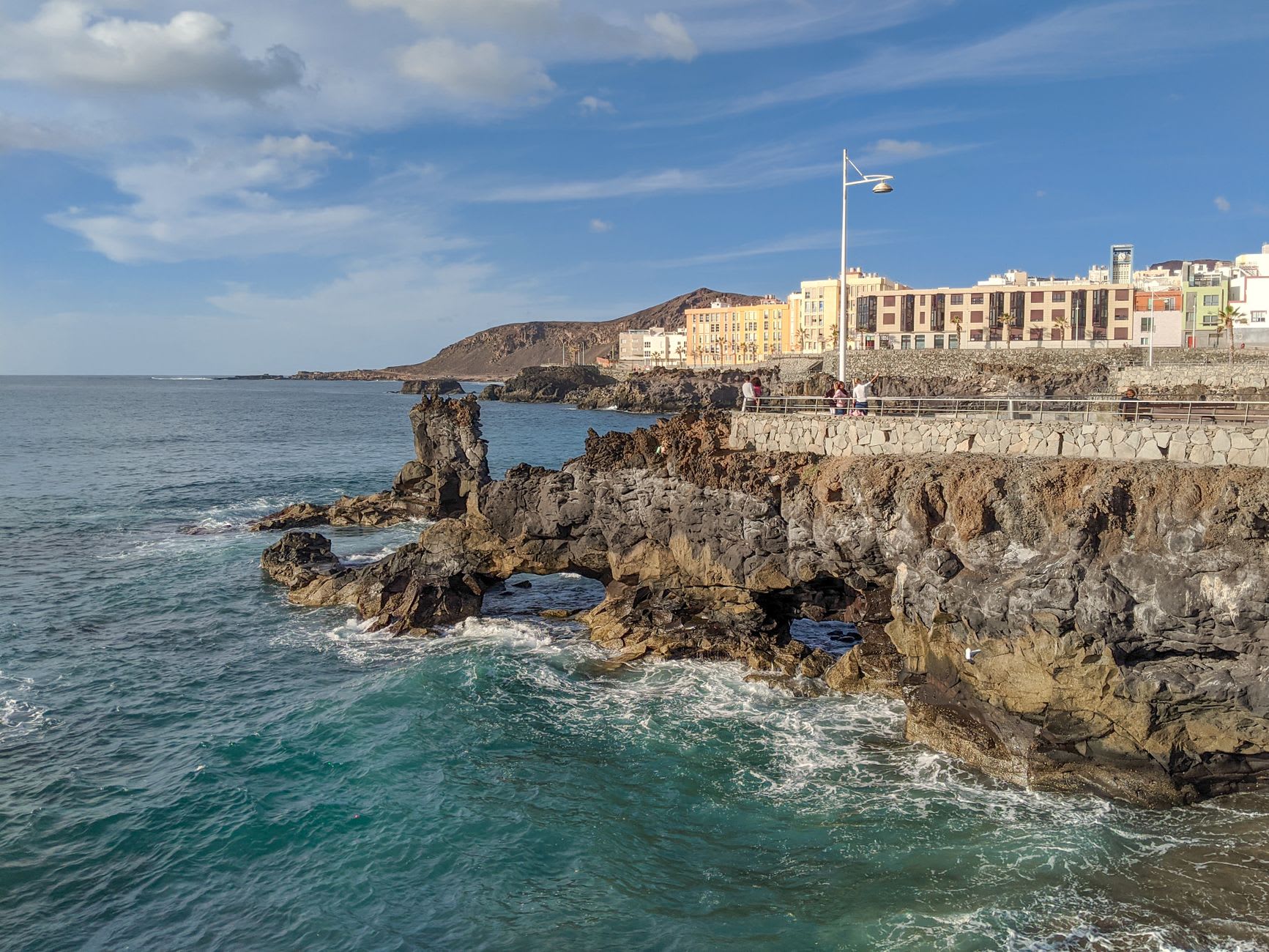
The city’s beach — Playa de Las Canteras — is one of the better urban beaches in Europe, a three-kilometer arc of golden sand in a natural bay protected by a reef, where the water is calm enough for swimming year-round. But I found myself more drawn to the evening paseo along the promenade, where the locals come out in force around seven and the city reveals its essential character: African and Spanish and something else entirely, a port city that has absorbed centuries of arrivals and departures and turned them into something that doesn’t belong to any single category.
When to go: November through April for the best weather and the Carnival in February, which is one of the most elaborate in Spain. Summer is warm but brings the calima — a hot dusty wind off the Sahara — which coats everything in a fine reddish dust and turns the sky orange for days.