El Hierro
"El Hierro is the island you find when you have finished finding all the other islands."
I took the small propeller plane from Tenerife because the ferry takes three hours and I was already running late for the only reason that matters on El Hierro: the light. The island has 11,000 people, two main towns, one road that loops the perimeter, and a quality of isolation that you feel as soon as the plane climbs above the cloud layer and you look down at the ocean in every direction and see nothing for fifty miles. The island sits at the southwestern tip of the Canary archipelago, the last landmass before the Atlantic opens to the Americas, and until the seventeenth century cartographers used it as the prime meridian — the zero point from which all longitude was measured.
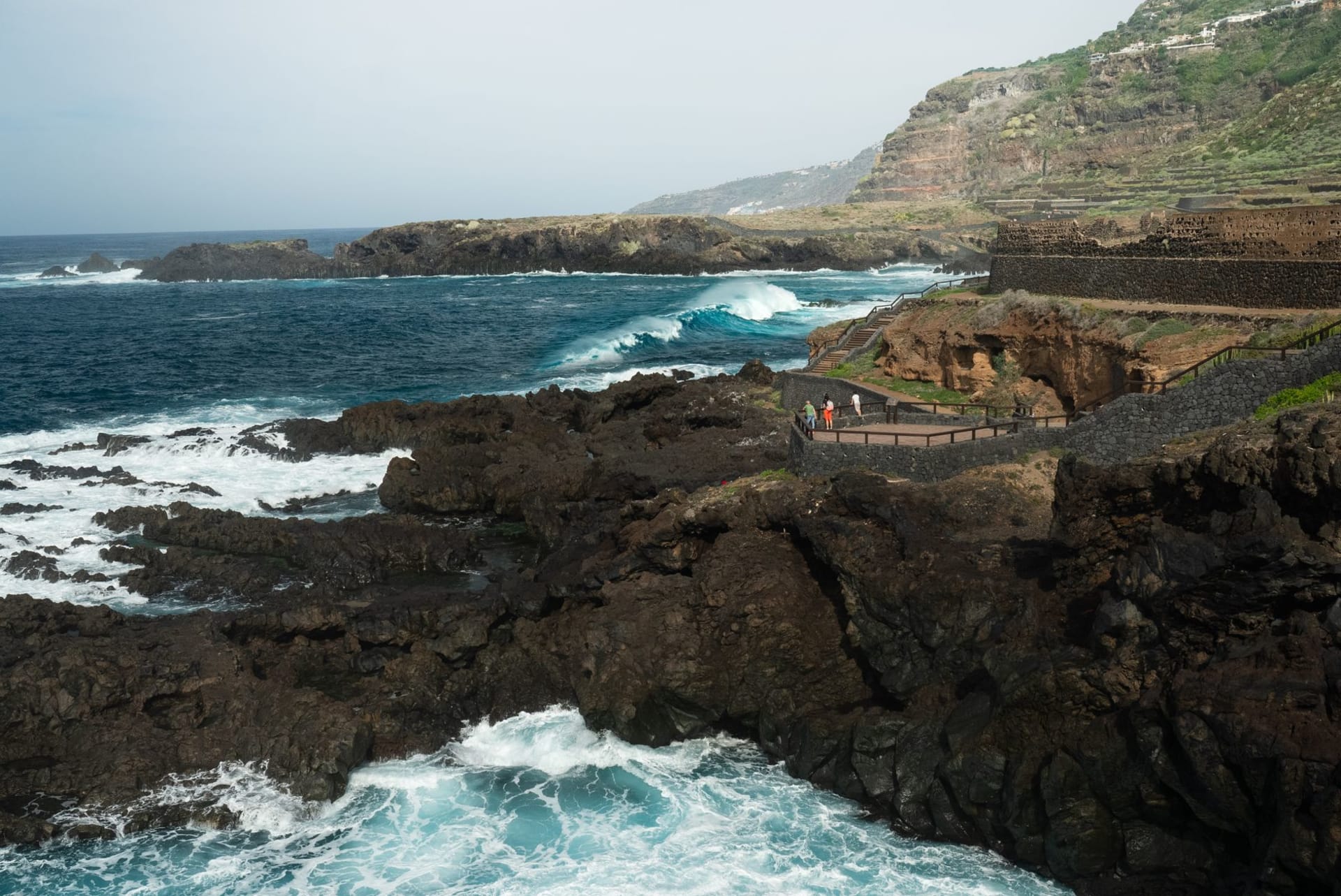
The landscape shifts rapidly because El Hierro is small enough that you can be in three different microclimates in thirty minutes. The north coast, catching the trade winds and the cloud, supports dense laurisilva forest and the ancient sabinar — a forest of Canarian junipers that have been shaped by constant wind into horizontal sculptures, their trunks and branches reaching sideways and downward as if in permanent evasion of the sky. The southern coast is the inverse: dry, volcanic, black rock platforms dropping into water so clear and turquoise it looks artificially coloured.
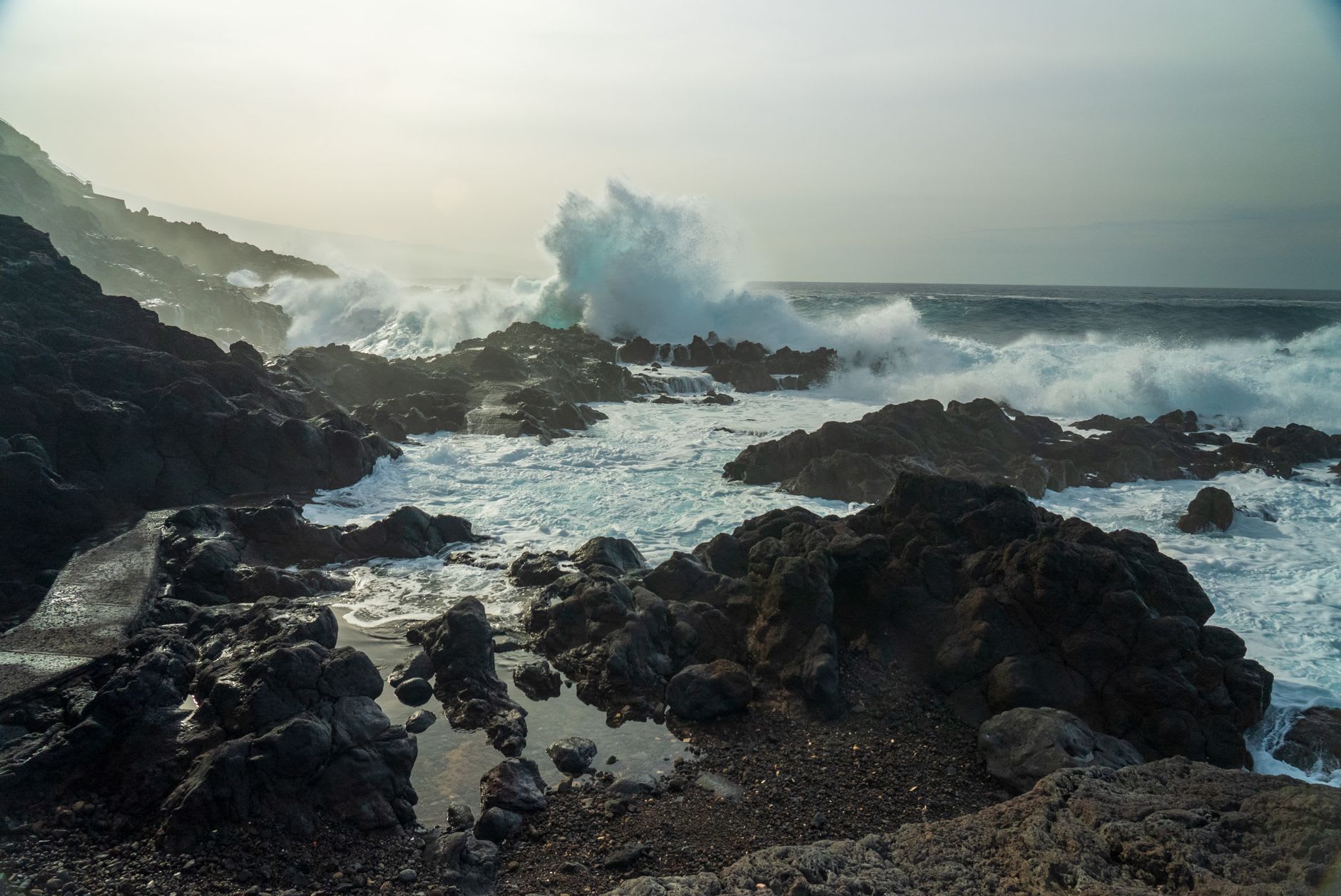
The natural pools at La Maceta and the Charco Azul on the north coast are where I spent most mornings. They are not pools in any constructed sense — they are depressions in the lava platform that fill with Atlantic water at high tide, creating enclosed swimming areas where the water runs a colour between green and blue that I don’t have a word for. You lower yourself in from the rocks and float in water at exactly the right temperature, and the only sounds are the waves hitting the outer platform and whatever birds are working the cliff above. On my third morning I swam for an hour without seeing another person.
El Hierro’s wines surprised me most. The island’s vineyards grow in the volcanic soil at altitude, mostly listán negro and verijadiego — varieties found almost nowhere else — producing wines that are mineral and aromatic and almost nothing like what most people mean when they say Canarian wine. I bought a bottle at a cooperative in Frontera and drank most of it on the terrace of my rental house above Valverde, watching the clouds build and dissipate over the caldera of El Golfo in the colours of a painting that was trying too hard and working anyway.

The island runs a significant portion of its electricity from a hybrid wind-hydro system that uses surplus wind energy to pump water uphill and then releases it through turbines when wind is insufficient. On some days El Hierro generates one hundred percent of its electricity from renewable sources. This is not trivia — it is a kind of stubbornness about self-sufficiency that seems entirely in character with an island that spent centuries being the last edge of the known world.
When to go: Spring and autumn are ideal. Winter can be rough on the exposed north coast. Summer brings the best swimming conditions at the natural pools but also the only crowds the island gets. Whenever you go, book accommodation well ahead — there aren’t many options and the island fills faster than you’d expect.