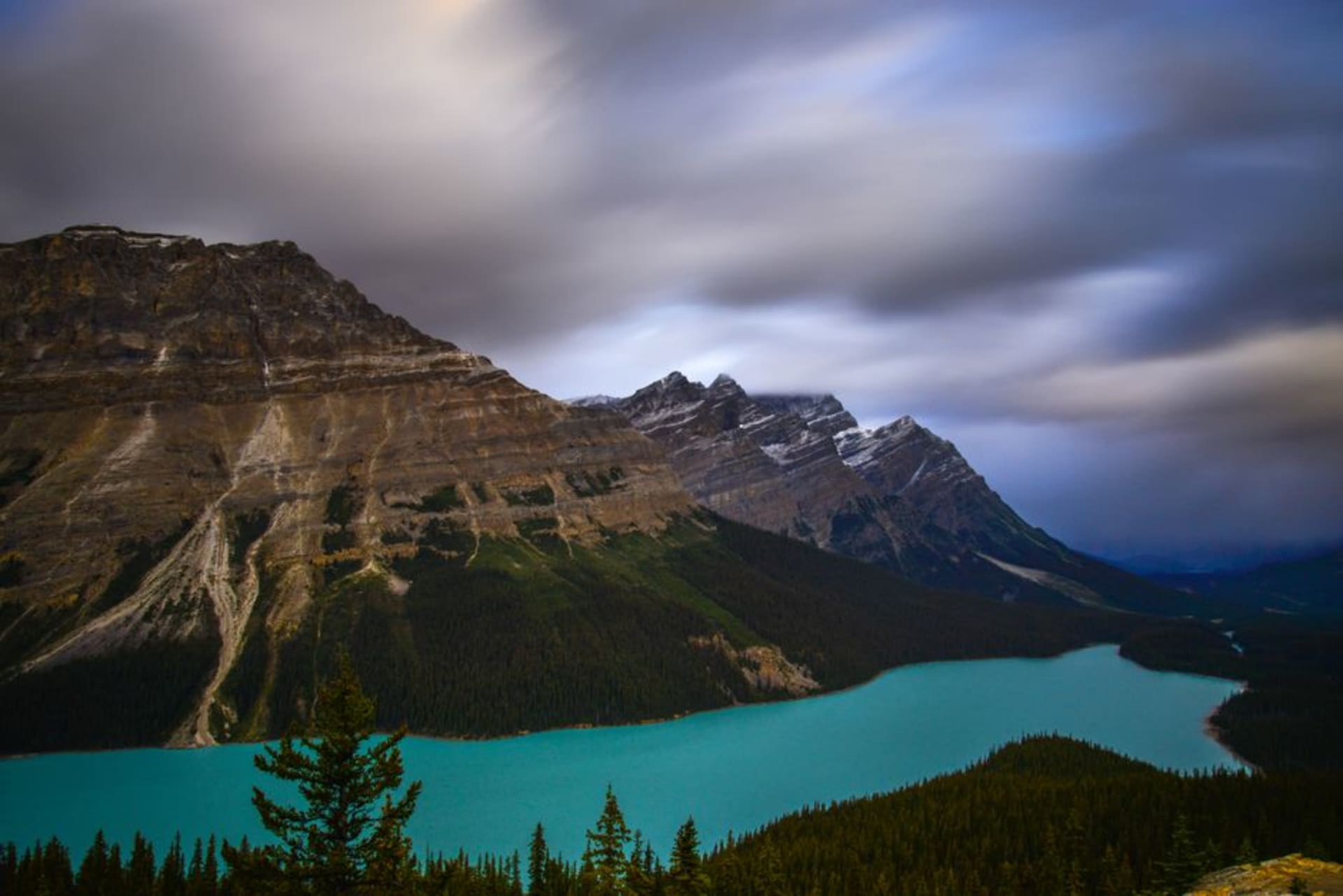
Peyto Lake
"I've never trusted a color that much until I saw it holding still in a lake."
A glacier-fed lake off the Icefields Parkway whose impossible turquoise still stops me mid-sentence every time I picture it.
Lia and I almost drove past the turnoff. We’d been on the Icefields Parkway since sunrise, stopping every few kilometers because some new ridge or glacier kept demanding attention, and by the time the sign for Peyto Lake appeared I was running on gas station coffee and mild disbelief that a road could look like that for so long. We parked, grabbed the trail, and started up toward the Bow Summit lookout without much expectation — I remember telling Lia it was probably just another pretty lake. I was wrong within about eight minutes of walking.
The trail climbs gently through spruce and fir, and the lake stays hidden until almost the last turn, which somehow makes it worse. Or better. You come around the bend and there it is, thirty meters below, a sheet of blue so saturated it looks like someone spilled paint into the valley. That color comes from glacial rock flour — fine sediment ground up by the Peyto Glacier and suspended in the meltwater — and it peaks in the height of summer when the snowmelt is running hardest. We’d timed it, unintentionally, for late July, and the lake was doing exactly what it’s famous for.
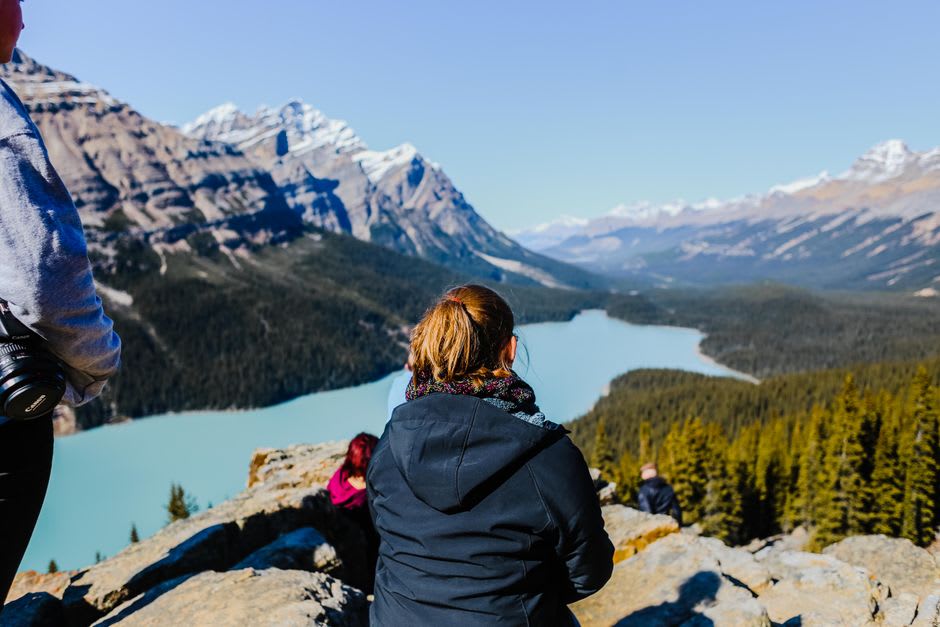
From the lookout, people kept pointing out the shape — a wolf’s head, snout pointing toward the far shore, ears formed by two little bays. I couldn’t unsee it once Lia traced it in the air with her finger. The lake sits at about 1,860 meters, fed by the Peyto Glacier up on the Wapta Icefield, and it’s named for Bill Peyto, one of the old trail guides who became a park warden here in the early 1900s — the kind of name that gets attached to a place quietly, without ceremony, and then just stays. I liked that better than some engineered monument. A guy who walked these valleys for a living got a lake that looks unreal.
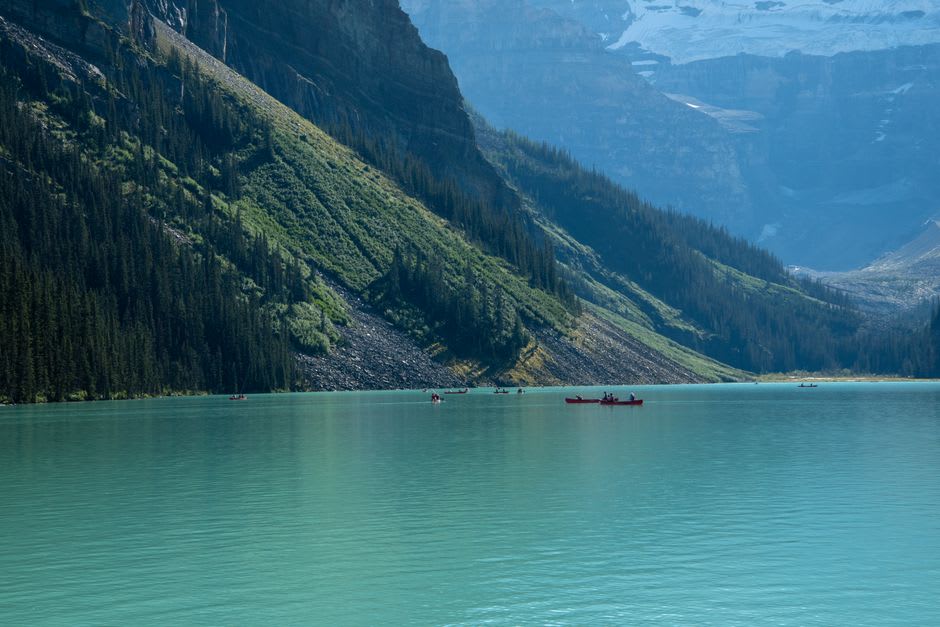
We stayed longer than planned, eating trail mix on a rock and watching the color shift slightly as clouds moved over the water. It’s one of those places where photos genuinely undersell it — I looked at mine that evening and thought the saturation had to be a lie, except I’d been standing right there.
When to go: Aim for late June through August — that’s when the meltwater is at its heaviest and the lake shows off the brightest, almost unreal turquoise it’s known for.