Americas
Canadian Rockies
"I drove around a bend on the Icefields Parkway and had to pull over to stop laughing."
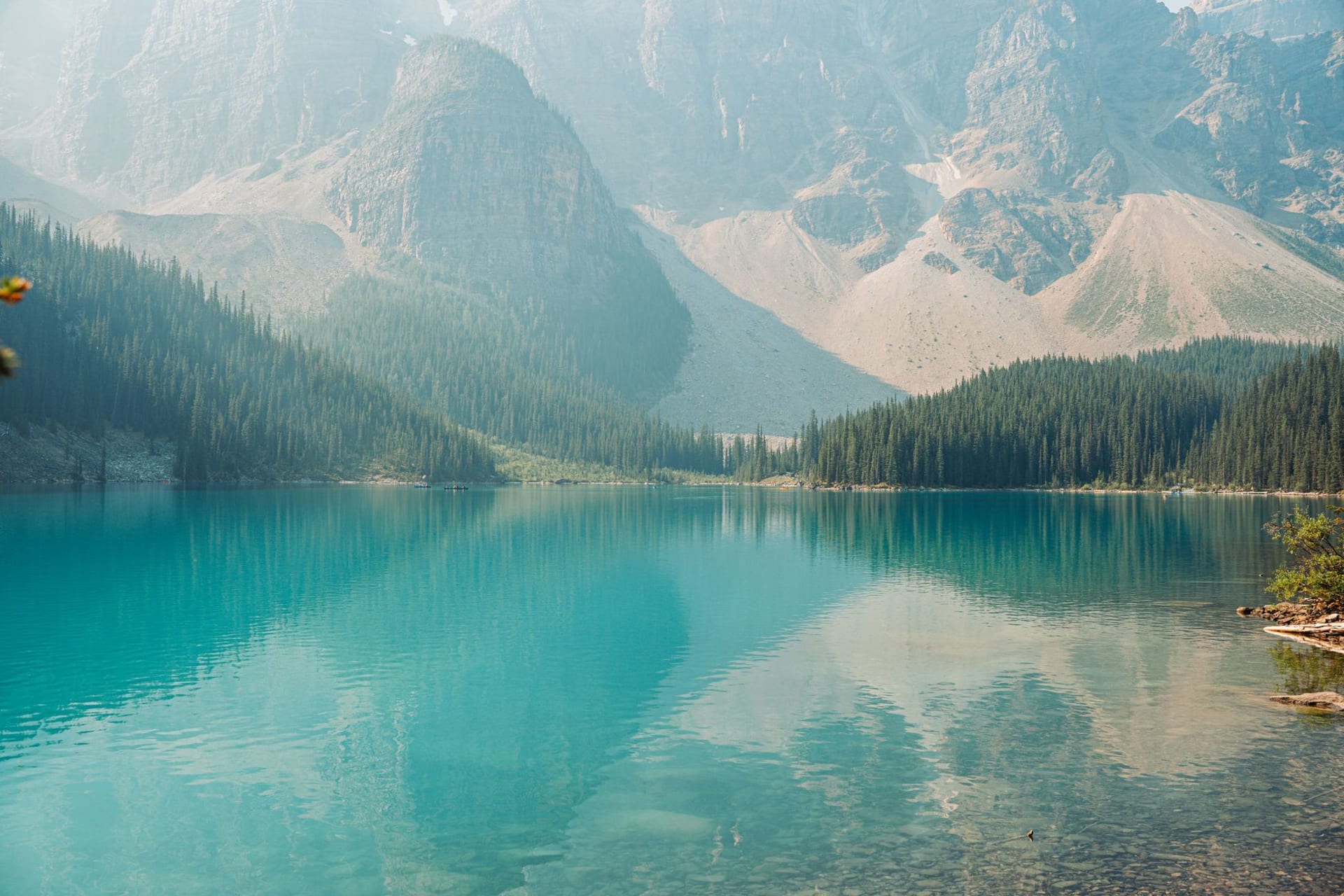
The first time I saw Lake Louise, I genuinely thought something was wrong with my eyes. That shade of turquoise — the glacial flour suspended in meltwater doing things to light that physics should probably prohibit — is so aggressively, almost offensively beautiful that your brain refuses to file it under “real.” I stood there for a long time. A Japanese tour group arrived, took thirty seconds of video, and left. I stayed another forty minutes and still didn’t feel like I’d earned the right to move on.
The Canadian Rockies sit in Alberta and British Columbia, and the corridor between Banff and Jasper — the Icefields Parkway — is one of the great drives on earth. Not one of the great “scenic drives” in the brochure sense. I mean a road where you will pull over involuntarily, repeatedly, because something impossible has appeared again: the Columbia Icefield, a leftover from the Pleistocene spilling down between peaks; Peyto Lake, shaped like a wolf’s head and coloured like an old poster of the Aegean; Athabasca Falls, which is not particularly tall but is furious in a way that makes you back up a step. I drove it in late September when the larches had turned gold. I cried twice and I’m not going to apologize for that.
Banff townsite gets crowded — genuinely, unpleasantly crowded in July and August, with the parking lots at Moraine Lake so full they require a shuttle and a lottery mindset. But Jasper, further north, is quieter and somehow even more dramatic. The wildlife density up there is serious: I watched a black bear eat berries ten meters from the road for twenty minutes while traffic patiently waited. In the evenings, elk wander through the townsite like they’re checking Airbnb listings. The dark sky preserve around Jasper is real — on a clear night without a moon, the Milky Way is not a metaphor.
When to go: Late June through mid-September for accessible roads and wildflower meadows. September is objectively the best month — crowds thin, temperatures cool, larch season turns entire valleys amber-gold. Skip the Canada Day and August long weekend crowds if you value your sanity. Winter (December–March) offers ski resorts at Banff, Lake Louise, and Marmot Basin, plus a different kind of silence that gets under your skin.
What most guides get wrong: They send you to Moraine Lake at dawn like it’s a pilgrimage and then wonder why you feel like you’re in a stadium. The Rockies reward wandering off the obvious loop. Johnston Canyon in October when the crowds are gone. The Plain of Six Glaciers hike above Lake Louise, which most people skip because the teahouse at the lake already felt like enough. Maligne Lake in Jasper, Spirit Island at golden hour with almost nobody there. The places that make the postcards are worth seeing — but they’re the floor, not the ceiling.