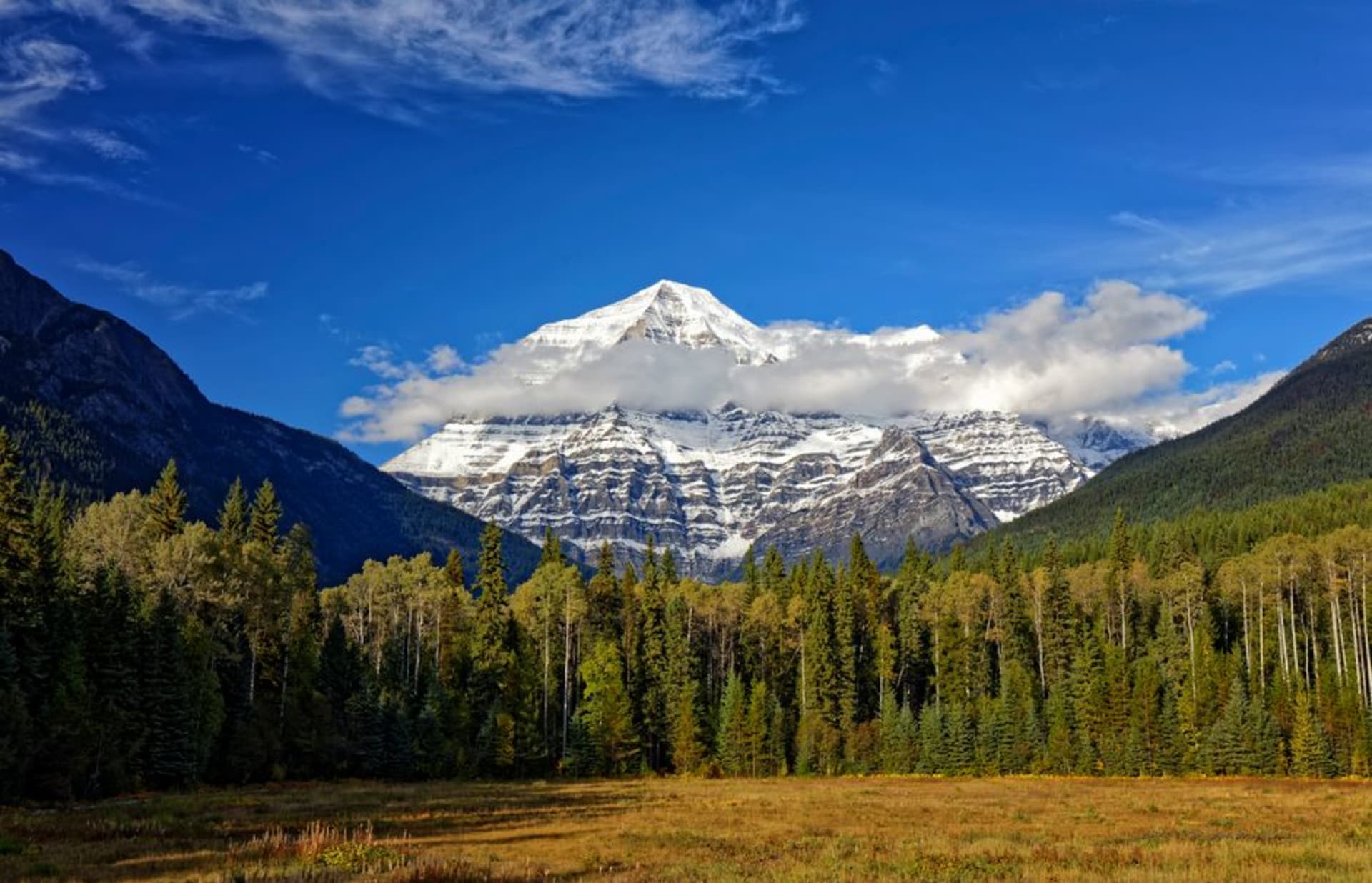
Mount Robson Provincial Park
"We waited three days for that mountain to show its face, and it was worth every one of them."
A glacier-hung giant that hides in its own clouds two-thirds of the year, and the trailhead for one of Canada's great backcountry walks.
We almost didn’t get to see it. Lia and I pulled into the visitor centre parking lot at Mount Robson with a forecast that promised nothing but grey, and the ranger there told us straight away not to get our hopes up — the peak, she said, is wrapped in cloud something like two-thirds of the year. At 3,954 meters it’s the highest point in the entire Canadian Rockies, and apparently it makes its own weather, dragging moisture off the Pacific side and holding onto it like a secret. We stood in that parking lot for a good twenty minutes just staring up at a wall of grey, waiting.
Then, on our second morning, it happened. We’d started early on the Berg Lake Trail, which begins right there at the park and stretches 22 kilometers into the backcountry, and somewhere past Kinney Lake the clouds tore open for maybe ninety seconds. I saw the whole face of Robson, glacier ice catching the light, and I actually stopped walking and just said “oh” out loud. Lia was already digging for her camera. It closed back up almost immediately, but that glimpse recalibrated the whole trip — I understood then why people keep coming back to this one mountain.
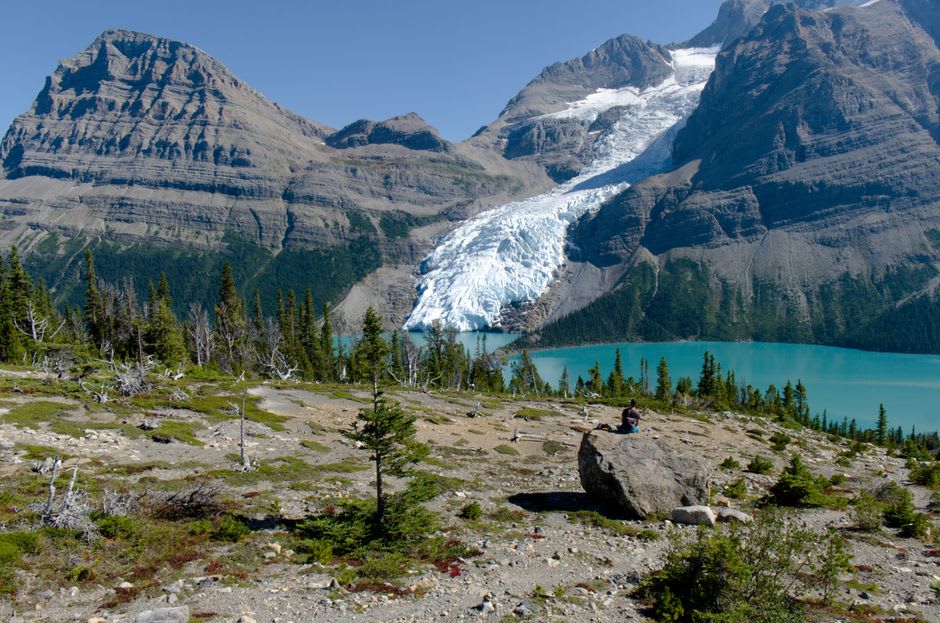
We didn’t do the full 22 kilometers that trip — we’re planning to go back and do the whole thing to Berg Lake, where the Berg Glacier calves directly into the water, chunks of ice dropping in with a boom you can apparently hear from camp. What we did do was push through Whitehorn Basin before turning back, and even that stretch felt enormous, wildflowers up to my knees and the Fraser River running cold and fast beside the trail. It’s strange to think that river, which cuts all the way through British Columbia to the Pacific, starts right here as glacial melt in this one park. We filled our bottles straight from a side stream and Lia joked it was the freshest water either of us would ever drink, and she wasn’t wrong.
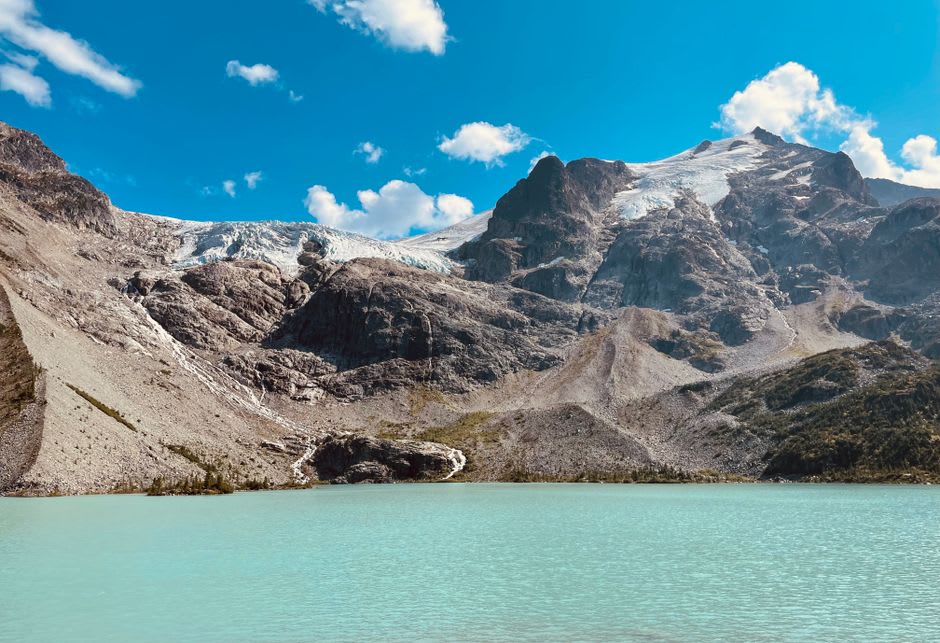
Knowing that Mount Robson sits within the same UNESCO World Heritage designation as Banff, Jasper, and Yoho made it feel less like a solo detour and more like a piece of something much bigger — a whole protected spine of mountains that’s been recognized as one system since long before any of us were born. The park itself dates back to 1913, which is easy to forget when you’re standing there feeling like the first person to ever see it. We camped near the trailhead that second night, ate reheated noodles out of the pot, and kept craning our necks every time the wind moved the clouds, hoping for one more look.
When to go: aim for July through September if you want any real shot at clear skies and an open backcountry trail — earlier in the season the upper sections can still be under snow, and Robson keeps its clouds close no matter what the calendar says.