
Moraine Lake
"The old twenty-dollar bill had this view on it. Seeing it in person, I understood why they'd put it on money."
The road to Moraine Lake closes every winter and opens each spring with the kind of fanfare that suggests the lake itself has seasonal opinions. I drove it in late September, on a morning cold enough that my breath fogged the windshield, and pulled into a parking lot that held maybe twelve cars. The crowds that define this place in August — the shuttles, the lottery systems, the five-hour waits — had all evaporated with the first frost. What remained was the lake and the Ten Peaks and a wind that smelled of snow even though none had fallen yet.
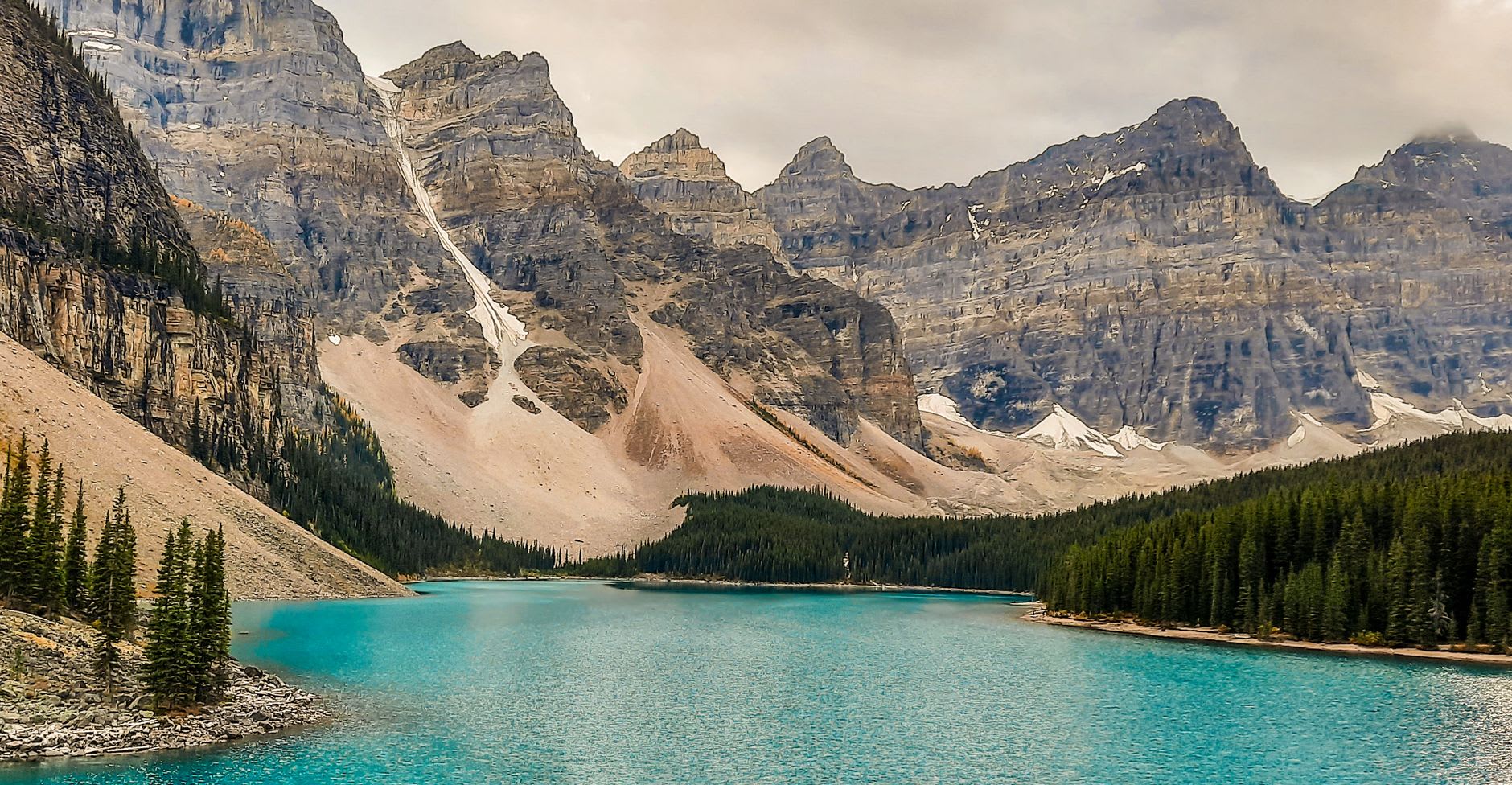
The Rockpile is the viewpoint — a small moraine of boulders piled at the lake’s edge that you climb in three minutes and from which the famous photograph takes itself almost automatically. Every angle is the right angle. The Ten Peaks — Wenkchemna, meaning “ten” in the Stoney Nakoda language — form a wall of grey limestone and ice across the far end, their reflections in that intense blue-green water completing a composition so geometrically perfect it seems designed. The old Canadian twenty-dollar bill carried this image. Standing on the Rockpile, I understood why a country would want to put a lake on its money.
The Larch Valley trail above Moraine Lake is the reason to come in September specifically. The larch is the only conifer that loses its needles, and before it does so it turns the colour of old brass. At elevation, entire slopes go golden in a matter of days, and hiking up through the subalpine forest in the third week of September feels like walking through a slow fire that isn’t burning anything. I ate lunch at Larch Valley looking back down at the lake below — a blue so vivid against the gold of the trees and the grey of the peaks that I checked twice whether my sunglasses were doing something strange.
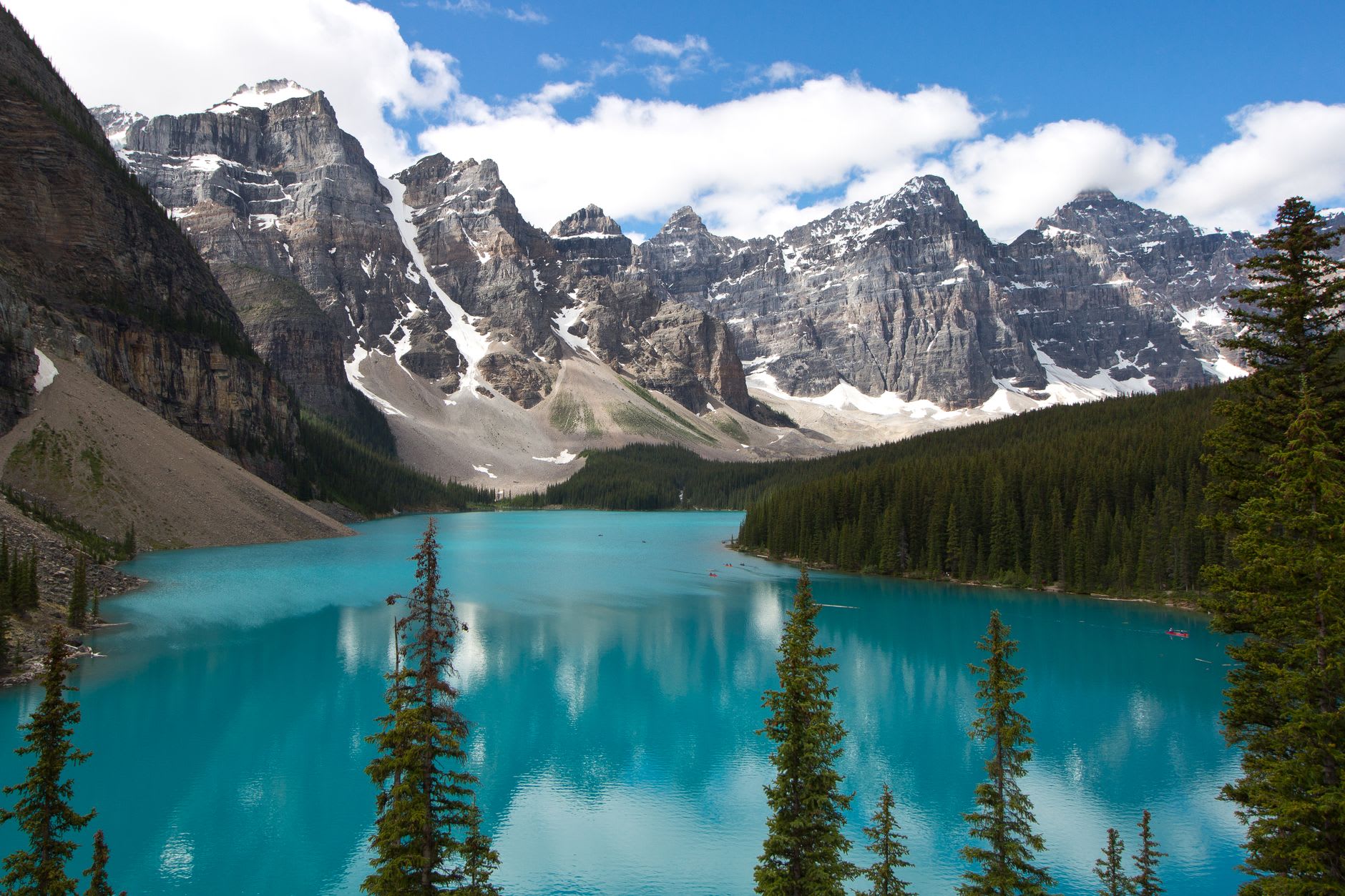
The canoe rentals on the lakeshore offer what might be the best perspective: from the water, the peaks seem to close in overhead, the scale more immediate, the colour of the water even harder to explain. The paddles dip in and come up dripping a blue-green that looks tinted. Mornings on the lake when the wind hasn’t arrived yet, the surface is so still that the reflection of the Ten Peaks is indistinguishable from the peaks themselves, and you get briefly confused about which direction is up.
When to go: September, specifically the third and fourth weeks, when the larches turn and the crowds have cleared. The road typically opens in late May or June but the summer crowds are substantial — the Parks Canada shuttle system is required, and early booking is essential. If you’re going in summer, the 5:30 a.m. shuttle is not a joke.