Yoho National Park
"Yoho means 'awe' in Cree, and it's the rare place name that undersells the thing it's naming."
A compact, fossil-rich park next door to Banff, where a 500-million-year-old sea bed, an engineering marvel of a railway, and one of Canada's tallest waterfalls all sit within an hour of each other.
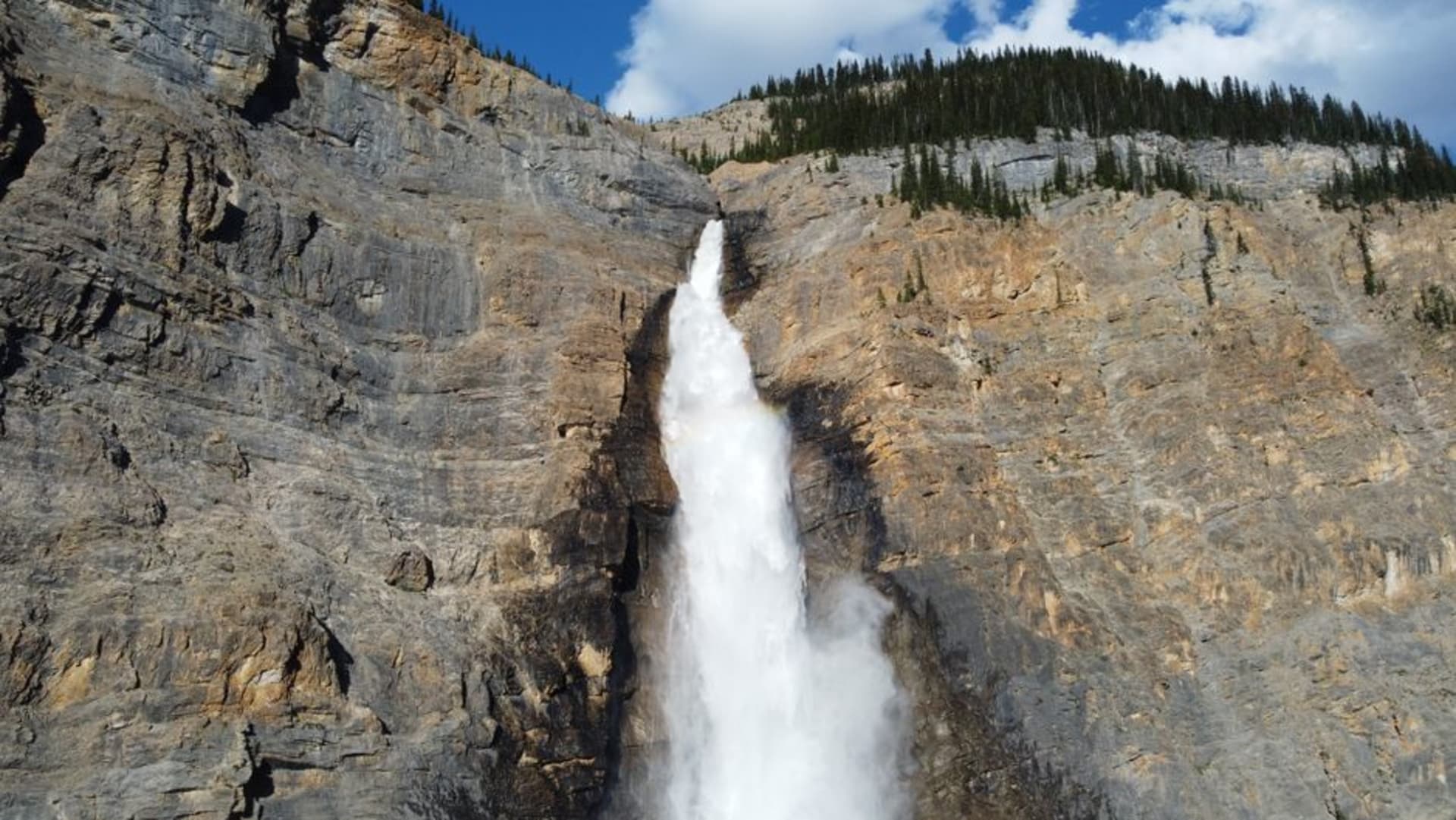
Yoho National Park sits just across the Continental Divide from Banff, small enough that you could plausibly see its headline sights in a single long day, and I mean that as praise rather than a knock against it — this is a park that doesn’t waste your time getting to the good part. I drove in off the Trans-Canada from the Alberta side, and within twenty minutes of crossing into British Columbia I was standing at the base of Takakkaw Falls, watching water drop 254 metres from a hanging glacier valley above, the spray reaching me a good hundred metres back from where the falls actually hit the rock. “Yoho” is a Cree exclamation of awe and wonder, and it is, refreshingly, an entirely accurate piece of branding.
An Ancient Sea Bed, Cracked Open
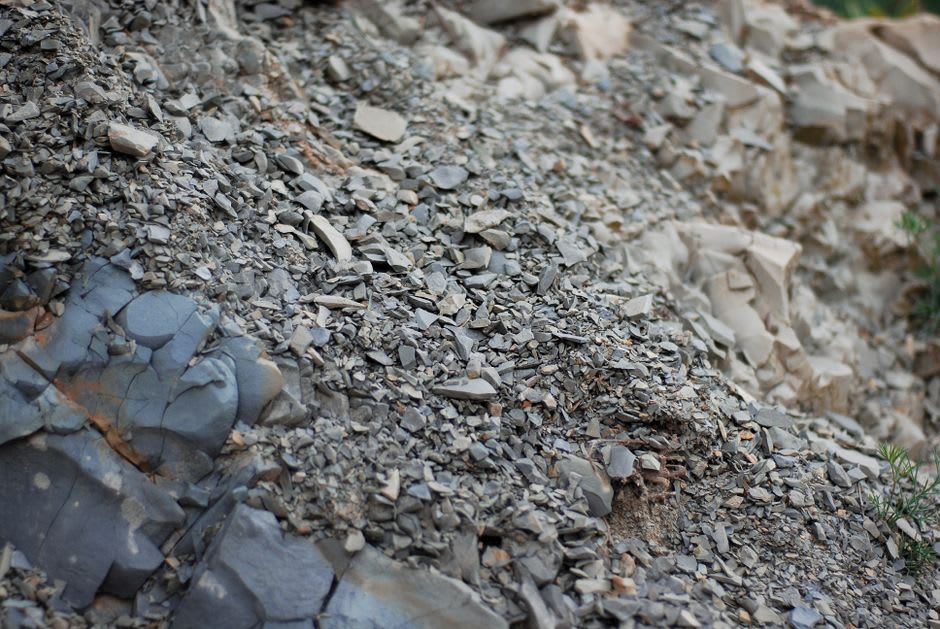
The park’s deepest claim to significance isn’t visible from any road, though. The Burgess Shale, high in the alpine above Field, is one of the most important fossil sites on Earth — a 508-million-year-old sea bed that preserved soft-bodied Cambrian creatures in extraordinary detail, the kind of specimens that reshaped how scientists understand the early explosion of animal life. You can’t just wander up to it; access is restricted to guided hikes run through the Yoho-Burgess Shale Geoscience Foundation, a demanding day that gains serious elevation before rewarding you with slabs of rock containing creatures that look like nothing alive today, all soft frills and improbable eyes. I went on one of these hikes with a guide who had spent two decades studying the site and who talked about half-billion-year-old trilobites with the specific tenderness usually reserved for family.
Emerald Lake and a Railway That Shouldn’t Work
Emerald Lake, lower down and reachable by a short drive, is the park’s answer to Lake Louise — smaller, less crowded, and arguably just as strikingly coloured, ringed by the President Range and quiet enough in early morning that the reflection holds almost perfectly still. But the detail that stayed with me longest was the Spiral Tunnels, a pair of tunnels bored directly through Cathedral Mountain and Mount Ogden in 1909 to solve an impossible railway grade — trains literally spiral through the mountain, crossing under and over their own track, to gain elevation gradually enough for the engines of the era to manage it. Standing at the viewpoint and watching a mile-long freight train disappear into one tunnel entrance only to reemerge, minutes later, from a portal directly above where it went in, is one of those pieces of infrastructure that made me stop and just watch, entirely unprompted by anything except genuine engineering awe.
Field itself, the tiny park townsite, is barely more than a general store, a visitor centre, and a scattering of houses tucked against the valley wall, which suits the park’s whole character — Yoho does not need to be big to be extraordinary.
When to go: Late June through September for the Burgess Shale hikes (snow-free trail access is essential) and for Takakkaw Falls at full glacial-melt volume. July offers the fullest flow at the falls.