
Whitehorse
"At eleven at night the sun was still up over the Yukon River, and I genuinely couldn't tell you if I was tired or not."
The Yukon's small, sturdy capital on the banks of its namesake river, where a preserved gold-rush steamship and endless summer light meet an aurora-lit winter.
I landed in Whitehorse in June, at close to midnight, and walked out of the tiny airport into full daylight — not dusk, not twilight, actual bright afternoon-quality light at an hour my body insisted should be dark. That disorientation followed me for the whole trip. The Yukon River runs right along downtown, wide and fast and startlingly clear, glacial green where the light hits it right, and the whole town — maybe 25,000 people, most of the territory’s entire population — sits along its bank like it’s still deciding whether to be a real city or stay a very well-equipped outpost.
The SS Klondike and a River That Built Everything
Whitehorse exists because of the Klondike Gold Rush, but it isn’t Dawson City’s ghost-of-boom-times version — it’s the more practical one, the transportation hub. The rapids just south of town once made the Yukon River unnavigable by larger boats, which is precisely why Whitehorse became the trans-shipment point, and the beautifully restored SS Klondike sternwheeler sits dry-docked on the riverbank as the physical proof. I did the guided walk-through: cargo holds that once carried ore concentrate downriver to Dawson and passengers upriver, a captain’s wheelhouse with sightlines across the whole deck, cabins so tight you understood immediately why people spent their days outside on deck instead. The rapids themselves were tamed decades ago by a hydro dam, which now has a fish ladder you can watch salmon labor up in late summer — one of the longest salmon migrations on the continent, over 3,000 kilometers from the Bering Sea.
Winter Is a Different Whitehorse
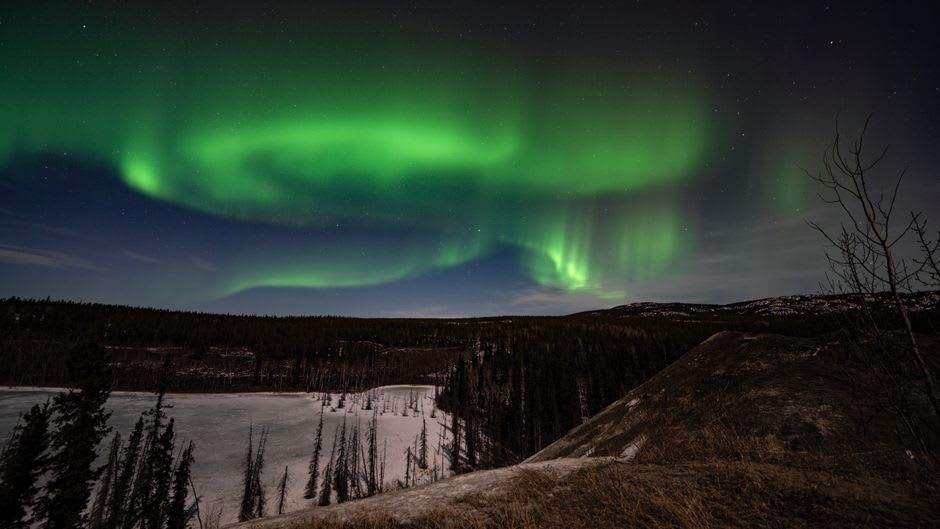
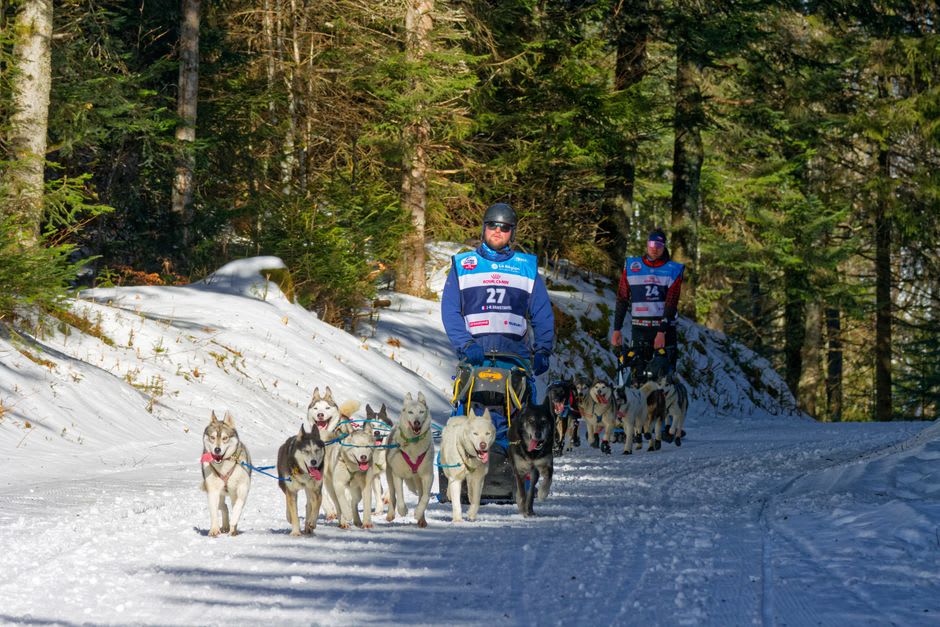
I came back in February, and it’s an entirely different town — minus thirty some mornings, ravens as the only visible wildlife downtown, and the aurora showing up on maybe half the clear nights, casually, the way Churchill’s does but with a town’s worth of amenities wrapped around it instead of nothing. I drove twenty minutes out past the light pollution with a thermos of coffee that was frozen solid by the time I finished the drive, and lay on the hood of the rental car watching green curtains ripple directly overhead for almost two hours. This is also when the Yukon Quest — the brutal thousand-mile sled dog race between Whitehorse and Fairbanks, Alaska — starts or finishes here depending on the year, and the town turns out en masse at the finish line, mushers and dogs steaming in the cold, somebody always handing out chili.
Downtown itself rewards a slow wander — the Yukon Beringia Interpretive Centre for a genuinely strange detour into Ice Age mammoths and steppe bison that once roamed here, and a small brewery scene that’s disproportionately good for a town this remote, since apparently making excellent beer is one of the ways you survive a Yukon winter.
When to go: Late June for nearly 20 hours of daylight and the summer solstice festival, or January through March for reliable aurora viewing and the Yukon Quest.