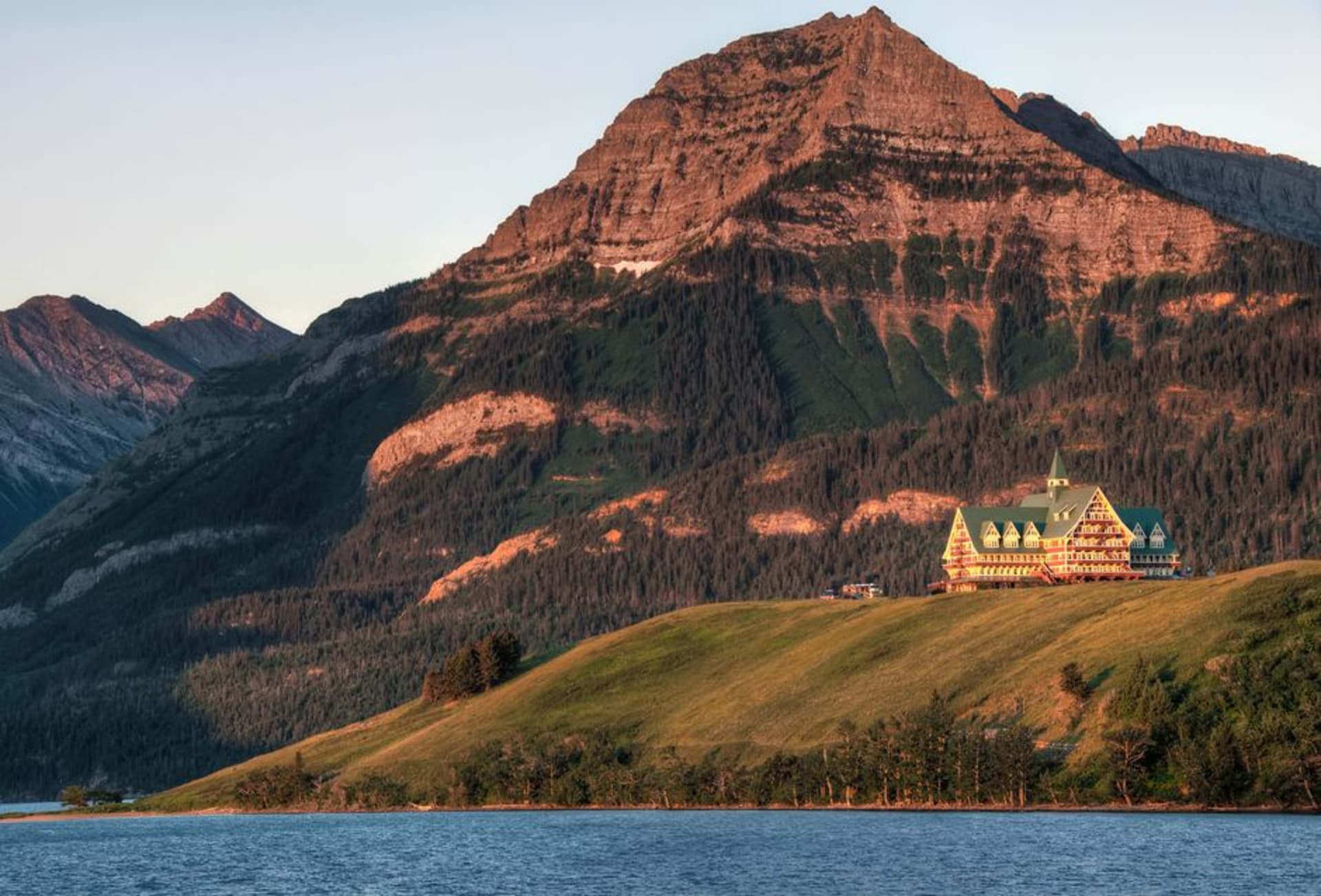
Waterton Lakes National Park
"Waterton is the only place I've stood where you can watch a wheat field and a mountain range argue over the same horizon."
Where the prairie ends without warning and the Rockies simply begin — a peace park shared with Montana, a grand red-roofed hotel, and a landscape still visibly healing from fire.
Driving south from Calgary toward Waterton, the transition caught me off guard in a way Banff or Jasper never do — those parks ease you into the mountains gradually, foothills building for an hour before the real peaks show up. Waterton doesn’t bother with the transition. The prairie runs flat and gold right up to the park boundary, and then the Rockies simply stand up out of the ground, no foothills, no warning, like someone drew a hard line between two different countries. Geologists have an explanation involving overthrust faults and ancient rock pushed up and over younger prairie strata, but standing at the boundary, explanation or not, it still looks like a mistake in the landscape’s design.
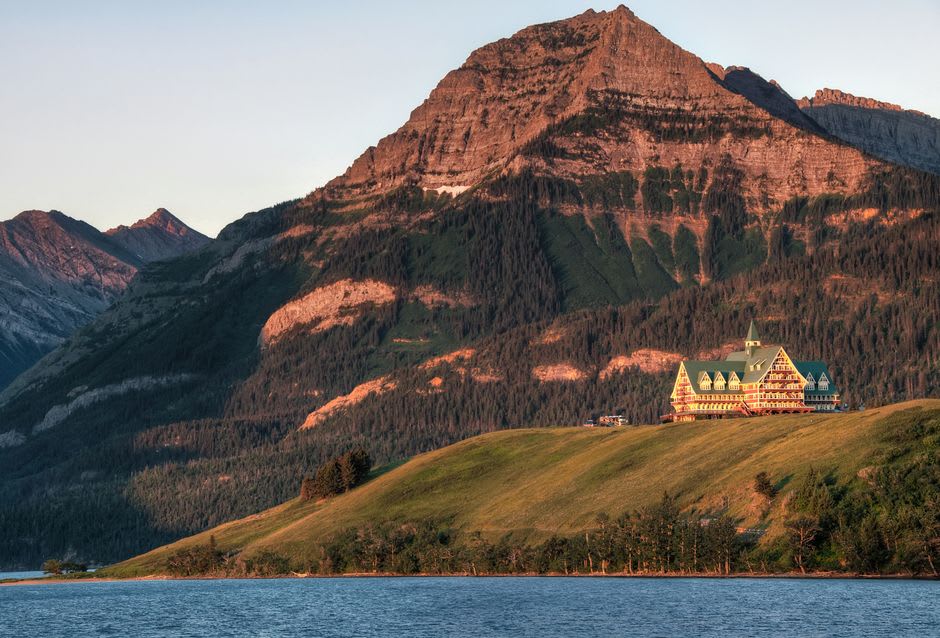
The Prince of Wales Hotel sits on a windswept bluff above Upper Waterton Lake, built in 1927 by the same railway ambitions that gave Lake Louise its Chateau, and it is, without exaggeration, one of the windiest hotel sites I’ve ever stood at — the staff apparently tie down deck furniture as routine maintenance. I had tea in the lobby, floor-to-ceiling windows looking straight down the lake toward Montana, and the wind was audible even through the glass.
A peace park recovering from fire
Waterton Lakes forms one half of the Waterton-Glacier International Peace Park, established in 1932 as the world’s first, a joint designation with Montana’s Glacier National Park across the border — a boat cruise on Upper Waterton Lake actually crosses into the United States without a checkpoint in sight, one of the odder border crossings you’ll make. The two parks share ecosystems, grizzly populations, and a hiking trail network that doesn’t particularly care where the 49th parallel falls.
In September 2017, the Kenow wildfire burned through roughly forty percent of the park, and the evidence is still everywhere — hillsides of blackened, standing deadwood interspersed with vivid green regrowth, fireweed and young aspen claiming ground that lodgepole pine used to hold. A park ranger I talked to near the townsite described the fire less as a disaster than as a reset the ecosystem had been overdue for, since decades of suppression had let fuel build up beyond what the landscape naturally wants to carry. It’s an odd thing to hike through — genuinely eerie in places, genuinely hopeful in others, sometimes in the same few hundred metres of trail.
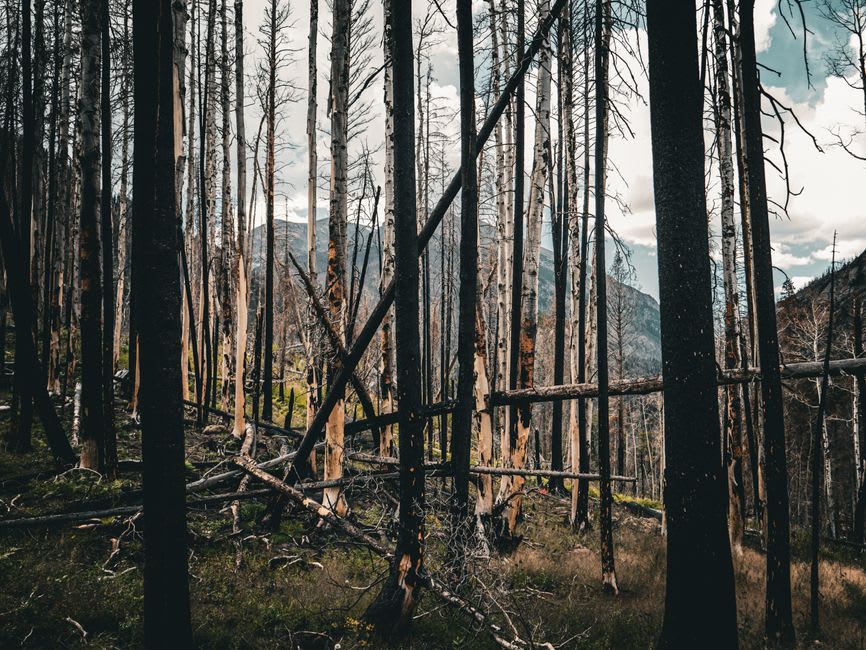
When to go: July through September for reliably open trails and the calmest winds you’ll get here, which still isn’t calm. Early June brings dramatic wildflower blooms in the burned areas, a strange and striking payoff of the 2017 fire.