
Tobermory
"The water is so clear I could see the shipwreck from the boat deck before we'd even anchored."
A tiny harbour town at the tip of the Bruce Peninsula where turquoise Georgian Bay water hides century-old shipwrecks beneath the waves.
I’d been told Tobermory’s water looked Caribbean and dismissed it as tourism-board exaggeration, the same way every lake town claims its water is the bluest anywhere. Then the glass-bottom boat idled to a stop above the wreck of the Sweepstakes in Big Tub Harbour, and there it was, sitting whole and intact just six metres down, timbers clearly visible through water so transparent it barely registered as water at all. The colour comes from limestone bedrock and minimal sediment, and combined with the cold, oxygen-rich depths of Georgian Bay, it creates a clarity that genuinely startles people who grew up around murkier lakes.
Tobermory sits at the very tip of the Bruce Peninsula, the narrow limestone finger that separates Georgian Bay from Lake Huron, and the town itself is small enough to walk end to end in fifteen minutes — a working harbour with fishing boats still tied up alongside the dive charters and glass-bottom tour boats that now dominate the local economy.
Fathom Five and the Wrecks
Fathom Five National Marine Park, Canada’s first national marine conservation area, protects more than twenty shipwrecks scattered across the surrounding waters, most from the late 1800s when this stretch of Georgian Bay was a notoriously dangerous shipping route between Great Lakes ports. Divers come from across the continent for wrecks like the Arabia and the China, sitting remarkably preserved in the cold fresh water, but you don’t need scuba gear to see the shallower ones — the glass-bottom boats cruise directly over several wrecks in Big Tub Harbour that are visible without so much as getting wet.
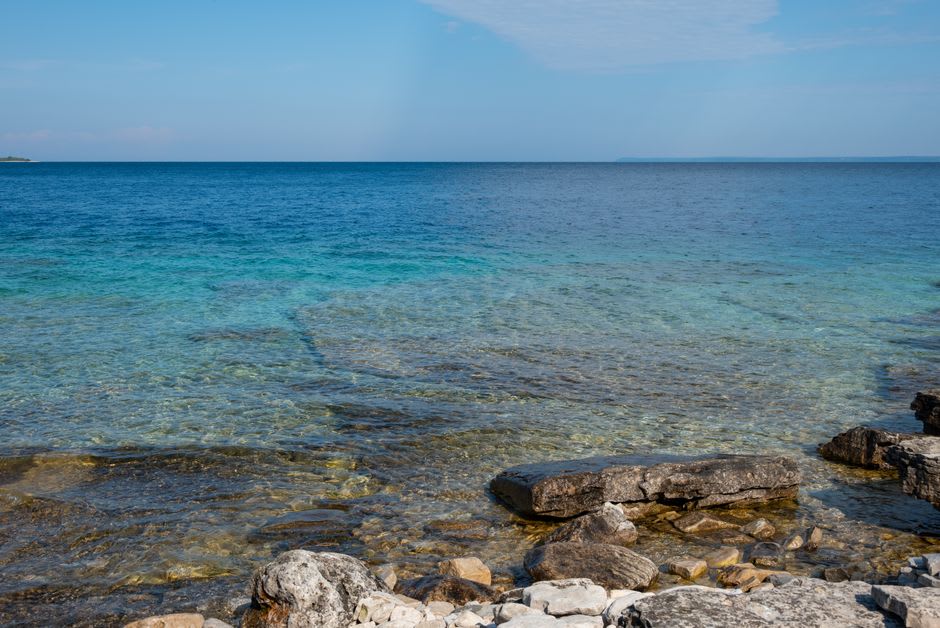
Flowerpot Island
A short boat ride out into Georgian Bay brings you to Flowerpot Island, named for its two sea-stack rock formations that erosion has carved into shapes resembling giant flowerpots, wider at the top than the base in a way that looks almost cartoonishly precarious. I hiked the loop trail around the island’s edge, past caves cut into the limestone cliffs and a small automated lighthouse, the turquoise water visible through gaps in the cedar the entire way. It’s a strange, slightly surreal landscape for Ontario, closer in feeling to a Mediterranean sea stack than anything I associate with the Great Lakes.
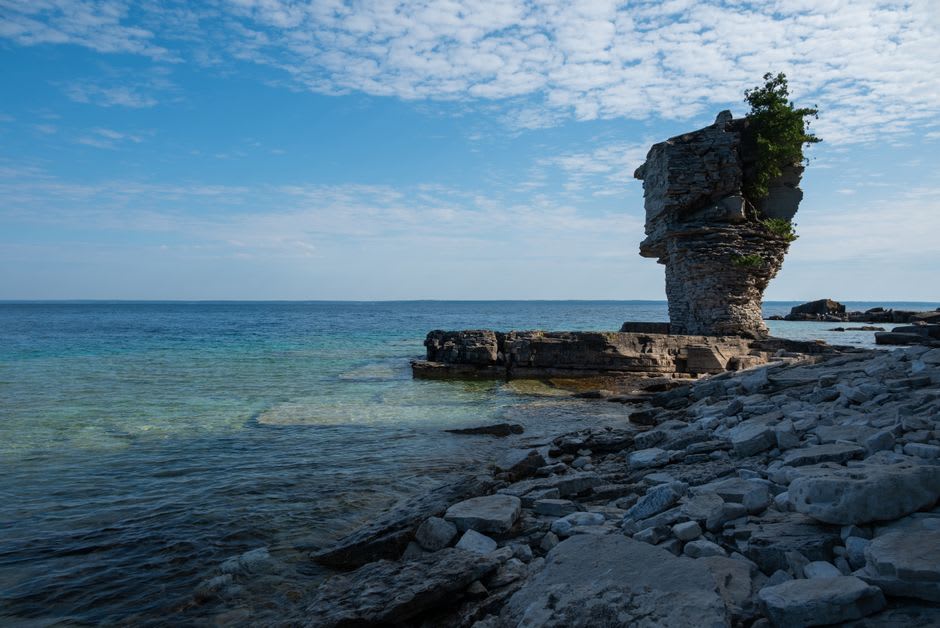
When to go: July and August for the warmest, calmest water and full boat-tour schedules; visibility and colour are at their best on the still, sunny days that cluster in late summer, though the town empties out and prices drop noticeably by September.