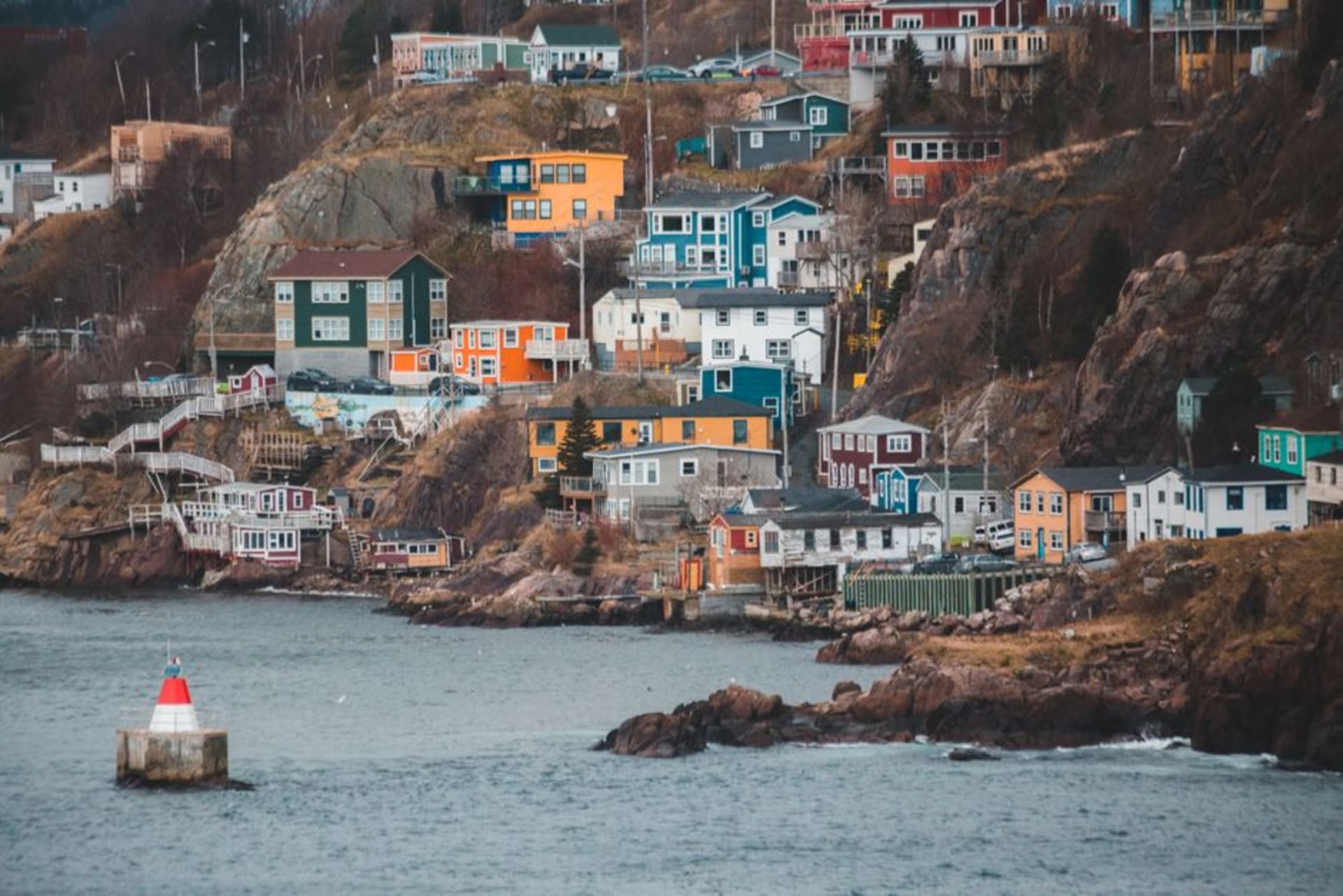
St. John's
"St. John's is the only Canadian city where a bar street can also be a National Historic District, and it wears both titles well."
North America's oldest city, where jellybean-coloured row houses climb steep hills toward Signal Hill and George Street parties like nowhere else in Canada.
St. John’s announces itself in colour before anything else — the row houses along Jellybean Row are painted in a riot of pinks, teals, mustards, and purples that, according to a story I heard from more than one local, started as a practical matter: in the fog that rolls off the Atlantic constantly, homeowners needed to be able to find their own front door, so they painted them distinctly. Fog or no fog, the effect walking up Gower Street or Duckworth Street is genuinely cheerful in a way I didn’t expect from a city that spends a good chunk of its year under grey skies. Newfoundlanders claim St. John’s as the oldest city in North America, dating settlement back to the 1500s when European fishing crews began using the harbour seasonally — a claim contested by a few other places on the continent, but nobody here seems bothered by the dispute.
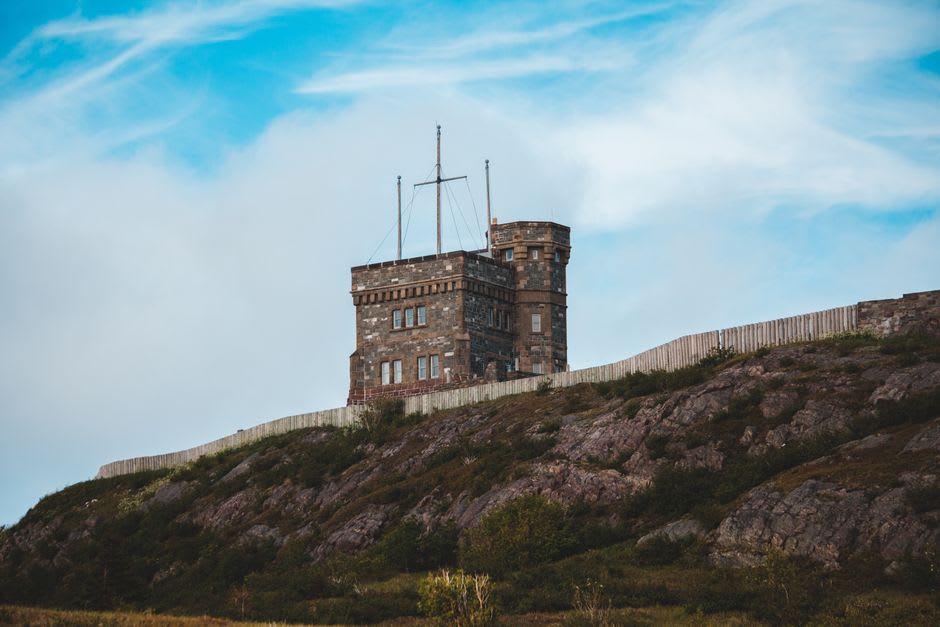
The harbour itself is tucked behind a narrow channel called the Narrows, guarded on one side by Signal Hill, where Cabot Tower stands watch over the entrance to St. John’s. I climbed up on a blustery afternoon — the wind on Signal Hill is a constant, almost personality-defining feature of the place — and got the payoff: a sweeping view down into the harbour, out across the open Atlantic, and back over the coloured rooftops of the city itself. It was here in 1901 that Guglielmo Marconi received the first transatlantic wireless signal, a fact commemorated at the site with a plaque that undersells how strange it must have felt to hear a signal arrive from Cornwall on a hilltop this remote.
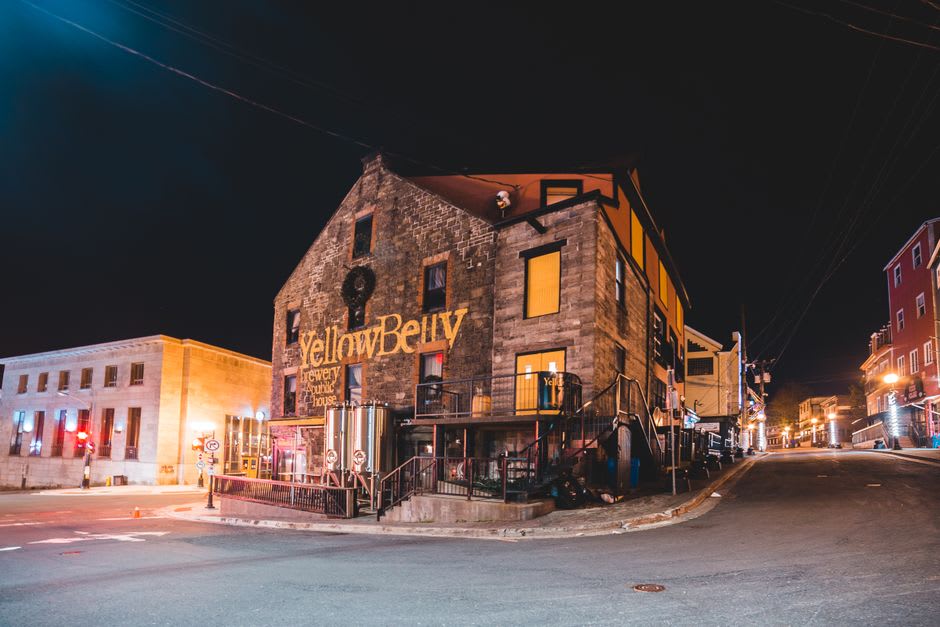
George Street
Nothing prepared me for George Street. It’s a short two-block strip packed with more bars and pubs per square foot than anywhere else in the country, by the city’s own claim, and on a Friday night it turns into an outdoor party that spills between venues without much distinction between them — a cover charge at one bar often gets you into several. A local at the next table over talked me through the local rite of passage called the “Screech-In,” in which visitors kiss a cod, down a shot of Screech rum, and recite a bit of nonsense dialogue to be declared honorary Newfoundlanders. I did it. I do not regret it, though I regretted the second shot the next morning.
Kitchen parties and the accent
Beyond George Street, the city’s musical culture runs deep and genuine — traditional Newfoundland folk sessions, fiddle and accordion, breaking out in pubs on nights with no particular occasion, what locals call a “kitchen party” even when it’s happening in a bar. The accent alone, a distinct lilt shaped by centuries of relative isolation and heavy West Country English and Irish settlement, was almost musical to listen to, full of phrases I had to ask people to repeat and then still didn’t fully catch.
When to go: June through September for the mildest weather and the fullest cultural calendar, including the George Street Festival in late July; expect fog and wind in any month, it’s simply part of living on this coast.