Squamish
"Squamish is the town where everyone you meet is on their way to or from doing something that would frighten your mother."
A granite monolith, a windswept estuary, and a gondola climbing into the clouds — the outdoor sports capital wedged between Vancouver and Whistler on the Sea to Sky Highway.
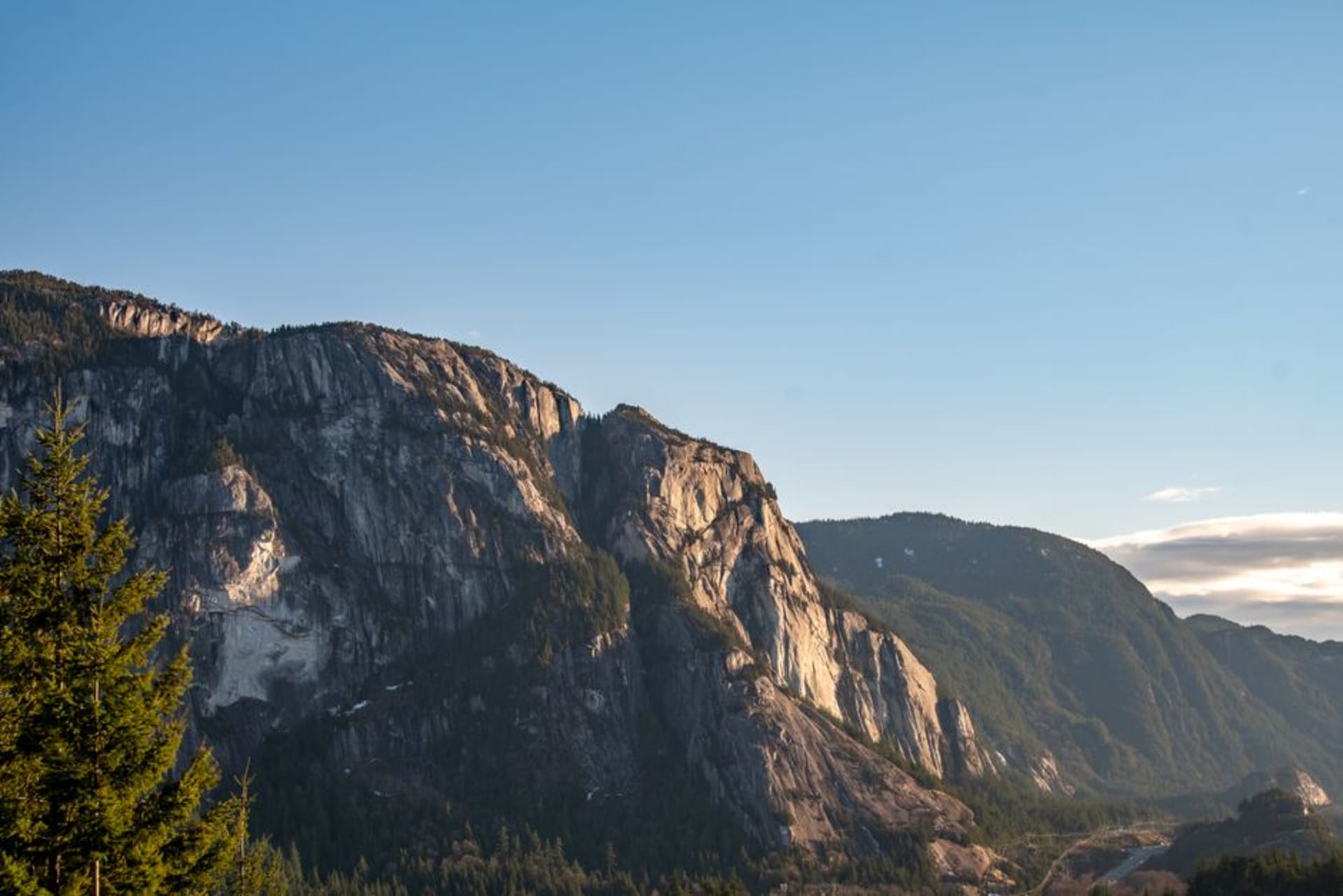
The Stawamus Chief announces itself long before you reach Squamish proper — a two-thousand-foot granite dome rising straight out of Howe Sound, visible from the highway in a way that makes you instinctively slow the car down. I had driven this stretch between Vancouver and Whistler once before without stopping, which I now consider a small crime. This time I pulled off, and within ten minutes of parking I had counted a dozen climbers racking up gear at the base, a paraglider circling overhead, and a family setting off toward the summit trail with the specific brisk energy of people who do this every weekend. The Chief is the second-largest granite monolith in the world, and it has made Squamish one of the premier rock-climbing destinations on the continent, with something like two thousand routes on the surrounding cliffs.
I am not a climber, so I took the Sea to Sky Gondola instead, which hauls you up the opposite side of the valley to a suspension bridge strung between two peaks, the Chief staring back at you at eye level across the gap. Below, Howe Sound opened up in long fjord-like arms toward the ocean, and I stood on that swaying bridge for longer than was strictly necessary, watching sailboats reduced to specks and trying to spot the climbers I had seen at the base, now impossibly small against the rock.
Wind, water, and the Outdoor Recreation Capital
Squamish calls itself the Outdoor Recreation Capital of Canada, a title that would sound like boosterism anywhere else, but here it is closer to an inventory. The Squamish Spit, at the mouth of the Squamish River where it meets Howe Sound, funnels a thermal wind that builds through summer afternoons into some of the most reliable windsurfing and kiteboarding conditions in North America — I watched a dozen sails carving across the estuary while bald eagles worked the same airspace, entirely unbothered. Mountain biking trails lace the forested slopes above town, built and maintained largely by the local riding community, and in winter the Chief and the surrounding peaks turn into a base for ice climbing that draws people from as far as Alberta.
What struck me most, though, was how unpretentious it all felt. This is not Whistler, twenty minutes up the highway, with its ski-resort polish and European prices. Squamish still has the feel of a working logging town that discovered, almost by accident, that its landscape was worth more as a playground — and it has adjusted without losing its edges.
When to go: July and August for the reliable estuary winds and long climbing days; December through March for ice climbing on the Chief’s shaded faces.