
Saguenay Fjord
"I have seen fjords in Norway and this one, improbably, this far south, held its own against every single one of them."
One of the southernmost true fjords on Earth, gouged through the Canadian Shield by glaciers, ending at Tadoussac where beluga whales gather in numbers that stopped me mid-sentence.
Nobody had properly warned me that Canada has a fjord, so I arrived at Tadoussac slightly unprepared for how the landscape changes the moment the Saguenay River meets the St. Lawrence. The cliffs rise almost immediately, dark granite walls sometimes 300 metres high, plunging straight into water carved out by glaciers during the last ice age. It’s one of the world’s southernmost fjords, and unlike the fjords I’ve seen in Norway, this one cuts through the ancient, worn-down Canadian Shield rather than jagged young mountains — the effect is softer, older-looking, but no less dramatic once you’re actually on the water.
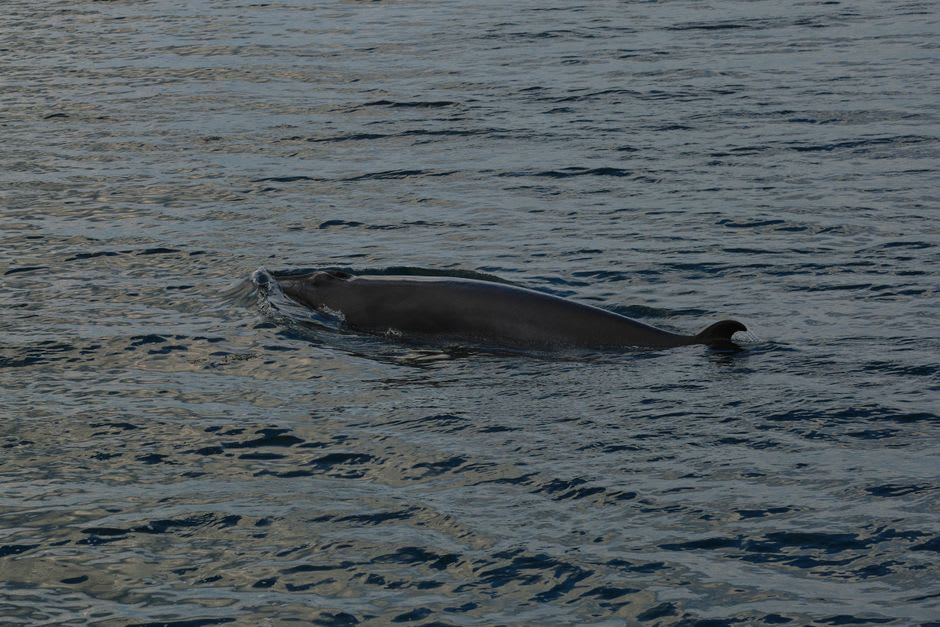
I took a small boat from Tadoussac out toward the fjord’s mouth, and within twenty minutes the captain cut the engine because a pod of belugas had surfaced nearby. These are among the southernmost beluga whales on the planet, a resident population that lives in the cold, nutrient-rich confluence where the fjord’s fresh water meets the salt of the St. Lawrence estuary, and watching their pale, ghost-white backs roll through the surface, again and again, closer than I expected a wild whale to ever come, is not something I’ve fully gotten over.
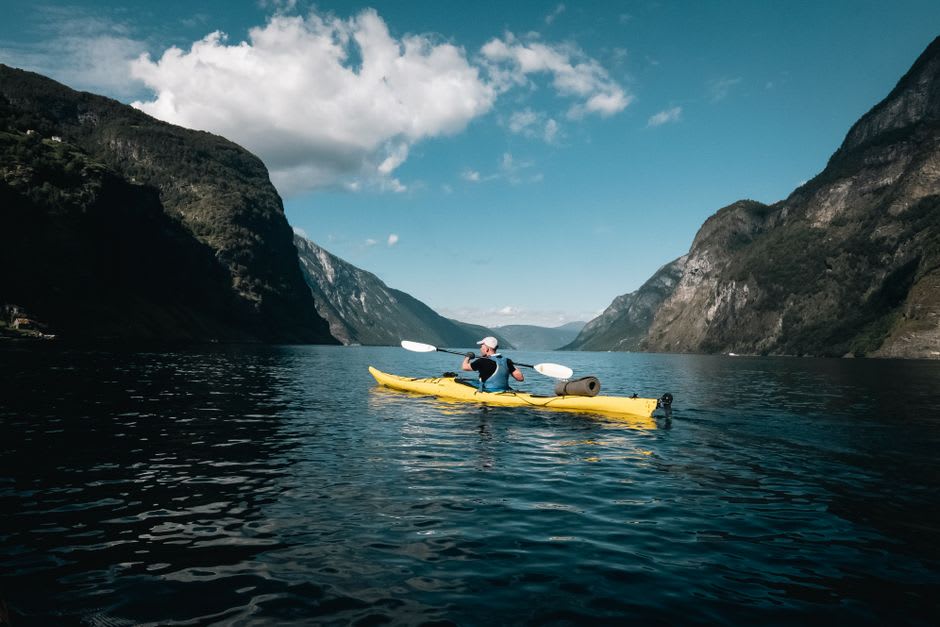
Kayaking beneath Cap Trinité
Further up the fjord, I paddled a sea kayak beneath Cap Trinité, a sheer cliff face that drops nearly 350 metres into water so deep and cold it stays a uniform black even at midday. A statue of the Virgin Mary sits on a ledge partway up, placed there in the 1880s by a merchant who nearly drowned in the fjord and promised, if he survived, to put something up in gratitude. Our guide cut the group’s chatter as we passed beneath it, and for a few minutes the only sound was paddles dipping and the odd distant call of a loon — the cliffs amplifying everything, the way a cathedral does.
The town of Tadoussac itself, one of the oldest European settlement sites in North America, dating to a fur-trading post from 1600, is little more than a cluster of wooden buildings around a grand red-roofed hotel, but it earns its outsized reputation as the whale-watching capital of eastern Canada many times over.
When to go: Late May through October for whale-watching, with a peak in July and August when belugas, minke, and occasionally fin and blue whales all feed in the estuary. Kayaking is best from June through September once the water has warmed slightly and the weather stabilizes.