Sable Island
"Nobody lives on Sable Island by accident, and for three centuries, nobody left it that way either."
A crescent of sand adrift far off Nova Scotia, home to wild horses, a graveyard of shipwrecks, and one of the largest grey seal colonies on Earth.
Getting to Sable Island is most of the story, and I say that as someone who has taken a lot of small, questionable planes to a lot of remote places. It’s a crescent-shaped sandbar about 300 kilometres southeast of mainland Nova Scotia, so isolated and so thin — barely a kilometre wide in places, 42 kilometres long — that it doesn’t even show up as land on some maps until you’re right on top of it. There’s no ferry, no regular flight; access is by small charter plane landing directly on the beach, weather permitting, and weather permits it less often than you’d like. I waited three days in Halifax for a window. When it finally came, the pilot set us down on hard-packed sand with the Atlantic on one side of the runway and nothing but dune grass on the other, and I understood immediately why sailors used to call this place the “Graveyard of the Atlantic.”
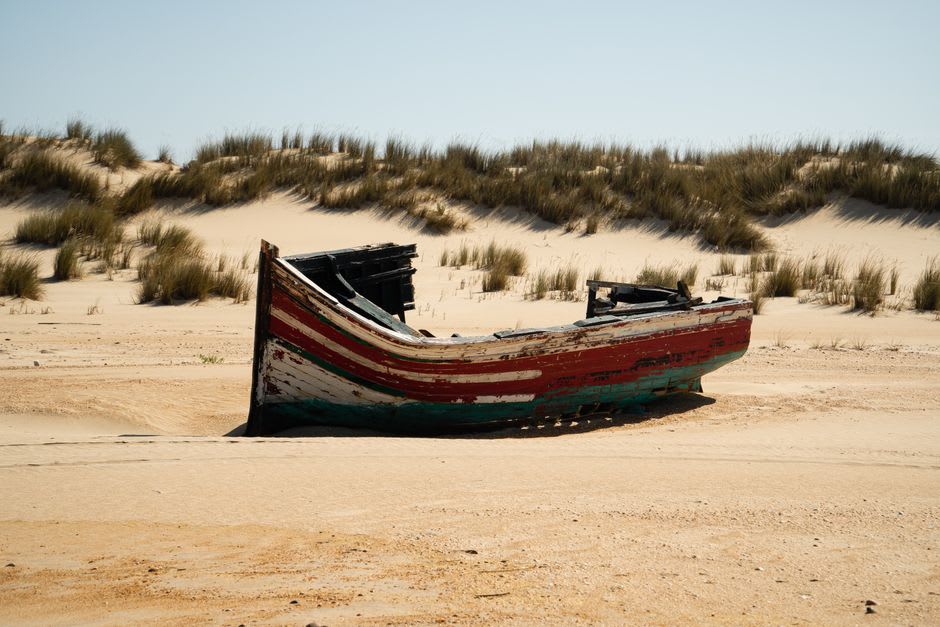
More than 350 shipwrecks are recorded around Sable Island, victims of shifting sandbars, thick fog, and a location that sits directly in the path of ships crossing between Europe and the North American coast. Walking the beach, you find timber fragments and metal fittings half-buried in sand that could be from a wreck two centuries old or twenty years old — the island doesn’t really distinguish, it just keeps the evidence and slowly reburies it with the next storm.
The wild horses
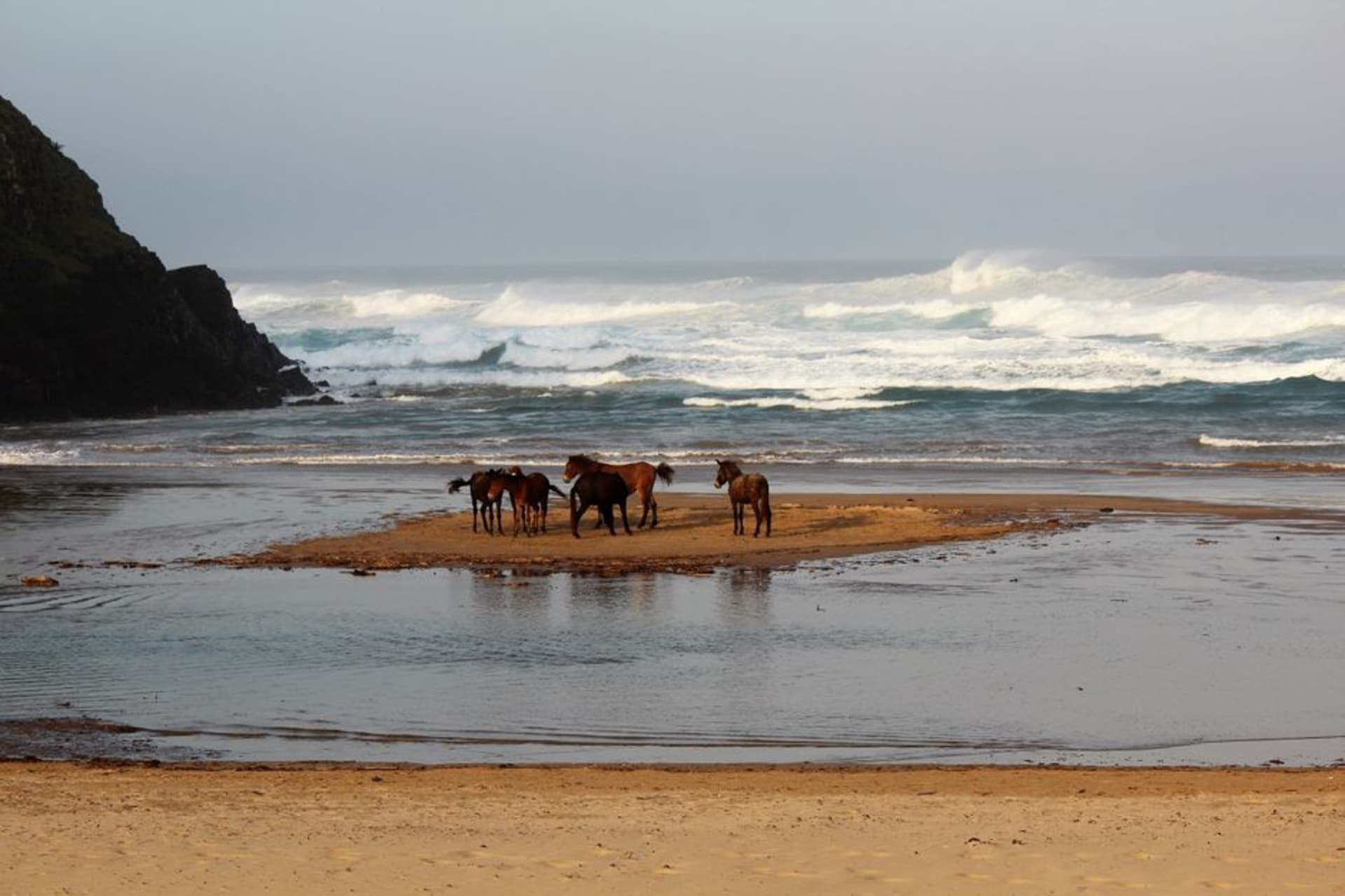
The horses are why most people go, myself included, and they earn the trip. Around 500 wild horses live on Sable Island, descended from stock put ashore in the 1700s — some accounts say by a Boston merchant, others tie it to deportation-era Acadian livestock — and left to fend for themselves ever since. No veterinary care, no supplemental feed, protected by federal law from any human interference at all. They’ve adapted into something leaner and shaggier than a typical domestic horse, grazing on marram grass and drinking from freshwater ponds that form in the dune hollows. I watched a small band moving along a ridge at dusk, unbothered by our presence at a respectful distance, entirely wild in a way that felt different from any “wild” horses I’d seen elsewhere — these ones have never once depended on a person.
Seals and the shifting sand
The island also hosts the world’s largest breeding colony of grey seals — in winter, hundreds of thousands gather on the beaches, though I visited in summer when the numbers are lower and the pups have already dispersed, and even then the shoreline was loud with them. Everything on Sable Island is administered by Parks Canada with a research station as the only permanent human presence; visitor numbers are tightly limited, both because access is so difficult and because the island itself is fragile, a living sandbar that migrates slowly eastward year by year, swallowing and revealing its own history as it goes.
When to go: July through September for the most reliable flying weather and easiest ground conditions, though tour operators strongly caution that any visit can be cancelled or cut short by fog or wind with almost no notice.