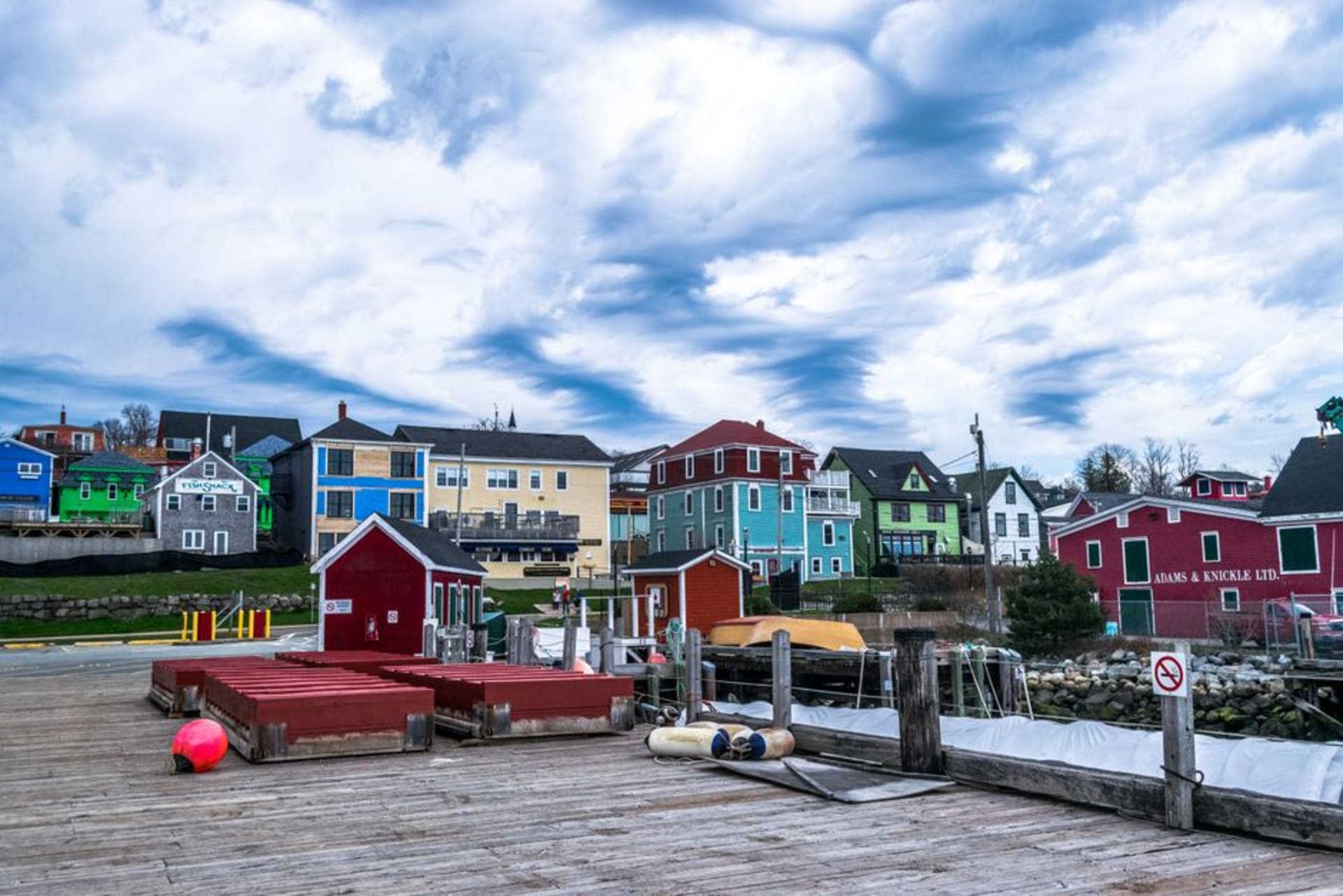
Lunenburg
"A whole town painted like it refuses to take the Atlantic winters seriously, and I respect the defiance."
A UNESCO-listed harbour town of candy-colored wooden houses, built by German settlers and still home port to the schooner that graces the Canadian dime.
Lunenburg is the kind of town that makes you stop the car before you have even found parking, because the view from the hill above the harbour — rows of saltbox houses in red, yellow, blue, and a shade of turquoise that should clash and somehow does not — looks staged in a way that turns out to be entirely genuine. UNESCO listed the whole old town as a World Heritage Site in 1995, one of the best-preserved examples of planned British colonial settlement in North America, and walking its grid of streets I understood the citation immediately: this is not a restored theme-park version of a historic town, it is the actual town, families still living in houses their ancestors built in the 1760s.
Those ancestors were mostly German, Swiss, and French Protestant settlers — the “Foreign Protestants,” as the British colonial records called them — brought over deliberately to balance the French Catholic population of Nova Scotia and given town lots on a strict grid pattern that still defines Lunenburg’s streets today. I found a small cemetery on the edge of town where the headstones read like a roll call of Rhineland surnames, Germanic names sitting quietly on Canadian granite, a detail that connected for me only after a local historian in the museum explained the settlement scheme over coffee.
The Bluenose and a Fishing Legacy
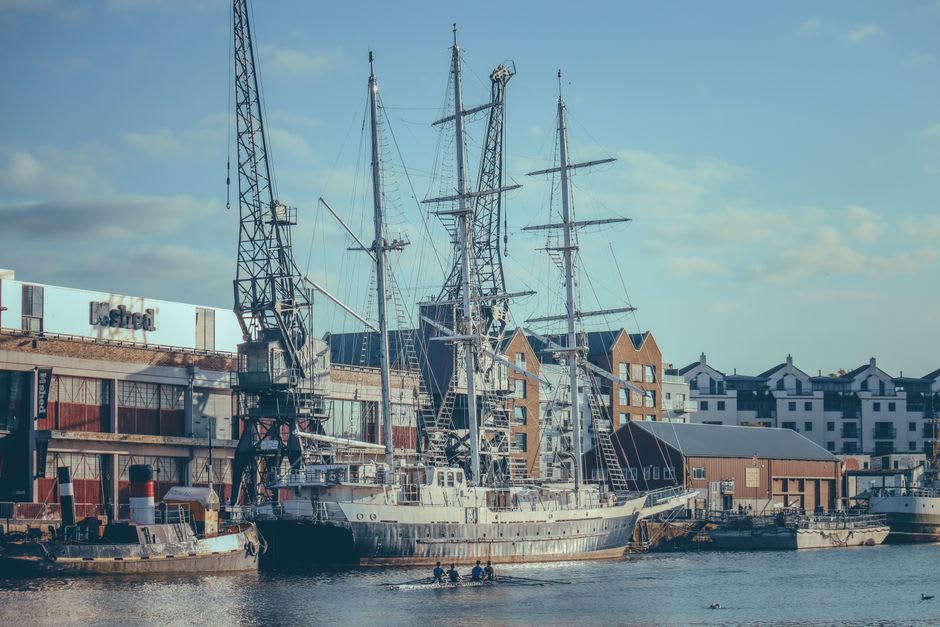
Lunenburg’s harbour is home port to the Bluenose II, a faithful replica of the legendary racing and fishing schooner Bluenose, built here in 1921 and undefeated in international racing for seventeen years — a source of such enduring national pride that the original vessel appears on the Canadian dime. I got lucky and caught the replica in port rather than out sailing, and walked its deck with a costumed crew member who talked about the original Bluenose the way some people talk about a family member, with real proprietary affection for a boat that predates everyone currently alive in the town. The Fisheries Museum of the Atlantic next door does not romanticize the industry that built Lunenburg quite so gently — displays on the Grand Banks cod fishery’s collapse, salt-cod curing sheds you can walk through, and a sober account of how thoroughly the fishery’s decline reshaped the whole province’s economy.
Dinner on the Wharf
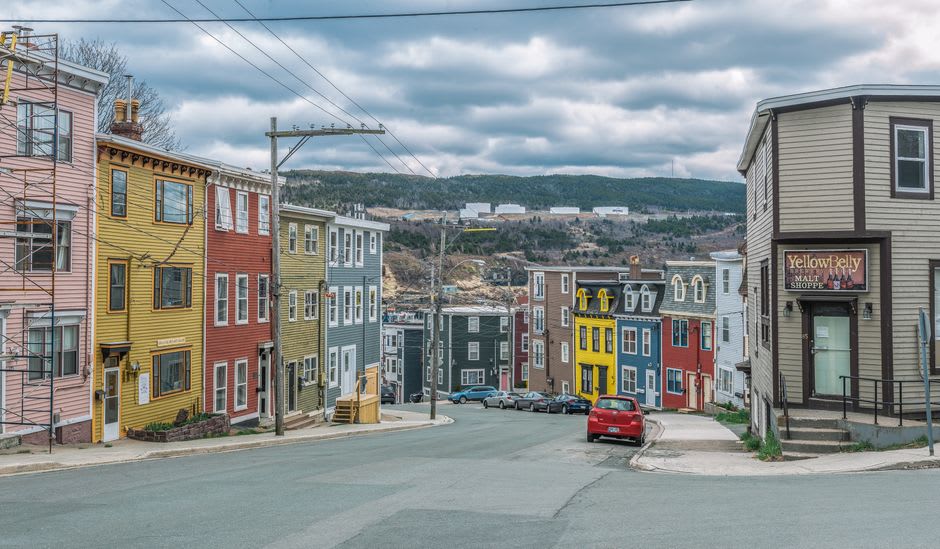
I ate scallops at a restaurant on the working wharf that were, the waiter assured me without much modesty, caught that same morning by the boat visible through the window, and I believed him because the smell of the harbour — diesel, salt, drying nets — was doing more to sell the meal than the menu was. Lunenburg still runs a modest scallop and lobster fleet alongside its tourism economy, and the two coexist on the same docks without much friction that I could see; the fishermen mend gear a few boats down from where the whale-watching tours load passengers, each apparently ignoring the other’s version of the harbour.
When to go: June through September for the warmest weather and the fullest calendar of harbourfront events, including the Nova Scotia Fisheries Exhibition and the Folk Harbour Festival in August. The town photographs best in the low light of early morning, before the day-trip crowds from Halifax arrive.