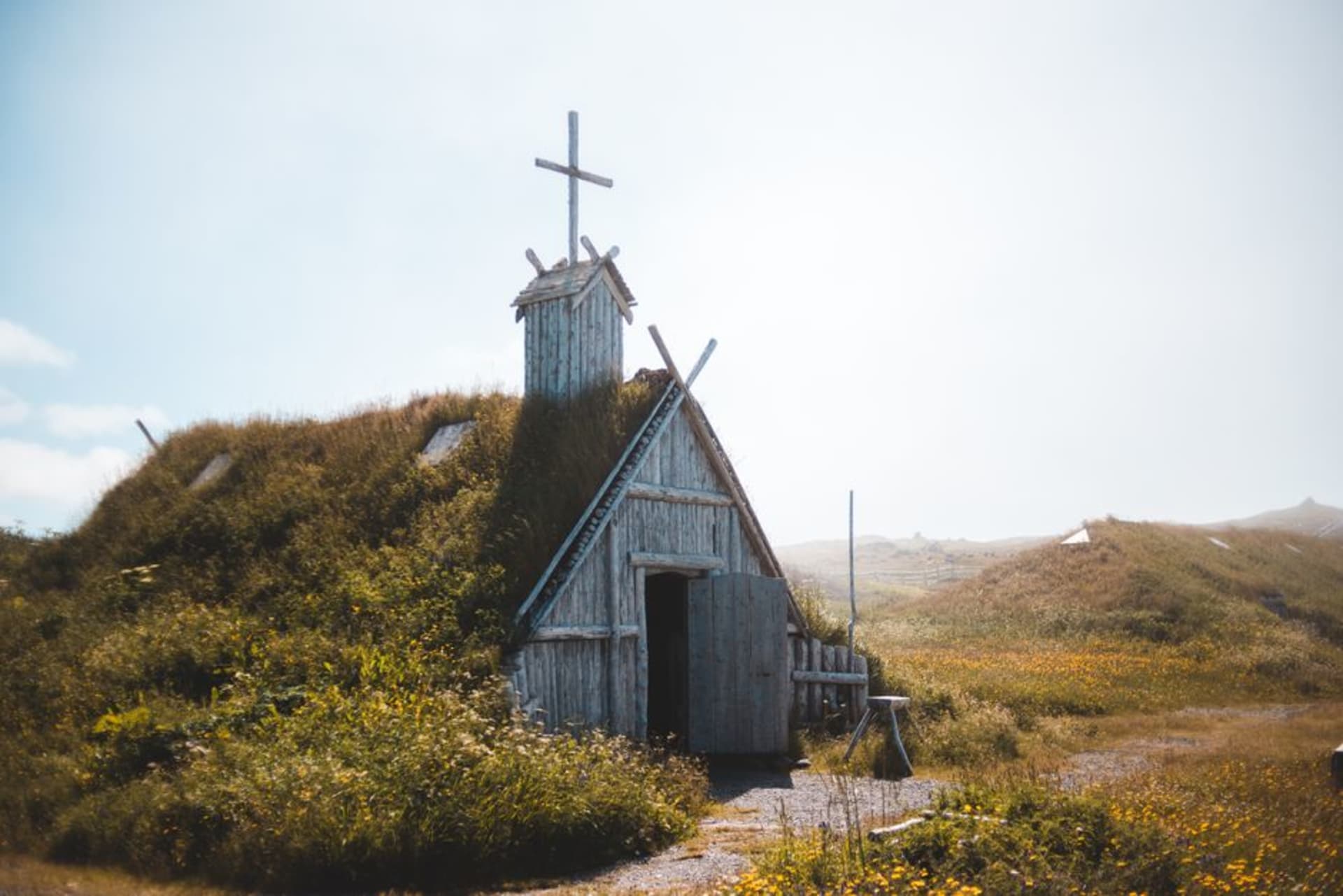
L'Anse aux Meadows
"Standing in that sod longhouse, I kept doing the math: a thousand years, and the wind hadn't changed at all."
The only confirmed Norse settlement in North America, where reconstructed sod longhouses sit on a windswept Newfoundland headland five centuries before Columbus ever sailed.
I drove eight hours up Newfoundland’s Great Northern Peninsula to get here, and for the last two the road narrowed to a single lane threading between bog and rock, with nothing but stunted spruce and the occasional moose warning sign. Then, abruptly, the trees gave up entirely and the land flattened into open meadow running down to a grey, restless sea. There is a reason the Norse picked this spot — it’s the only patch of the coast for miles that isn’t cliff. I parked next to a visitor center that looked almost apologetically small for what it protects, and walked out along the boardwalk toward three humped shapes of sod and timber, low against the horizon like something grown rather than built.
Grapes, Iron, and a Butternut
What convinces you this is real isn’t the reconstructed longhouses — those are careful guesswork, however good. It’s the details from the actual 1960s excavation, preserved in the small museum: a bronze cloak pin, iron rivets of the kind used in Viking ships, a spindle whorl for spinning wool, and — the detail that undid every doubt I had — a butternut, a tree that doesn’t grow anywhere near Newfoundland. It only grows much farther south, meaning the people who lived here in roughly 1000 AD had already been down toward the Gulf of St. Lawrence, or further, gathering things and bringing them home. This place is not just “the Vikings reached America.” It’s a waypoint, a base camp for something larger that the sagas only half-remember.
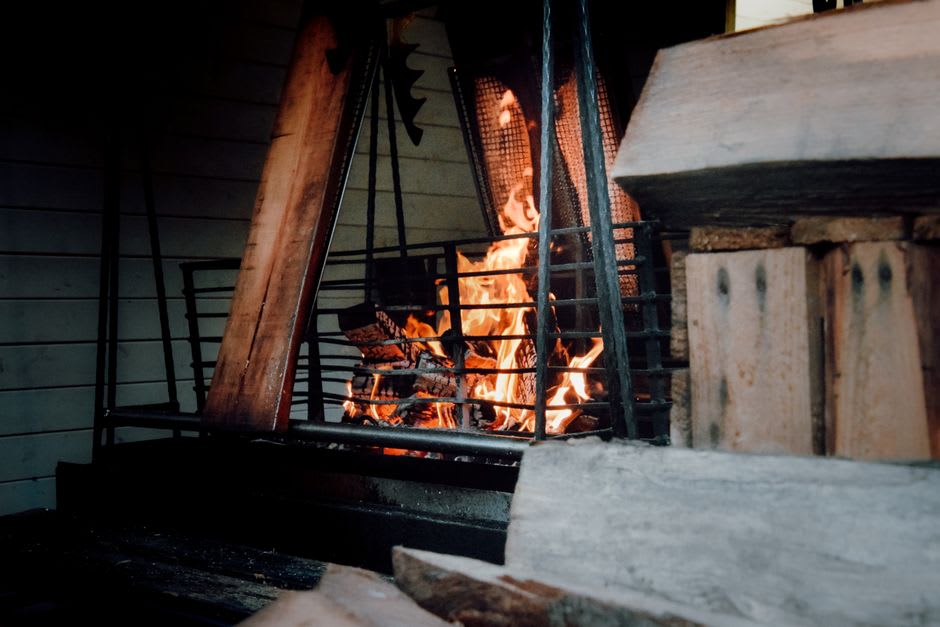
Inside the main longhouse, a costumed interpreter was keeping a peat fire going in the central hearth, and the smoke hung at head height in a way that made your eyes water and made total sense of why Norse turf houses have low doors — you learn fast to duck. He was a local guy, born forty minutes down the coast, and he talked about the excavation the way people here talk about their own family history, which in a strange way it now is. Newfoundlanders have adopted this site as something like a founding myth, even though genetically and culturally there’s no continuity — it’s more that the isolation and the sea here haven’t changed, so the story still fits the land.
Predating Columbus by Five Hundred Years
What gets lost in the “first Europeans in America” headline is how un-triumphant this site feels. There’s no fort, no gold, no grand narrative — just three or four small buildings, an iron-working shop, evidence of boat repair, and archaeological signs the Norse stayed maybe a decade before abandoning it, likely after conflict with the Indigenous peoples they called Skræling. Later Icelandic sagas — the Vinland Sagas — describe exactly this kind of encounter and exactly this kind of retreat. Standing on the meadow with the wind coming straight off the Labrador Current, I understood the retreat instinctively. It’s staggeringly beautiful and staggeringly exposed, a place that rewards nobody who isn’t extremely tough.
I ate dinner that night in nearby St. Lunaire-Griquet at a small kitchen party of a restaurant, cod tongues and partridgeberry pie, listening to a fiddler who’d clearly played this exact set for a thousand tourists before me and still meant it. That’s the thing about the tip of Newfoundland — it takes effort to reach, and the reward is proportional.
When to go: June through September, when the site and visitor center are fully open and the peninsula’s brutal winter has receded; July brings the best chance of icebergs still drifting past on their way south from Greenland.