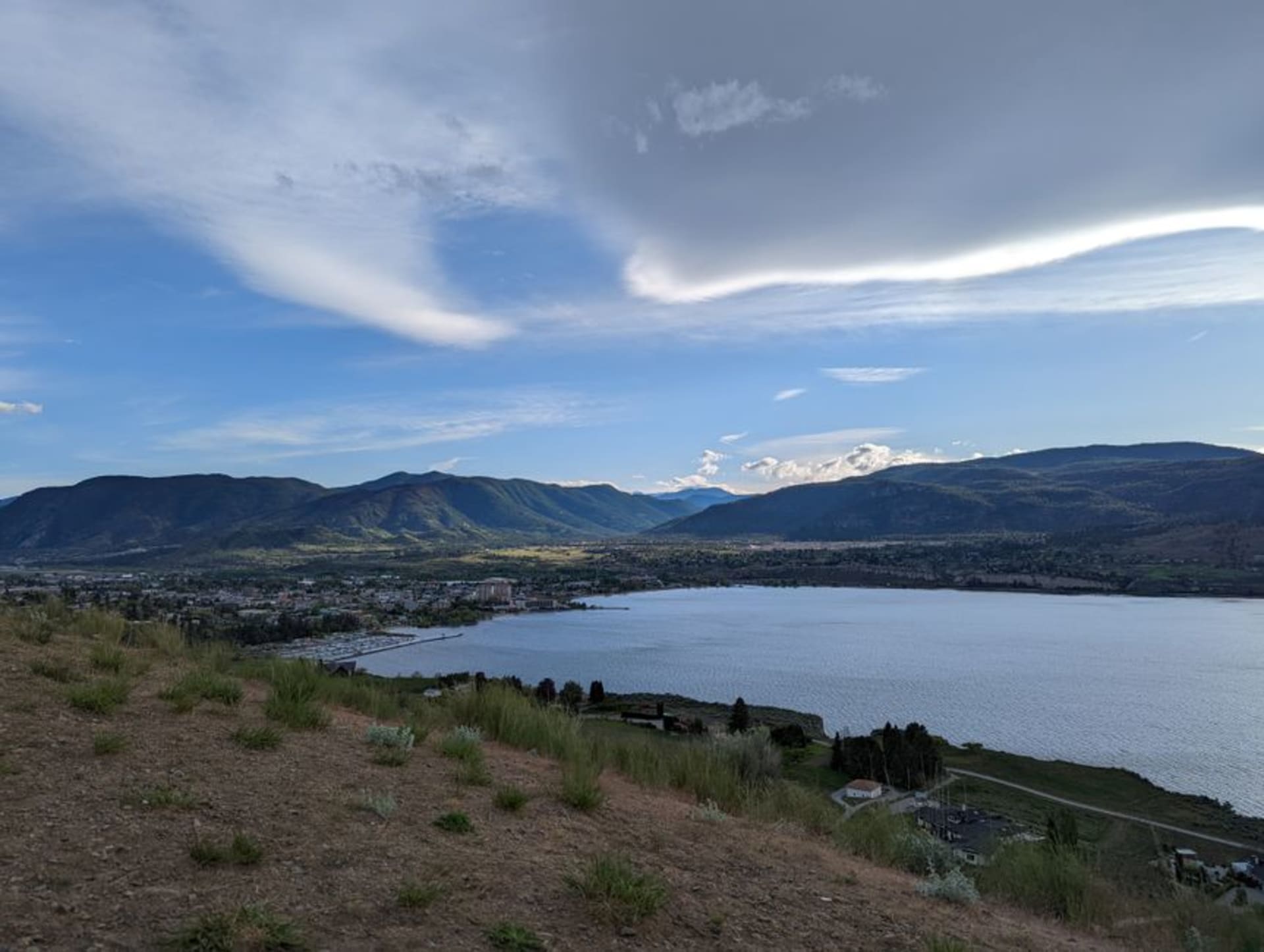
Kelowna
"Nobody warns you that a chunk of British Columbia is basically a desert with a lake in it."
The heart of the Okanagan Valley, where desert-dry summers, a long glacial lake, and rows of vineyards make British Columbia's most unlikely wine country.
I drove into Kelowna in July with the windows down, expecting the damp green British Columbia of the coast, and got something that felt more like Provence having a heat wave. The Okanagan Valley sits in a rain shadow cast by the Coast and Cascade Mountains, and the result is sagebrush hillsides, bone-dry heat that climbs past thirty-five degrees, and Okanagan Lake stretching a hundred and thirty-five kilometres between them like a long blue exclamation mark. I jumped in off a public dock in downtown Kelowna within an hour of arriving, and the water was warm enough to stay in for an hour without flinching — a genuine novelty in a country I had otherwise associated with glacial run-off.
What actually got me, though, was the wine. There are over a hundred and eighty wineries strung along this valley now, and the tasting rooms have a directness that Bordeaux, with its centuries of ceremony, has mostly lost. I pulled into a family-run place on the Naramata Bench, was poured a flight by the winemaker’s daughter between her shifts checking on the fermentation tanks, and left with a bottle of a bone-dry Riesling that tasted distinctly of the valley’s mineral soil and long, hot days. Orchards run alongside the vines — cherries, peaches, apricots — and roadside stands sell fruit so ripe it barely survives the drive back to the hotel.
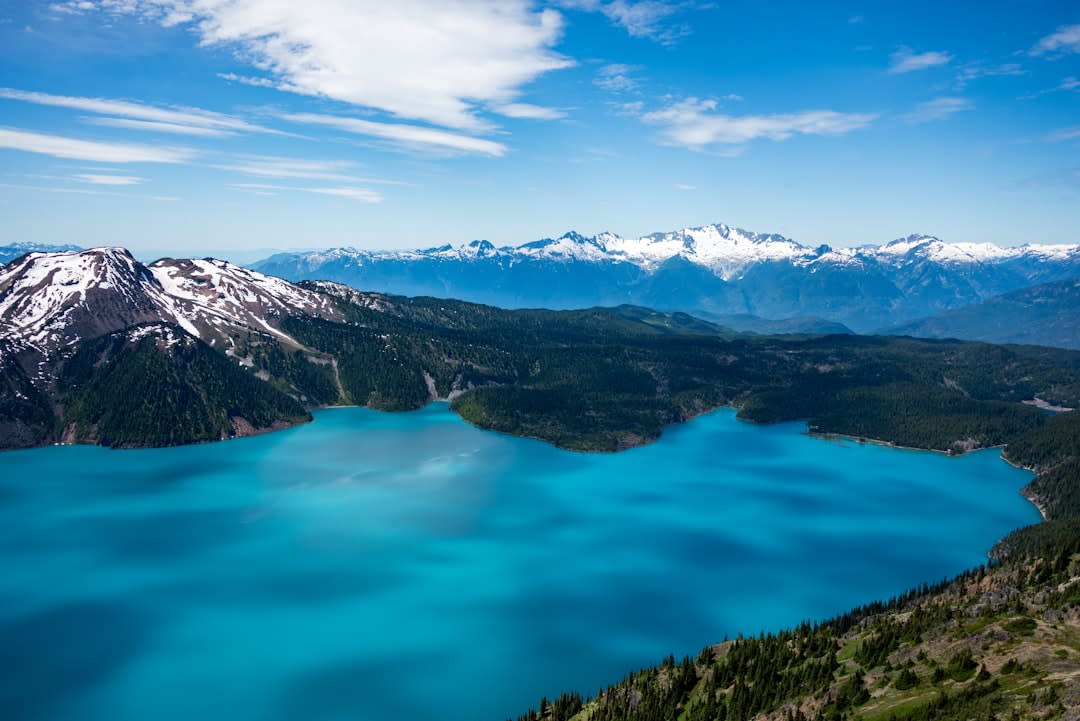
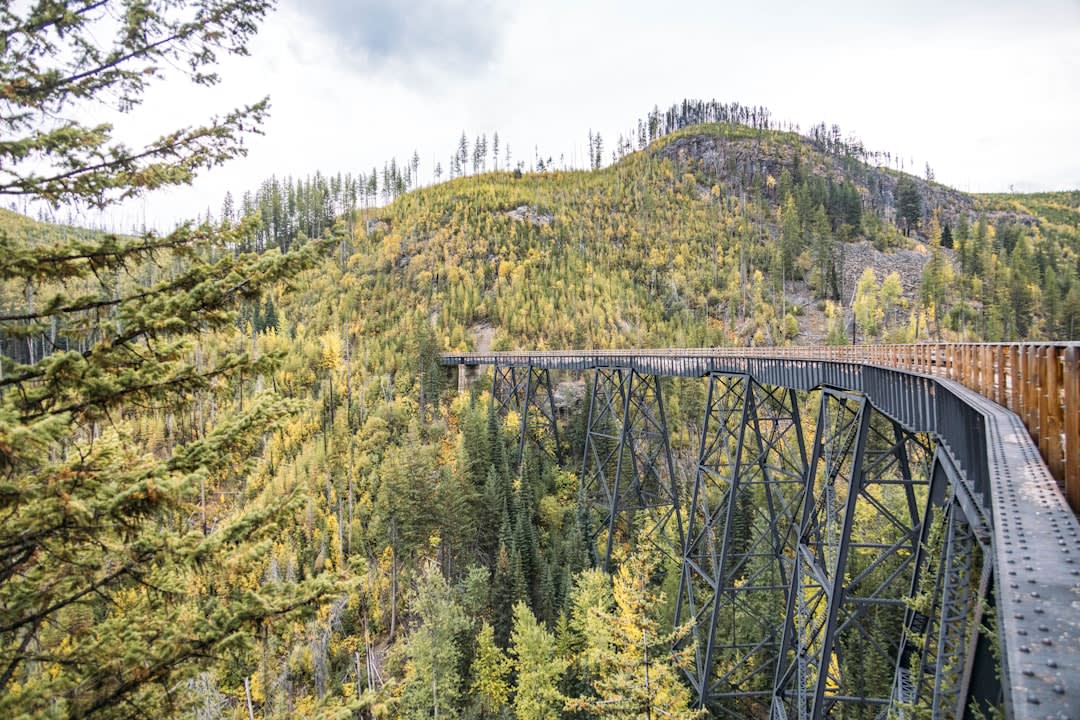
Myra Canyon and the ghost of the Kettle Valley Railway
The other thing I did not expect was the trestle bridges. Myra Canyon, up in the hills above the lake, carries the old Kettle Valley Railway grade across eighteen wooden trestles and through two tunnels, all now converted into a gravel cycling and walking trail with sheer drops on either side. The original line was built in the 1910s to haul ore and timber through terrain that seemed actively opposed to the idea of a railway, and wildfires destroyed most of the wooden trestles in 2003 — what you walk across now is a careful, faithful rebuild. I rented a bike in town and rode the full loop at a pace slow enough to actually look down, which I regretted slightly at the highest trestle and do not regret at all in retrospect.
Kelowna’s downtown has grown up around this contradiction — beach culture and wine culture sharing the same short blocks, paddleboarders drifting past patio tables where people are debating Pinot Noir versus Pinot Gris with real seriousness. It is the one part of British Columbia where I stopped needing a jacket after sundown, and that alone made it feel like a different country stitched into this one.
When to go: Late August into September, when the heat has settled slightly, the grape harvest is underway, and the orchards are at their most generous.