Gaspé Peninsula
"The road just keeps hugging the cliff and the villages just keep being beautiful, for six hundred kilometres, without apparent effort."
A thumb of land wrapping the St. Lawrence toward the open Atlantic, fishing villages clinging to cliffs, whales offshore, and Percé Rock standing alone in the water like a punctuation mark.
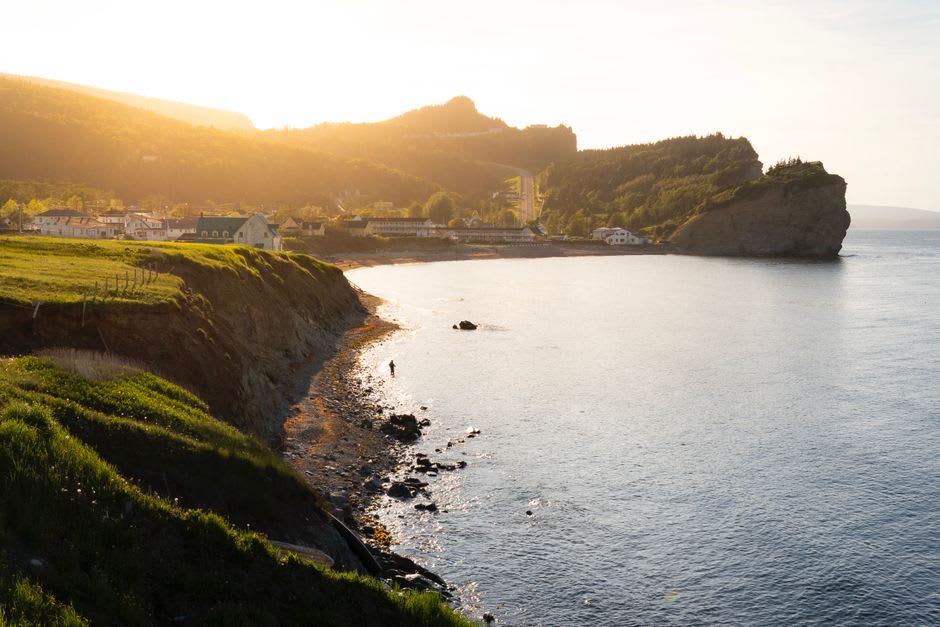
I drove the Gaspé Peninsula’s coastal route over three days from Rimouski, and it became one of those trips where I stopped setting a daily target because every single village made me pull over. The road, Route 132, wraps the entire peninsula, clinging to cliffs above the widening St. Lawrence until the river genuinely becomes ocean, fishing boats bobbing below in harbours painted the kind of saturated reds and blues I associate with Brittany, not North America. Half the towns are still overwhelmingly francophone, older signage entirely in French, and I found myself falling back into a version of my own language I hadn’t used in years — colloquial, coastal, unhurried.
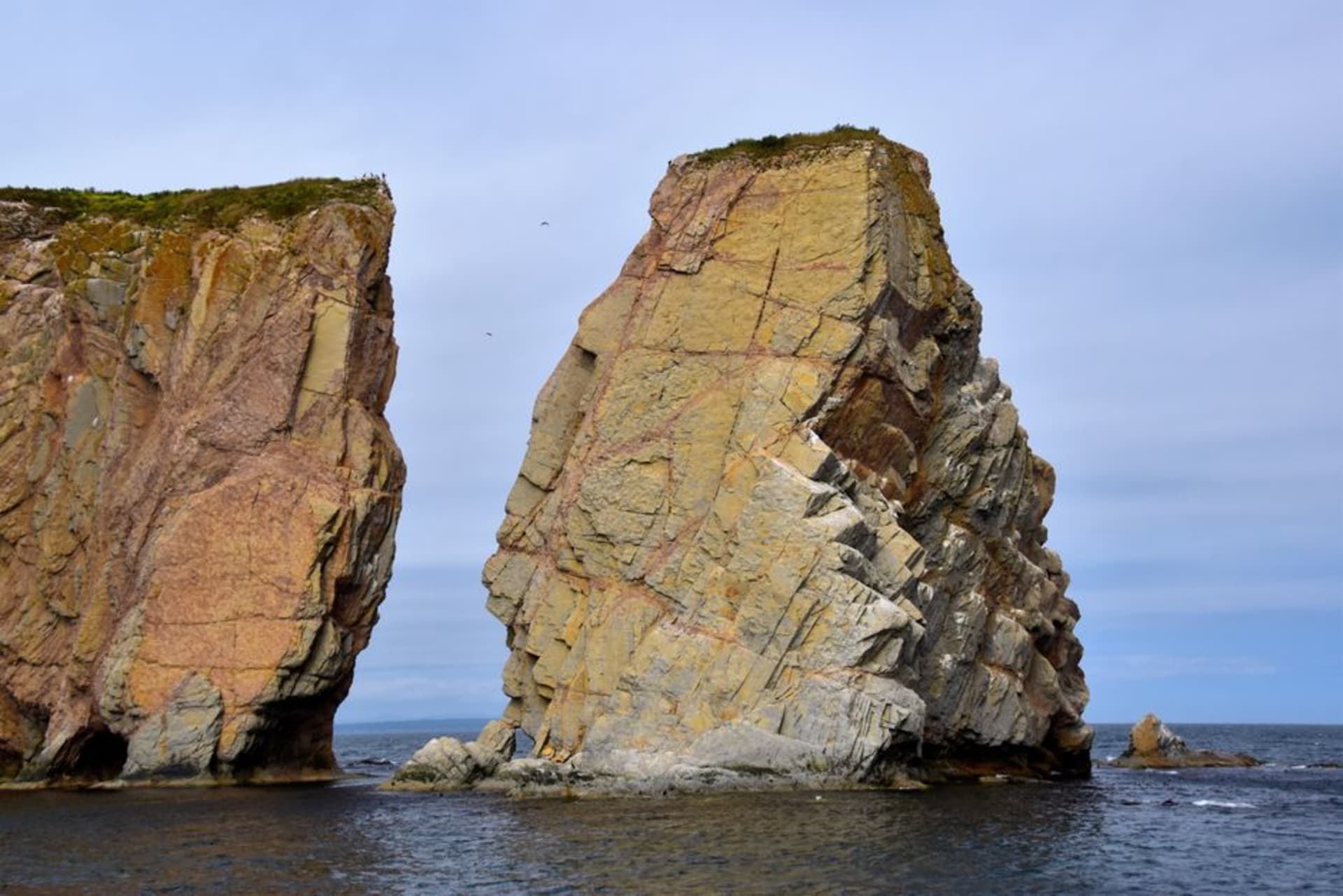
The whole drive builds toward Percé, and Percé Rock does not disappoint even after days of expectation-setting. It’s an immense limestone monolith standing just offshore, pierced clean through by a natural arch, and depending on the tide and the light it changes character completely — pale gold at sunrise, almost silver under cloud, blood orange at dusk when I finally got the photo I wanted. Boats run out to it and around the neighbouring Bonaventure Island, home to one of the largest colonies of northern gannets on the planet — tens of thousands of them, wheeling and diving in a single continuous roar of wings that I felt as much as heard.
Forillon and the whales
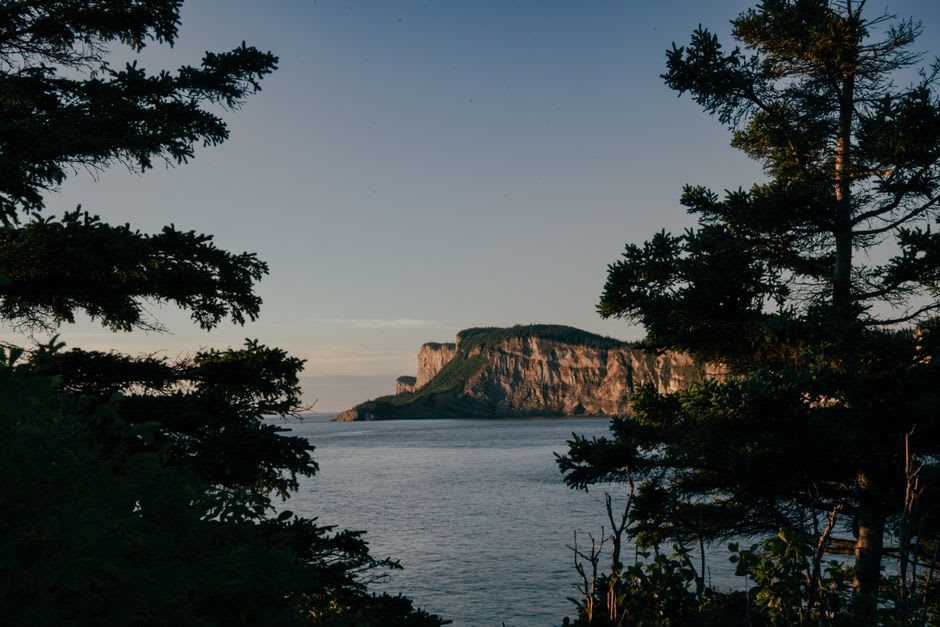
Forillon National Park, at the very tip of the peninsula, is where the Appalachian Mountains — the same chain that runs down through the eastern United States — finally meet the sea and stop. I hiked out along the Les Graves trail to Cap Gaspé, cliffs dropping straight to the water on one side, and spotted a minke whale surfacing maybe two hundred metres out, close enough that a group of us just stood there in silence until it vanished again. Whale-watching boats run out of several harbours along this stretch, chasing minke, fin, and occasionally blue whales that feed in the nutrient-rich water where the Gulf meets the river.
I ate more fresh cod and snow crab on this trip than I have anywhere else in Canada, usually at a shack with three plastic tables and a view that most restaurants would charge triple for.
When to go: July and August for reliable weather, whale-watching, and the gannet colony at its busiest. Early autumn brings quieter roads and the same dramatic cliffs without the crowds, though some boat tours wind down by late September.