Fogo Island
"A remote island where a group of grandmothers' quilting patterns inspired an internationally celebrated piece of architecture — that is a very Fogo Island story."
A remote outport island off Newfoundland where a strikingly modern inn now sits beside traditional fishing communities, and one headland claims to be a corner of the flat Earth.
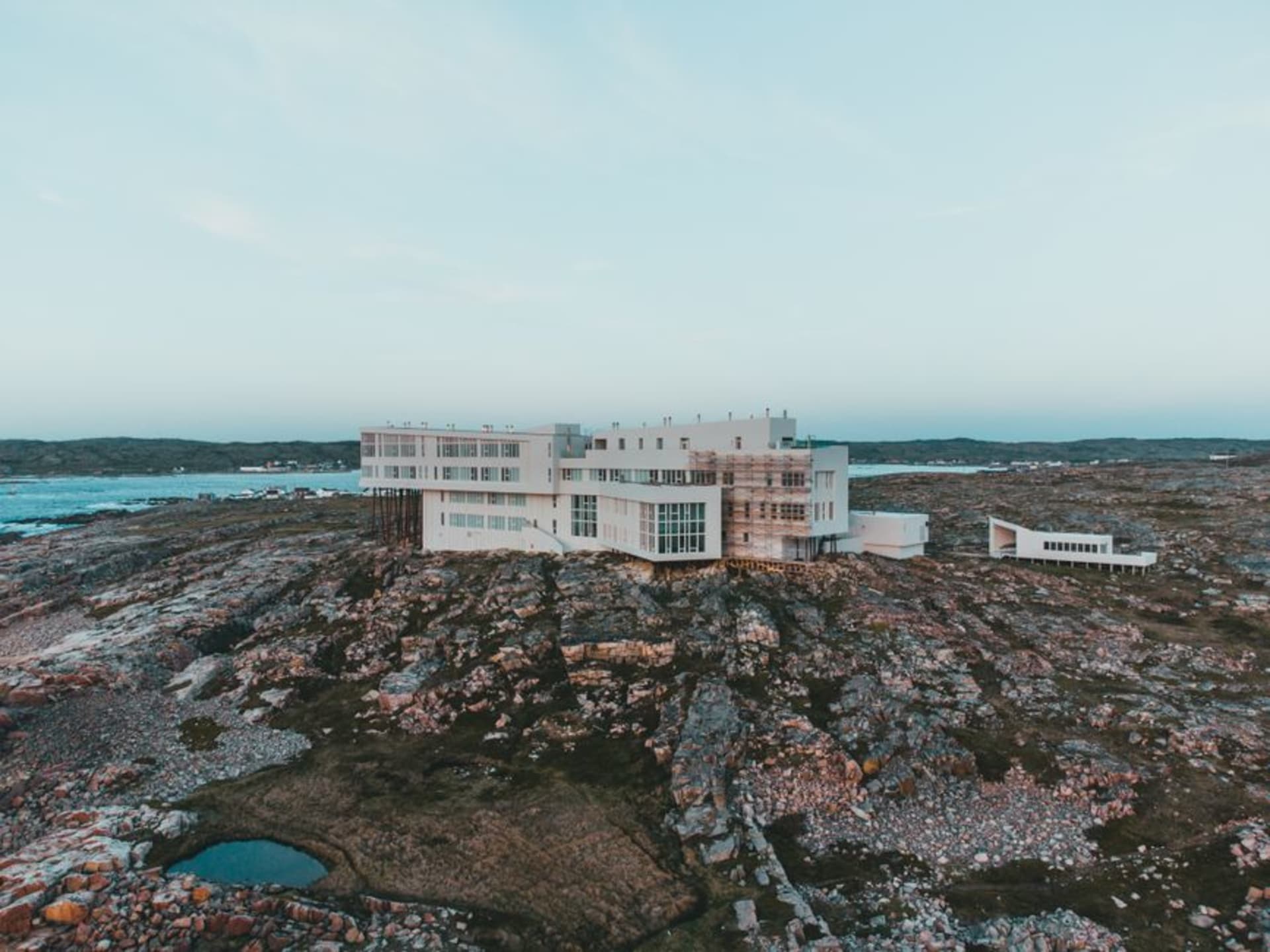
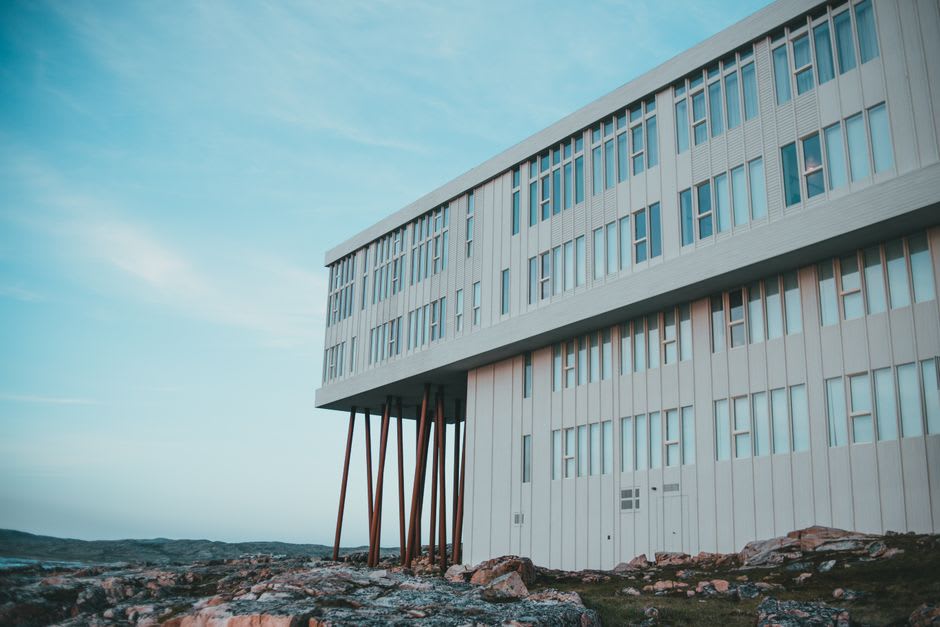
Fogo Island sits off the northeast coast of Newfoundland, reached by a ferry from Farewell that takes about an hour and drops you into a landscape of exposed rock, scattered ponds, and small outport communities that have fished these waters for centuries. I’d read about the Fogo Island Inn before arriving — a striking, angular building on stilts that looks almost aggressively contemporary against the traditional saltbox houses around it — and expected it to feel like an intrusion. It doesn’t. The inn was built by the Shorefast Foundation, a nonprofit founded by Fogo Island native Zita Cobb, explicitly to bring sustainable income back to an island whose economy had been gutted by the 1992 cod moratorium, and its interiors lean hard on local craft: quilts made by island women, furniture built in a local workshop, patterns drawn from generations of handiwork. Walking through it felt less like visiting a luxury hotel and more like touring an ambitious community project that happened to also be beautiful.
The island’s twelve communities each have their own particular character and, historically, their own particular boat-building or fishing specialty, a level of local distinctiveness you don’t expect on a landmass this small. I stayed in Joe Batt’s Arm, one of the larger communities, and spent an evening at the local shed talking to a retired fisherman who described, without much sentimentality, watching the industry collapse in the early ’90s and the island slowly finding its way back through tourism and renewed shellfish fishing.
Brimstone Head
The island’s odder claim to fame sits at Brimstone Head, near the community of Fogo — a rocky outcrop that the Flat Earth Society has, since the 1970s, listed as one of the four corners of the Earth, alongside locations in the Bahamas, New Zealand, and Russia. Nobody I spoke with on the island takes this literally, but they clearly enjoy the story and the plaque that commemorates it, and the hike up Brimstone Head itself is worth doing regardless of your position on Earth’s shape — a short, steep climb to a bald summit with sweeping views across the harbour and out toward open ocean, icebergs sometimes visible drifting past in early summer.
Outport rhythms
What stayed with me most was the pace — Fogo Island runs on a rhythm shaped by weather and tide rather than schedule, and I found myself falling into it within a couple of days, timing walks around the fog lifting and meals around whichever wharf still had fresh capelin or cod. The Shorefast Foundation has also opened artist studios scattered across the island’s more remote points, each one a small, striking piece of modern design set against bog and rock, part of a residency program that brings international artists to work in near-total isolation. Coming across one on a coastal walk, incongruous and lit from within on an otherwise empty headland, was one of the stranger and more memorable sights of my whole Newfoundland trip.
When to go: June through September for ferry reliability and the mildest weather; early summer adds a chance of icebergs drifting past the island’s northern shore.