Drumheller
"Drumheller is what happens when a landscape this strange also happens to be full of dinosaurs — nobody undersells it, for once."
Alberta's badlands, where seventy-five million years of erosion has carved hoodoos and dinosaur bones out of the same striped rock — kitsch and genuine science living side by side.
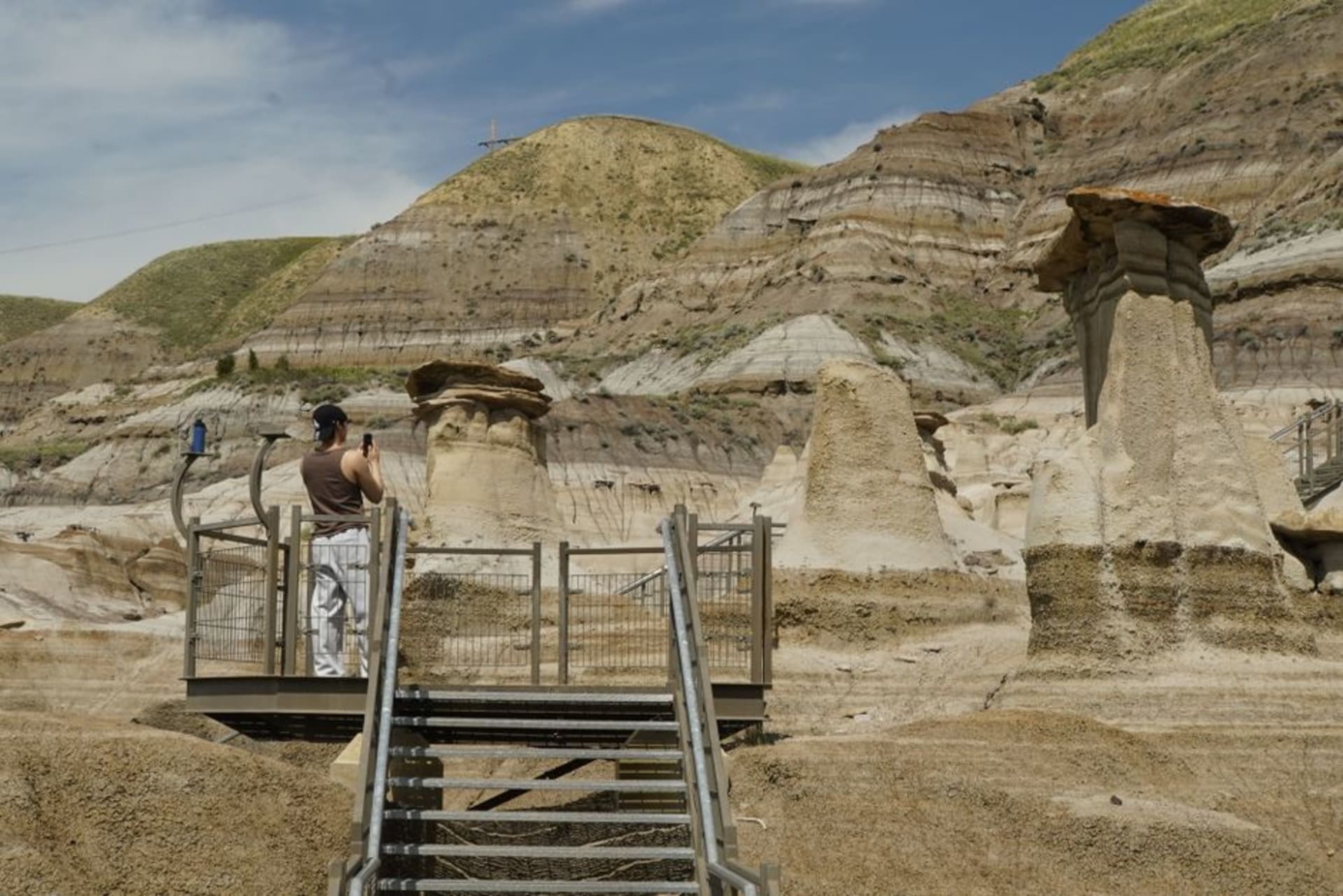
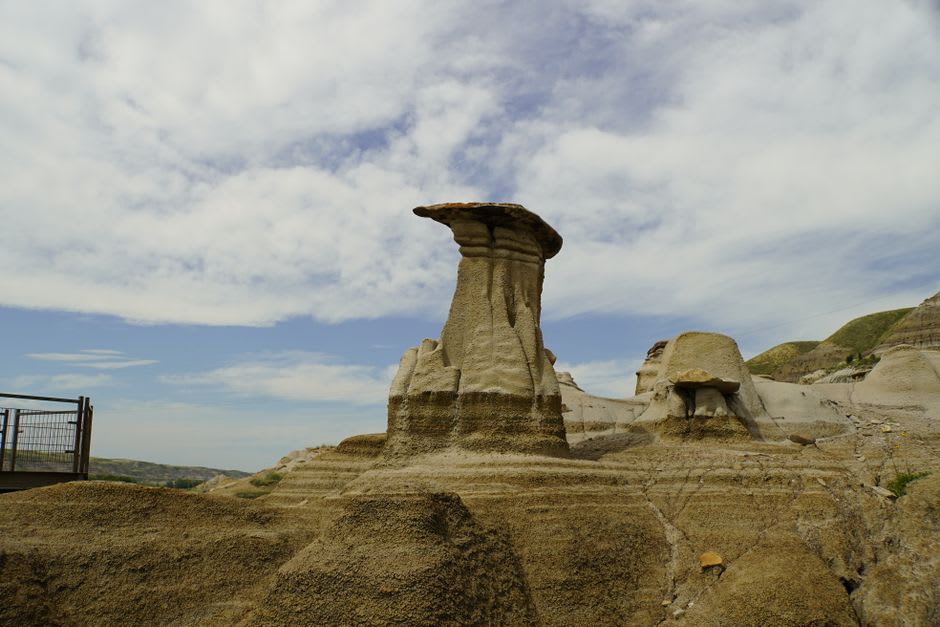
The drive into Drumheller drops you out of nowhere — flat Alberta prairie for an hour, wheat and canola to the horizon, and then the road tips over the edge of a canyon that shouldn’t be there and you’re suddenly among hoodoos, striped mudstone pillars capped with harder rock like they’re wearing hats. It’s disorienting in a way I wasn’t prepared for. The badlands look like they belong somewhere in the American Southwest, not ninety minutes from Calgary’s office towers.
The first thing you see entering town, before any actual geology, is the World’s Largest Dinosaur — a fibreglass T. rex over twenty-five metres tall that you can climb inside for a few dollars and stand in its open mouth, looking out over the Red Deer River valley. It is unapologetically kitsch, the kind of roadside monument that exists purely because someone decided it should, and I will admit I climbed it twice.
The Royal Tyrrell Museum
The reason Drumheller matters beyond the photo opportunity is the Royal Tyrrell Museum, one of the world’s great paleontology institutions, built into the badlands themselves. This region has produced more dinosaur fossils than almost anywhere on Earth — the erosion that shaped the hoodoos is the same process constantly exposing new bone, which means new specimens still turn up on a semi-regular basis. I spent close to four hours inside and could have stayed longer; the hall of dinosaurs holds specimens found within a short drive of the building, including Alberta’s own horned ceratopsians, displayed in a way that makes clear this isn’t imported spectacle but the region’s actual geological identity.
Outside the museum, the badlands themselves reward slow walking. I drove the short loop through Horsethief Canyon at sunset, when the striped layers of the mudstone — each band a different geological era, laid down over tens of millions of years — go from grey to a deep rust orange. A rancher parked at the overlook told me his family has worked this land for three generations and still finds bone fragments turning up in the fields after heavy rain, which he treated as an unremarkable fact of local life rather than the extraordinary thing it is.
When to go: May through September for warm weather and full museum hours; the badlands are brutally exposed with little shade, so bring water and go early or late in summer. Early fall gives you the best light for photographing the hoodoos without the peak-season crowds.