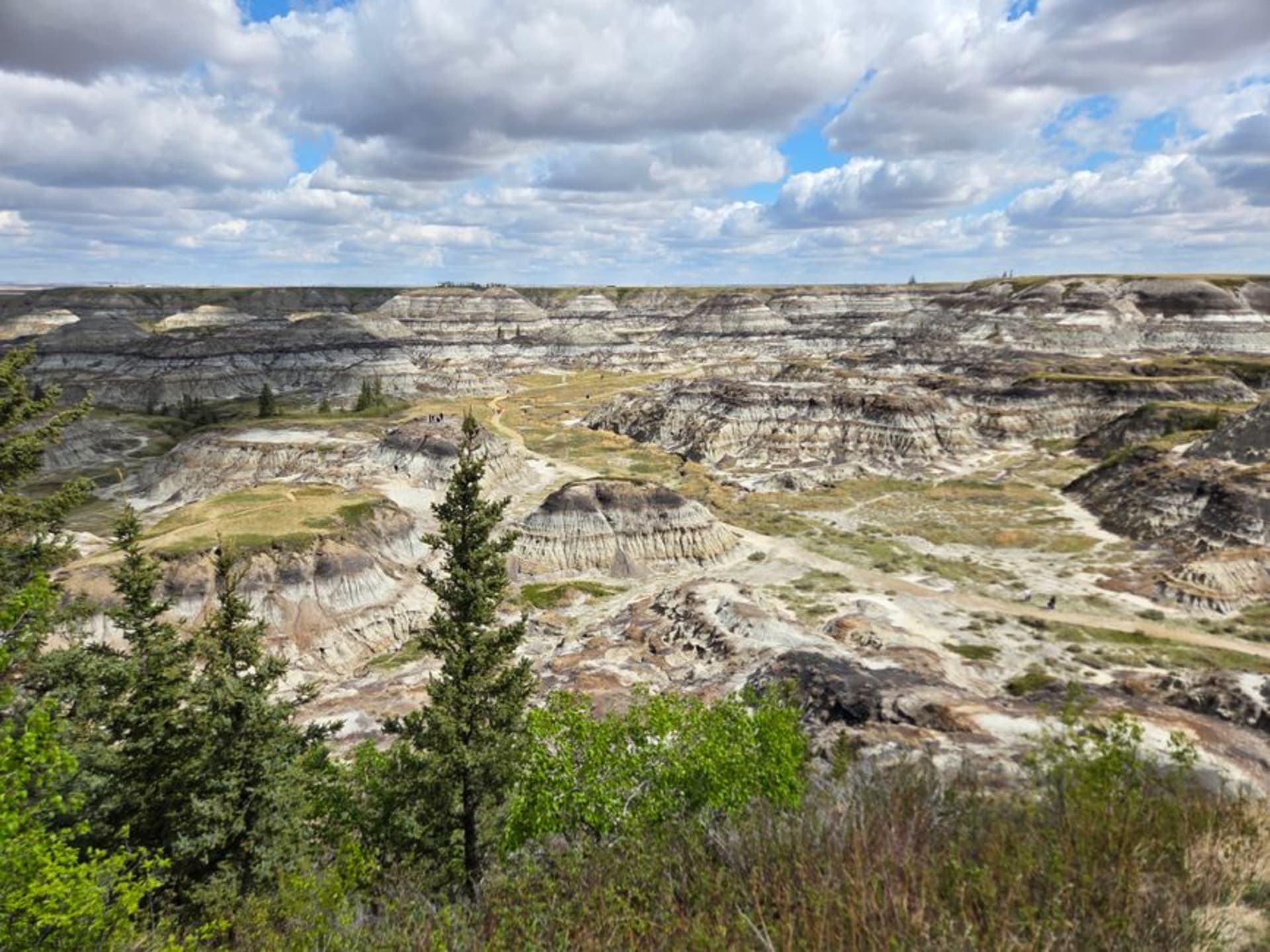
Dinosaur Provincial Park
"Somewhere under nearly every hill here is a dinosaur that has been waiting seventy-five million years for someone to notice."
A UNESCO World Heritage badlands site holding one of the richest dinosaur fossil deposits on Earth — an eroded, otherworldly landscape that looks abandoned by more than just the dinosaurs.
The drive to Dinosaur Provincial Park takes you well off the main highway east of Brooks, through wheat fields so flat and unbroken that the sudden drop into the badlands feels like the ground simply gave way. It did, in a sense — the Red Deer River has been cutting through these sediments for thousands of years, and what it exposed is a landscape of striped hoodoos, deep coulees, and eroded channels that looks less like Alberta and more like something out of the American desert Southwest, dropped in without explanation among the prairie wheat.
This isn’t just a scenic badlands site — it’s a UNESCO World Heritage Site specifically because of what’s buried in it. More than fifty dinosaur species have been identified from fossils found within the park’s boundaries, one of the richest concentrations of Late Cretaceous dinosaur remains anywhere on the planet, and new specimens are still actively excavated most seasons. Walking the public trails, I kept catching myself scanning the ground out of habit, half-expecting to trip over a femur, which is not entirely an unreasonable expectation here.
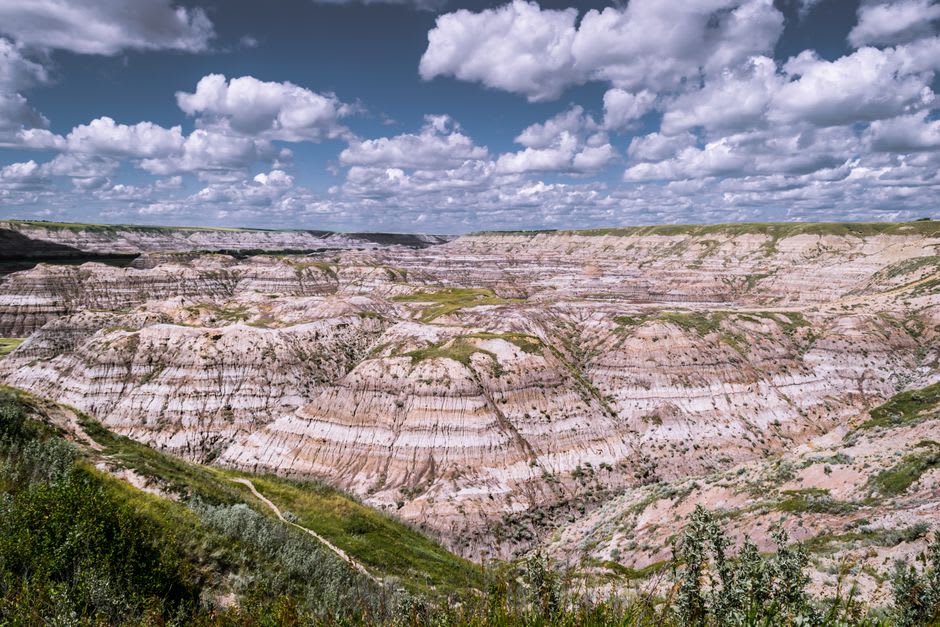
Inside the restricted zone
Most of the park’s badlands are actually off-limits to unsupervised visitors, fenced and protected to prevent fossil poaching and erosion damage, and the only way into the restricted core is on a guided tour run by the park’s field station. I booked one and spent three hours with a young paleontology student who pointed out bone fragments literally weathering out of the hillside as we walked — a piece of hadrosaur vertebra half-exposed in the mudstone, left in place exactly as regulations require, tagged for a future excavation crew. She explained that the same relentless erosion exposing new fossils every season is also slowly destroying ones nobody has found yet, a quiet, ongoing race between discovery and loss playing out across the entire park.
Camping in the park itself, in the cottonwood-shaded campground down near the river, gave me the clearest sense of how strange this landscape actually is — daytime badlands heat giving way to a startlingly cold, still night, coyotes calling somewhere out in the coulees, and a sky so free of light pollution that the Milky Way was fully visible by ten o’clock. It felt less like camping in a park and more like camping inside an active dig site that happened to also permit tents.
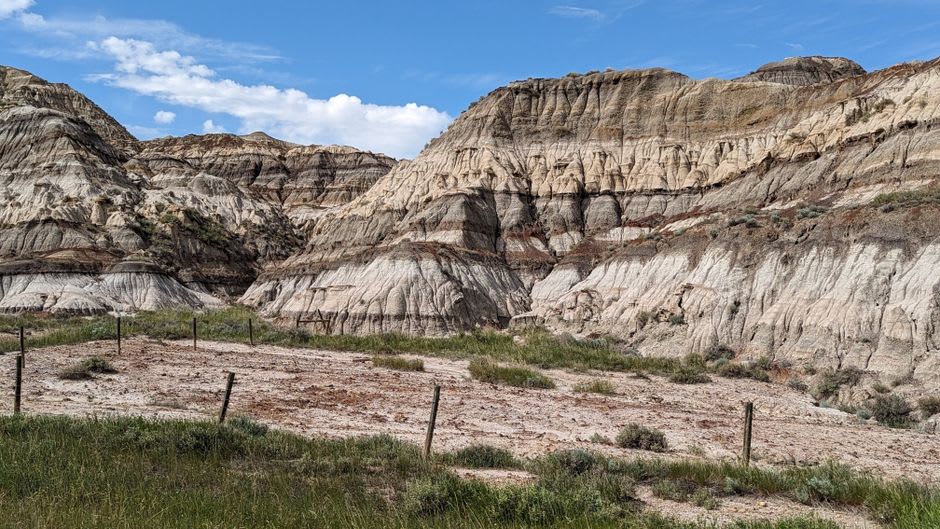
When to go: May, June, and September to avoid the harsh midsummer badlands heat, which regularly climbs past 30°C with almost no shade on the trails. Book the guided restricted-area hikes well ahead, since summer slots fill quickly.