Columbia Icefield
"Water that melts a few metres apart here ends up in the Pacific, the Atlantic, and the Arctic — that's the kind of geography that actually stops you in your tracks."
The largest icefield in the Rockies, straddling the Banff–Jasper boundary and feeding three oceans — a place where you can stand on ice thick enough to bury a skyscraper.
You feel the Columbia Icefield before you see it properly — a drop in temperature along the Icefields Parkway, a wind that suddenly has an edge to it even in July. Then the highway curves and there it is: the Athabasca Glacier, a tongue of blue-white ice spilling down between two peaks like something poured rather than formed. I’d seen glaciers in the French Alps, retreating, dirty with rockfall, apologetic almost. This one still has genuine presence, even though the signs along the access road — marking where the ice used to reach in 1900, 1950, 1980 — tell an unmistakable story of retreat.
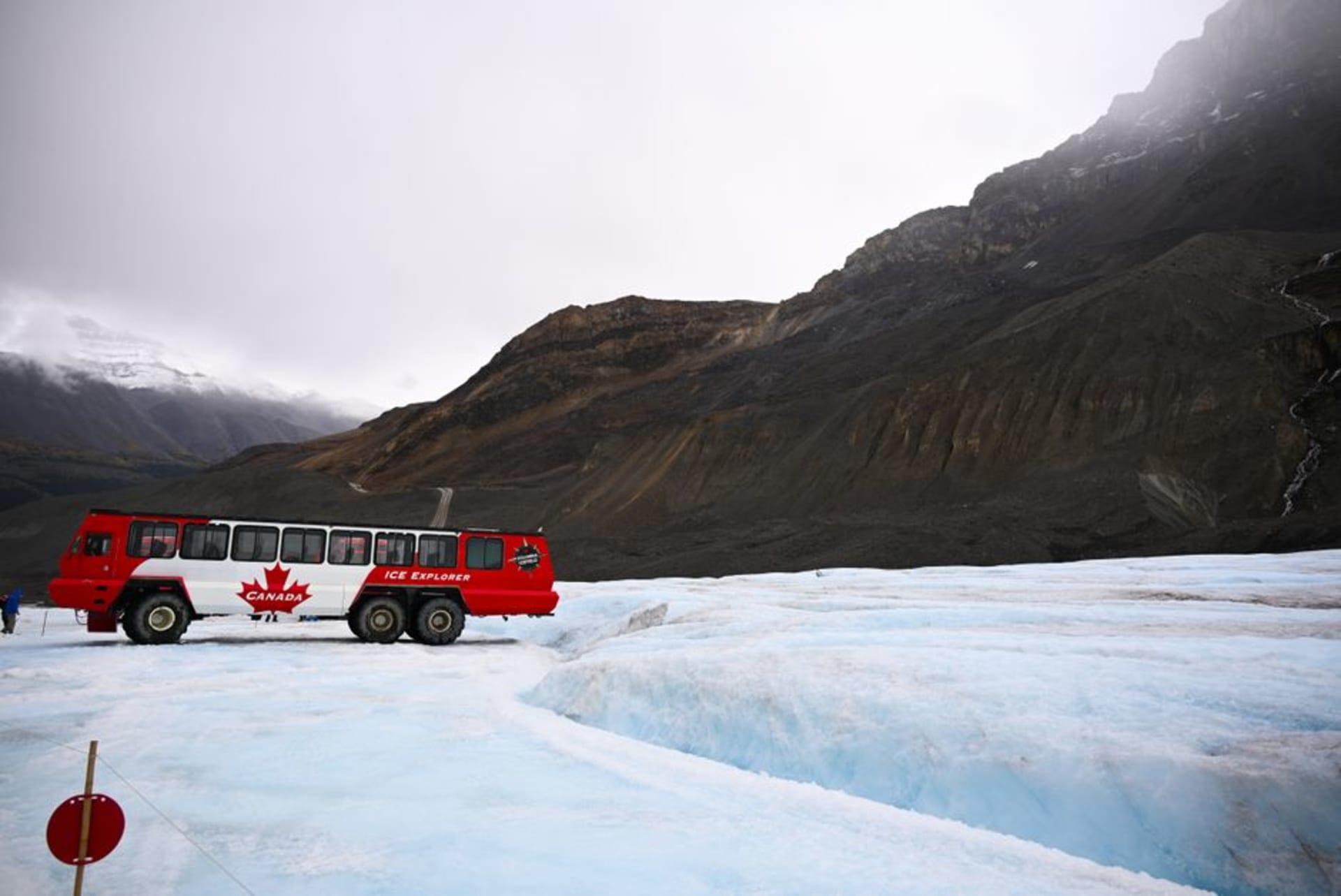
I did the Ice Explorer tour, one of those massive six-wheeled vehicles built specifically for glacier travel, and stepped out directly onto the ice with a guide who filled a bottle from glacial meltwater and had us drink it — startlingly clean, and cold enough to ache in your teeth. Underfoot, the ice groaned occasionally, a sound with no obvious source, like the glacier clearing its throat. He explained we were standing on ice up to 300 metres thick in places, dense enough that light takes on that impossible saturated blue in the crevasses.
The hydrological apex of North America
What makes the Columbia Icefield genuinely singular, beyond its size — it’s the largest icefield in the Rockies, feeding eight major glaciers — is its position on what’s sometimes called a triple continental divide. Meltwater here eventually reaches the Pacific, the Arctic, and, via the Saskatchewan and Nelson river systems, Hudson Bay and the Atlantic. Three oceans, from one mass of ice you could walk across in an afternoon. I stood at the toe of the glacier trying to work out which direction “my” water was headed and never quite managed it, which felt appropriate.
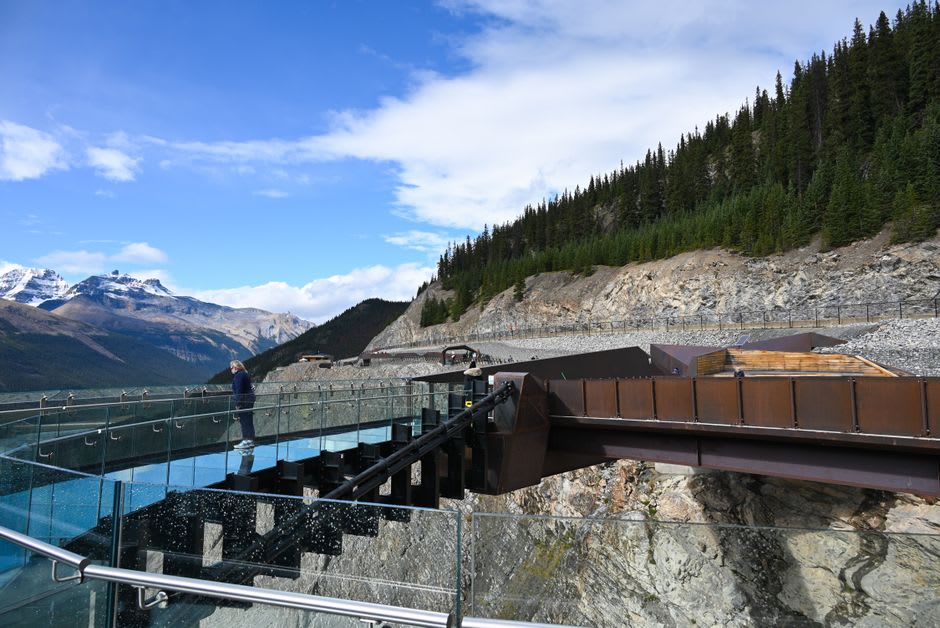
The Glacier Skywalk, a glass-floored observation platform cantilevered 280 metres above the Sunwapta Valley a short drive north, gave me the view I actually needed to understand the icefield’s scale — the whole glacial basin fanning out above, feeding a valley that plunges away beneath your feet in a way that turns your knees traitorous.
A glacier on a schedule
The uncomfortable part of the visit is the pace of the retreat. Guides here don’t shy away from it — they point out the distance markers matter-of-factly, the way you’d narrate a family member’s illness you’ve had time to get used to. The Athabasca Glacier has lost more than half its volume and retreated over a kilometre since the late 1800s. It’s still magnificent. It’s also, unmistakably, disappearing.
When to go: June through September, when the Icefield Parkway access road is fully open and the Ice Explorer tours run daily. Go early morning for thinner crowds and a clearer sky over the peaks.