Charlevoix
"A region built inside a two-hundred-million-year-old meteor crater, and somehow the cheese is the thing everyone talks about first."
A UNESCO biosphere region on the St. Lawrence's north shore, artist colonies tucked into river valleys, and a farm-to-table culture that outpaces most of what I've eaten in rural France.
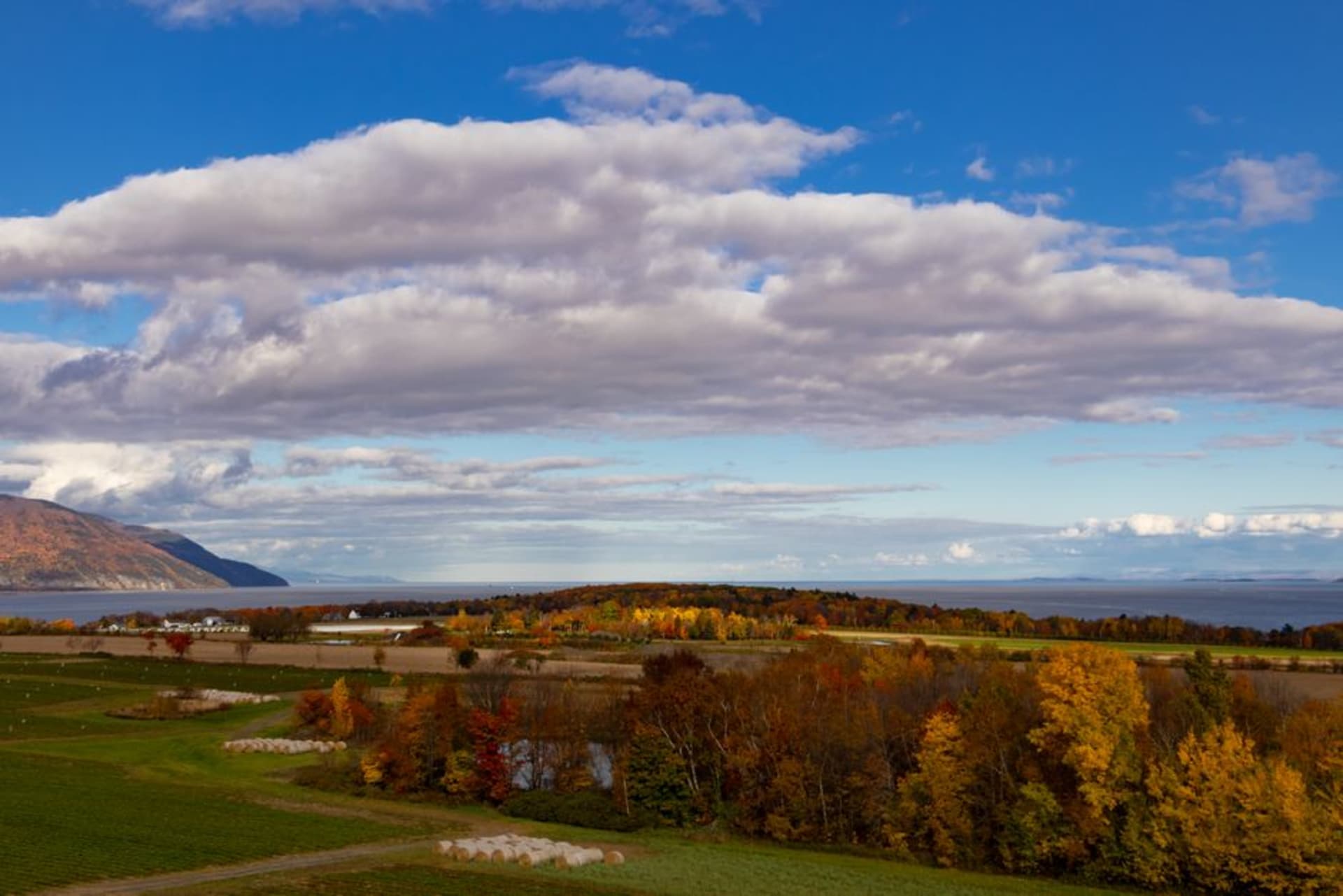
Charlevoix reveals itself slowly if you’re driving in from Québec City along the river road, the terrain folding into steeper hills and tighter valleys with each village you pass, until you realize the whole region sits inside the eroded rim of an ancient meteor impact crater — something like two hundred million years old, the geologist at my inn told me over breakfast, utterly matter-of-fact about it, the way people here are matter-of-fact about most extraordinary things. UNESCO designated the whole area a World Biosphere Reserve decades ago, and driving its switchback roads between river and ridge, past barns and church spires and the widening St. Lawrence glinting below, it’s obvious why.
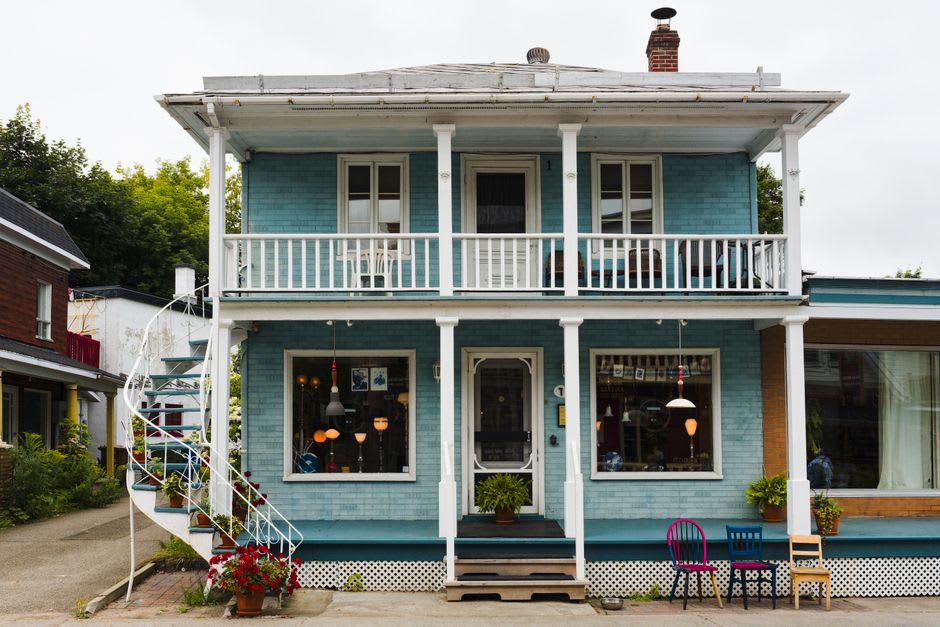
Baie-Saint-Paul is the region’s beating heart, an artist colony since at least the early twentieth century when Québécois painters started arriving for the specific quality of light where the Gouffre River meets the St. Lawrence. Galleries line the main street, more per capita than I’ve seen in towns many times its size, and I spent an entire rainy afternoon ducking between them, eventually buying a small landscape from a painter working out of her own storefront who told me she’d moved here from Montréal specifically because the horizon line does something to her work that the city never did.
The Route des Saveurs
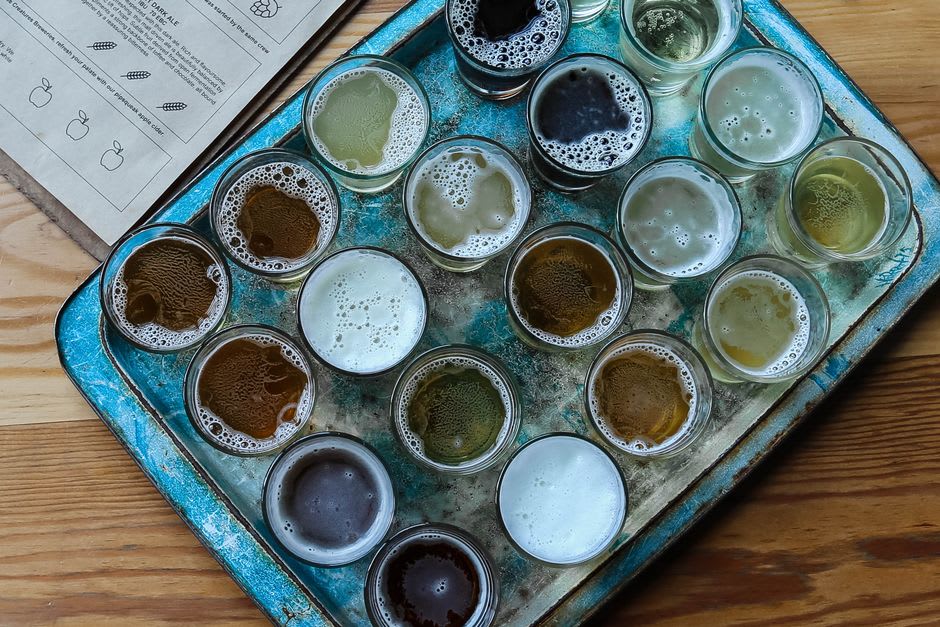
Charlevoix takes food more seriously than almost anywhere else I’ve been in Canada, and the reason has a name: the Route des Saveurs, a signed trail of farms, cheesemakers, cideries, smokehouses, and small restaurants that string along the region’s back roads. I stopped at a farm producing Migneron, a washed-rind cheese that would not embarrass itself on a table in Normandy, then at a cidery pressing apples grown on slopes steep enough to require terracing, then at a smokehouse curing lamb raised on nearby salt marshes. By dinner I’d built an entire tasting menu out of a single afternoon’s driving, without a reservation anywhere.
Above it all sits Le Massif, a ski resort with one of the largest vertical drops east of the Rockies, its runs dropping straight toward the frozen St. Lawrence in winter — I skied a single run there in March with the river visible the entire way down, ice floes drifting past, and it remains one of the strangest, most memorable descents of my life.
When to go: September for harvest season along the Route des Saveurs and the best light for the artist colonies. Winter, December through March, for skiing at Le Massif with river views on the descent.