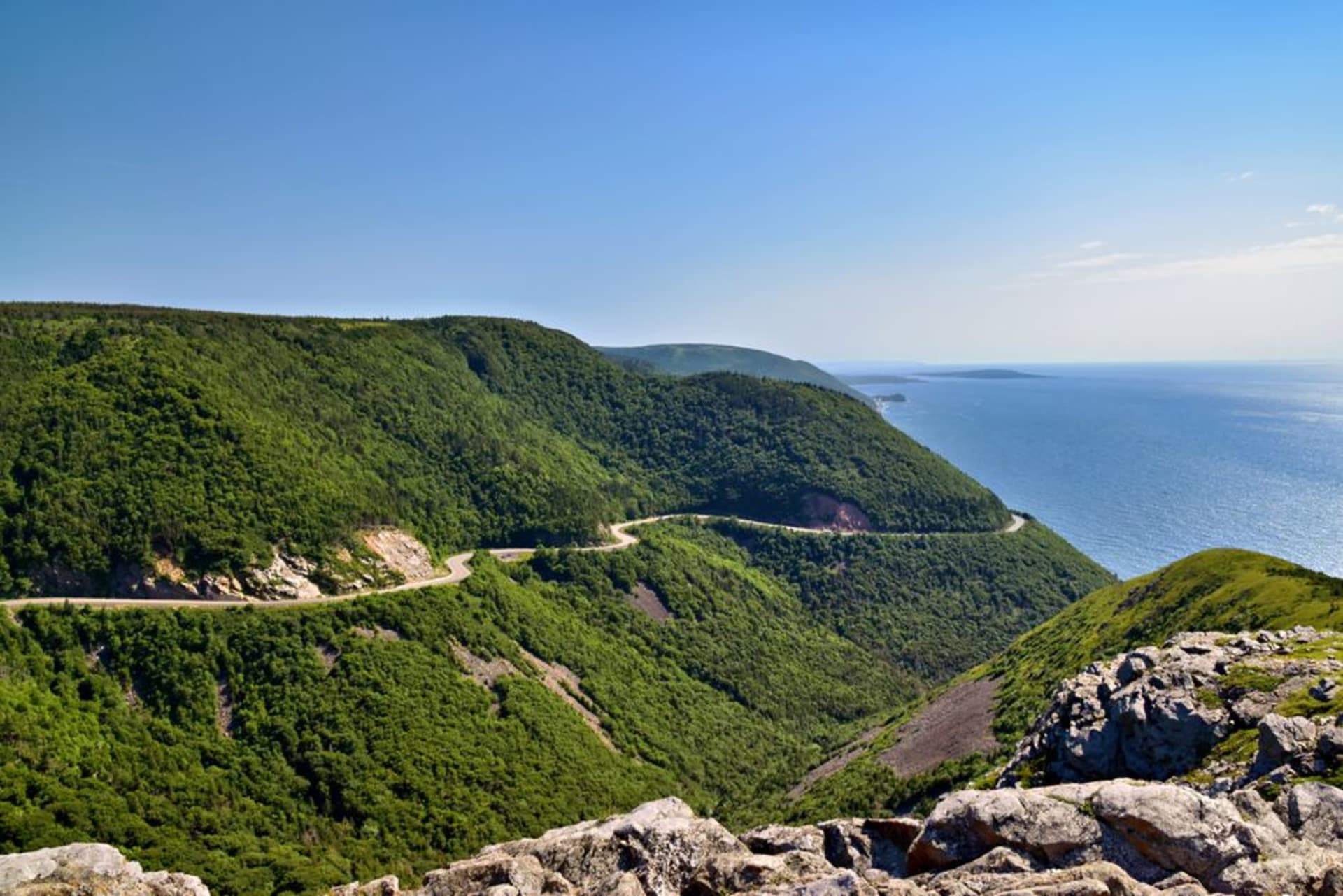
Cape Breton Island
"I have driven the Alps and the Amalfi coast. The Cabot Trail belongs in that conversation, and it barely tries."
A Highland-scaled island at Nova Scotia's northern tip, where Gaelic fiddle music, Acadian roots, and Mi'kmaq history layer over one of the great coastal drives on the continent.
I drove the Cabot Trail counter-clockwise, which locals in Chéticamp insisted was the correct direction — ocean side of the road on your side of the car, not the guardrail — and by the second hour I understood why people bring up this loop unprompted in conversations about the world’s great drives. Two hundred and ninety-eight kilometres circling the Cape Breton Highlands, climbing through boreal forest to plateau lookouts, dropping back to fishing coves painted in the kind of colour palette that looks fictional in photographs and is somehow understated in person. I pulled over so often for viewpoints that a drive Google estimated at five hours took me most of a day, and I do not regret a single stop.
What surprised me more than the scenery, though, was how many distinct cultures the island layers on top of each other without any of them dominating. The Mi’kmaq were here first, and their place names — Cheticamp itself derives from a Mi’kmaq or early Acadian root depending who you ask — still map the island. French Acadian communities settled the western shore after the Expulsion scattered their ancestors from the mainland, and Chéticamp today still runs on French as a living daily language, not a heritage display; I ordered dinner in French and the waitress switched without blinking. And Scottish Highlanders, cleared from their own land in the eighteenth and nineteenth centuries, resettled Cape Breton’s interior and east coast so thoroughly that Gaelic survived here decades after it had faded in Scotland itself.
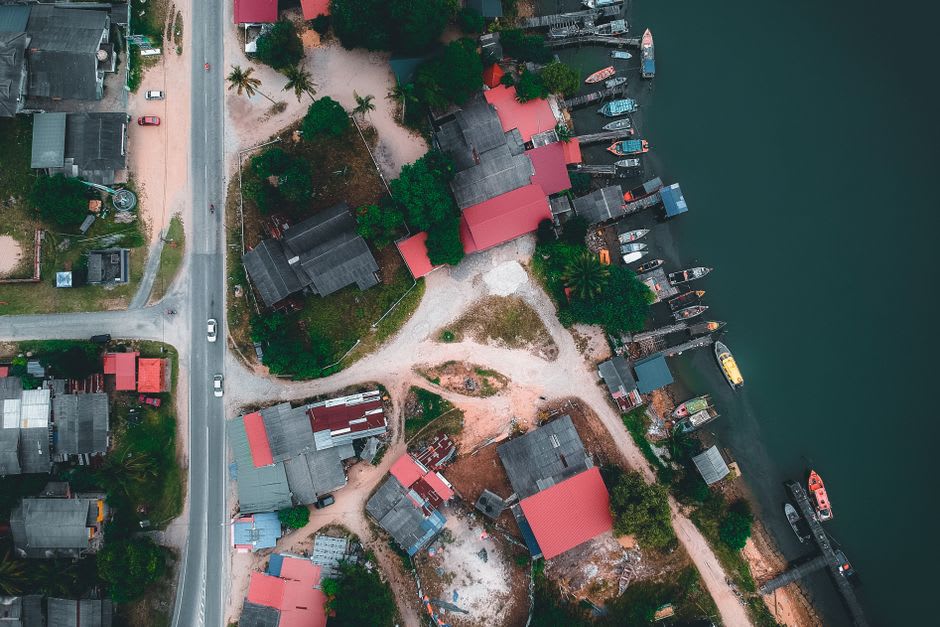
A Kitchen Party in Judique
That Gaelic layer is not a museum piece — it is Tuesday night at the Celtic Music Interpretive Centre in Judique, where I stumbled into a live session and found a room of maybe forty people, some elderly, some children, all clapping along as a fiddler and a piano player worked through reels that have been played on this island since the 1800s. A woman next to me explained that this was a “kitchen party,” the informal Cape Breton tradition of gathering around music the way other cultures gather around a meal, and that her grandmother had taught her the exact steps of the dance the teenagers up front were currently doing. I have been to fest-noz in Brittany, which claims a similar unbroken folk tradition, and Judique’s kitchen party held its own against that comparison without any self-consciousness at all.
Fortress Louisbourg
On the island’s eastern side, the Fortress of Louisbourg is a reconstruction so thorough it disoriented me for the first ten minutes — costumed interpreters staying in character as 1740s French colonial soldiers and merchants, cannons, a working bakery producing period bread, all rebuilt on the actual ruins of what was once a major French fortress town before the British destroyed it twice. It is the largest historical reconstruction in North America, and walking through its gates felt less like a museum and more like a very elaborate, very convincing piece of time travel, right down to the interpreter who refused to acknowledge my phone camera existed.
When to go: Late September and early October for the Cabot Trail’s fall colour, when the maples turn against the ocean and the summer crowds thin out considerably. Summer months bring the best weather for hiking the Skyline Trail and the fullest schedule of Celtic music events across the island.