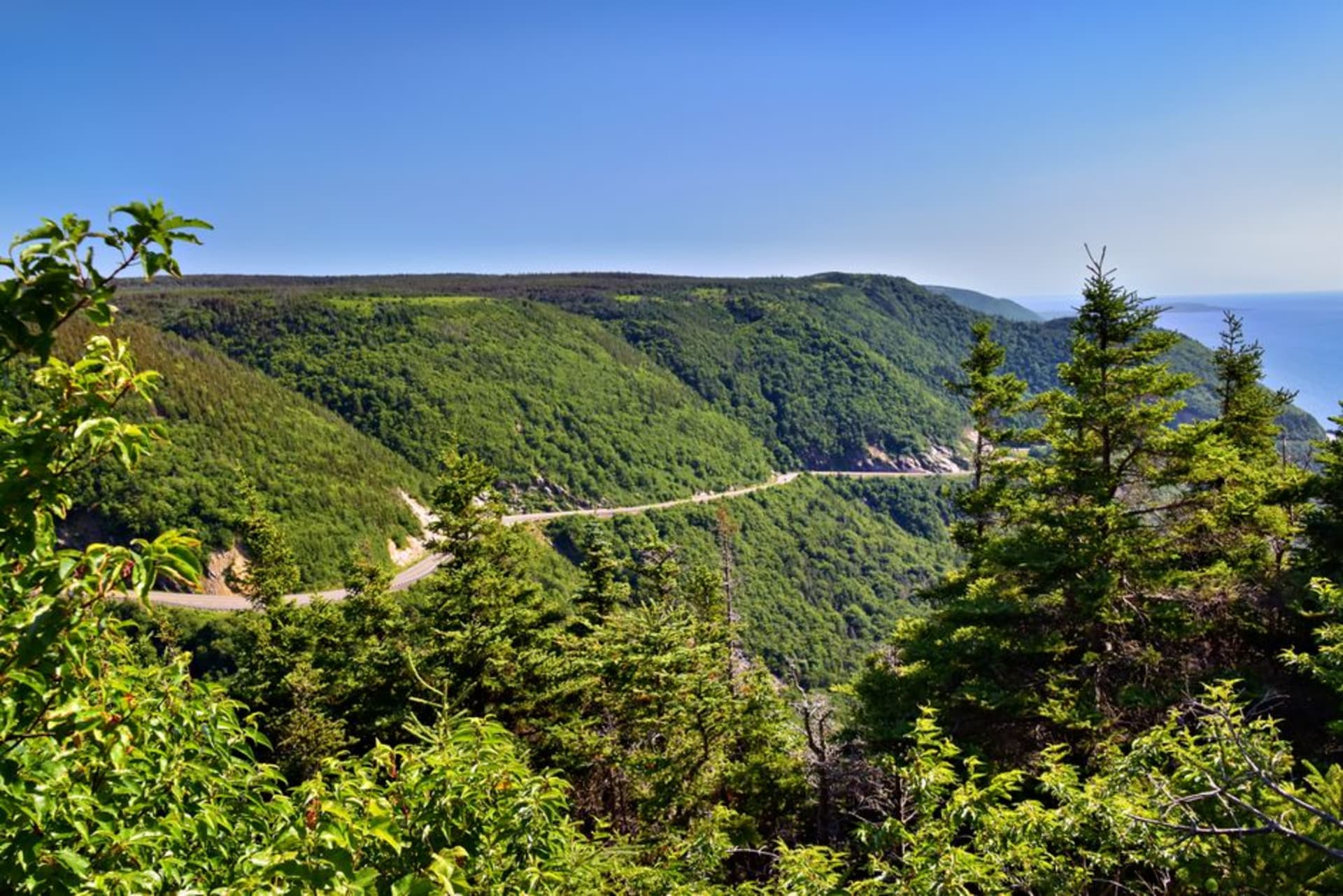
Cabot Trail
"I have driven the Amalfi Coast and the Cabot Trail beats it — fewer people honking, more moose."
A 298-kilometre highway looping the Cape Breton Highlands where the road hugs cliffs, moose wander the shoulder, and every lookout demands you stop again.
I want to be clear about what the Cabot Trail actually is, because I went in vague about the details and came out with strong opinions: it’s a 298-kilometre loop road that circles the Cape Breton Highlands in northern Nova Scotia, and it takes you through the kind of terrain — coastal cliffs, hairpin turns, sudden reveals of the Gulf of St. Lawrence hundreds of metres below — that makes you grip the wheel a little tighter even as you’re trying to look at the view. I rented a car in Baddeck and gave myself two full days for the loop, which people told me was generous. It was not generous. I stopped constantly.
The road was built in the 1930s, largely by hand and mule, cut into a coastline that clearly did not want a road there, and you can feel that stubbornness in every switchback around French Mountain and MacKenzie Mountain. Driving it counterclockwise, the ascent out of Pleasant Bay climbs so steeply and so close to the cliff edge that I found myself laughing nervously at a hairpin turn with nothing but Gulf of St. Lawrence on the other side of the guardrail — if there was a guardrail. This is not a road for the distracted or the hungover.
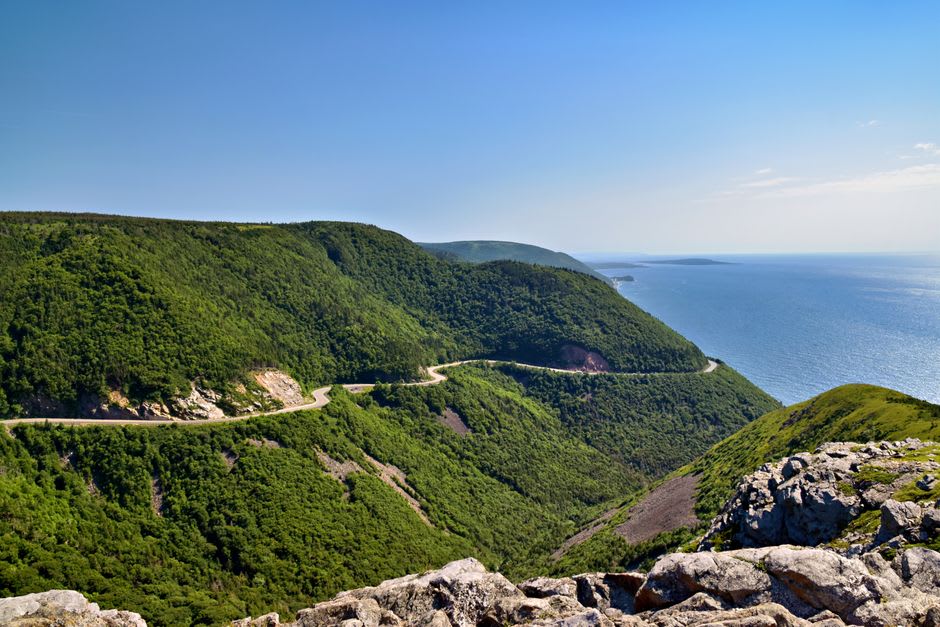
Skyline Trail and the moose
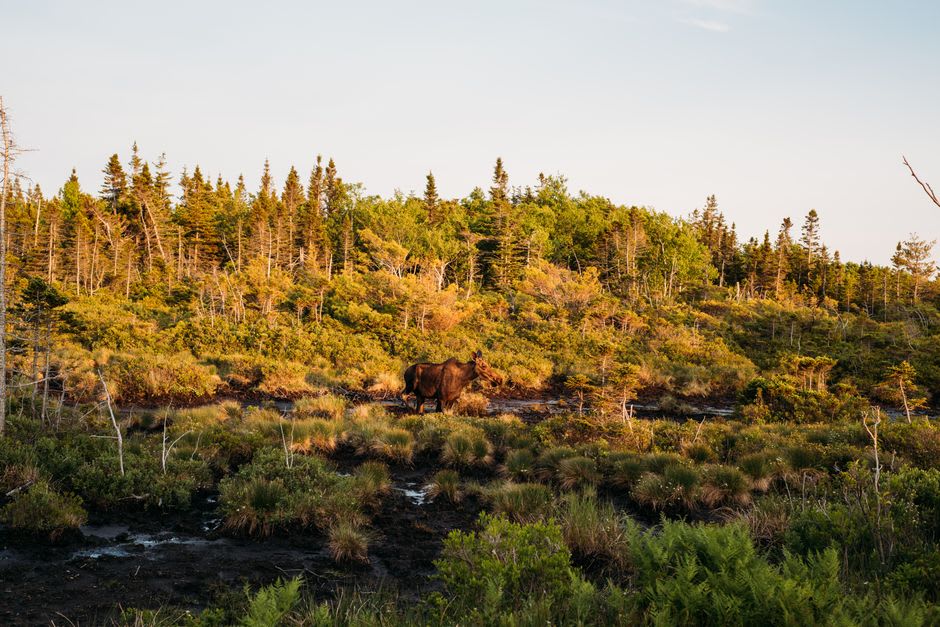
The single best stop on the loop is the Skyline Trail, a hike that starts unassumingly through stunted boreal forest — the trees get shorter and more wind-bent the further you go, victims of the salt air coming off the Gulf — before opening onto a boardwalk that juts out over a cliff with a 300-metre drop to the water. I went at golden hour on the advice of a woman at the visitor centre, and the boardwalk was crowded but silent, everyone just staring at the sun dropping into the ocean past the headland. On the walk back, a moose crossed the trail about twenty metres ahead of me, utterly unbothered, and kept browsing in the underbrush while a dozen of us stood frozen with our phones out. Cape Breton Highlands National Park has one of the healthiest moose populations in Atlantic Canada, and you’re told to expect sightings, but nothing quite prepares you for how casually enormous they are up close.
Ingonish and the fishing coves
The eastern half of the loop, through Ingonish and down toward the fishing village of Neil’s Harbour, trades the highland drama for something gentler — small coves with working lobster boats, a lighthouse that doubles as an ice cream stand, and the kind of unpretentious seafood chowder that tastes better for being served from a shack with a view of the harbour. I stopped in Neil’s Harbour for lunch and stayed an hour longer than planned, watching boats come in, which is more or less the correct way to experience this stretch of the drive.
When to go: Late September to early October for fall colour in the Highlands — the hardwoods turn first, the drive becomes genuinely spectacular, and the summer crowds have mostly gone home.