Bonavista
"Whether Cabot actually landed here or not, standing on this cape it's easy to believe you're seeing what he saw."
The rugged cape where John Cabot is said to have first sighted North America in 1497, now home to a working lighthouse, a puffin colony, and outport streets that feel unchanged in a century.
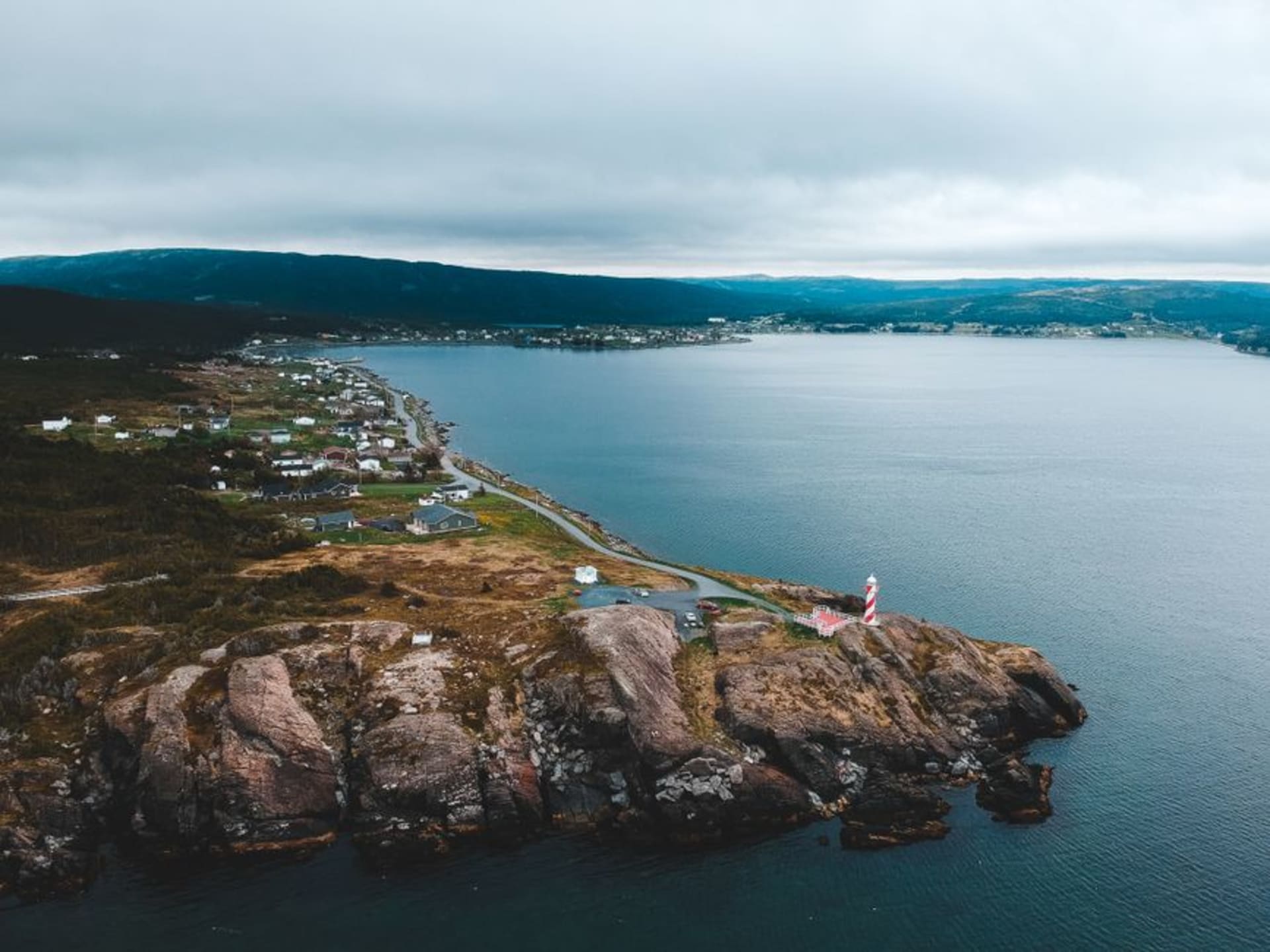
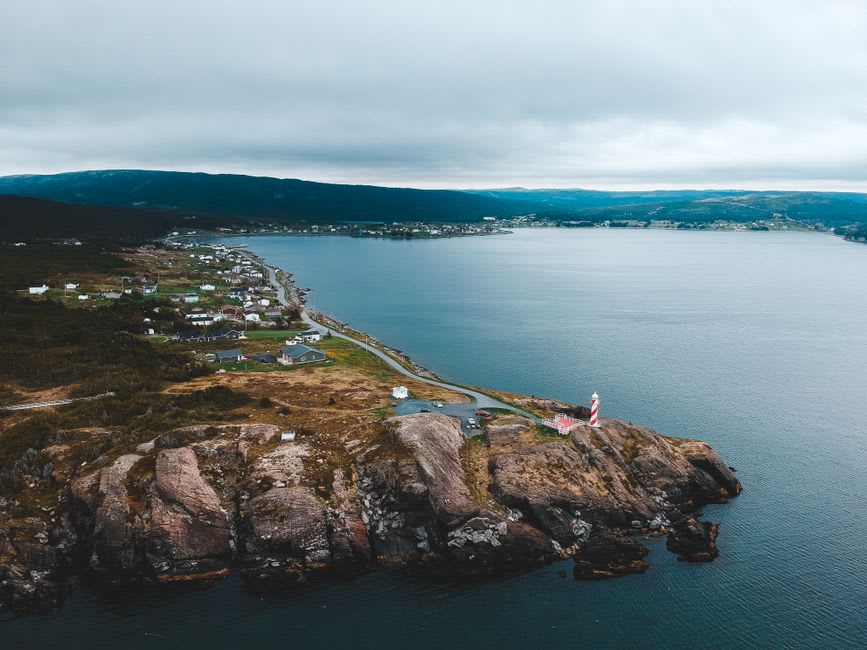
There’s a plaque at Cape Bonavista, and behind it a statue of John Cabot squinting toward the Atlantic, marking the spot where the Italian navigator sailing for England is traditionally said to have made landfall in 1497 — the first confirmed European sighting of mainland North America since the Norse centuries earlier. Historians will tell you the exact landing site is disputed, and I appreciated that the town itself seems relatively relaxed about the ambiguity; the statue and plaque exist more as a marker of the story’s importance to Newfoundland’s self-image than as a claim of certainty. Standing on that headland at dusk, wind coming hard off the water with nothing between me and open ocean until Europe, I understood why the story sticks regardless of the exact geography.
The Cape Bonavista Lighthouse, painted in bold red and white stripes, has stood watch over this exact stretch of dangerous coast since 1843, and it’s been restored to its 1870s operating condition, complete with the original seal-oil-lit apparatus you can climb up and see close. The lighthouse keeper’s job here was no small thing — this cape has claimed ships for centuries, and the light was, quite literally, the difference between a safe passage and a wreck.
Puffins at Elliston
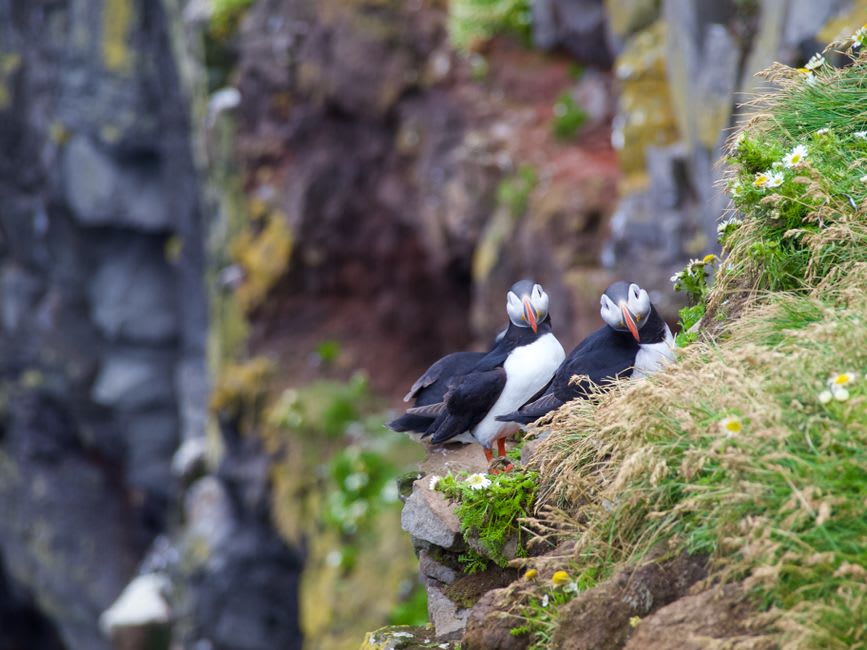
A short drive from Bonavista, the tiny community of Elliston bills itself as the “Root Cellar Capital of the World” — a claim I found charming rather than grand, tied to the dozens of centuries-old root cellars still dug into the hillsides — but the real draw for most visitors is the puffin colony just offshore. A short walk from a parking area brings you to a headland separated from a nesting island by only a narrow gap of water, close enough that Atlantic puffins, with their absurd orange bills and comically serious expressions, were flying and landing practically at arm’s length. I spent nearly two hours just watching them come and go, which is longer than I’ve spent watching most museum exhibits, and did not feel it was wasted time.
The town itself
Bonavista’s downtown is a working outport with genuine historic weight — the Ryan Premises National Historic Site preserves a former fish merchant’s complex that tells the story of Newfoundland’s centuries-long cod economy in unsentimental detail, right down to the salt-fish flakes where cod was once dried by the ton. Walking the streets past saltbox houses in faded blues and yellows, past stages still standing over the water, it was easy to imagine this town at the height of the cod fishery, before the 1992 moratorium reshaped everything. Today it feels quietly resilient — a scattering of good small restaurants, a distillery, and a community clearly proud of, rather than trapped by, its history.
When to go: Late June through early August for the puffin colony at its most active, since the birds return to Elliston to nest through the summer before heading back out to sea.