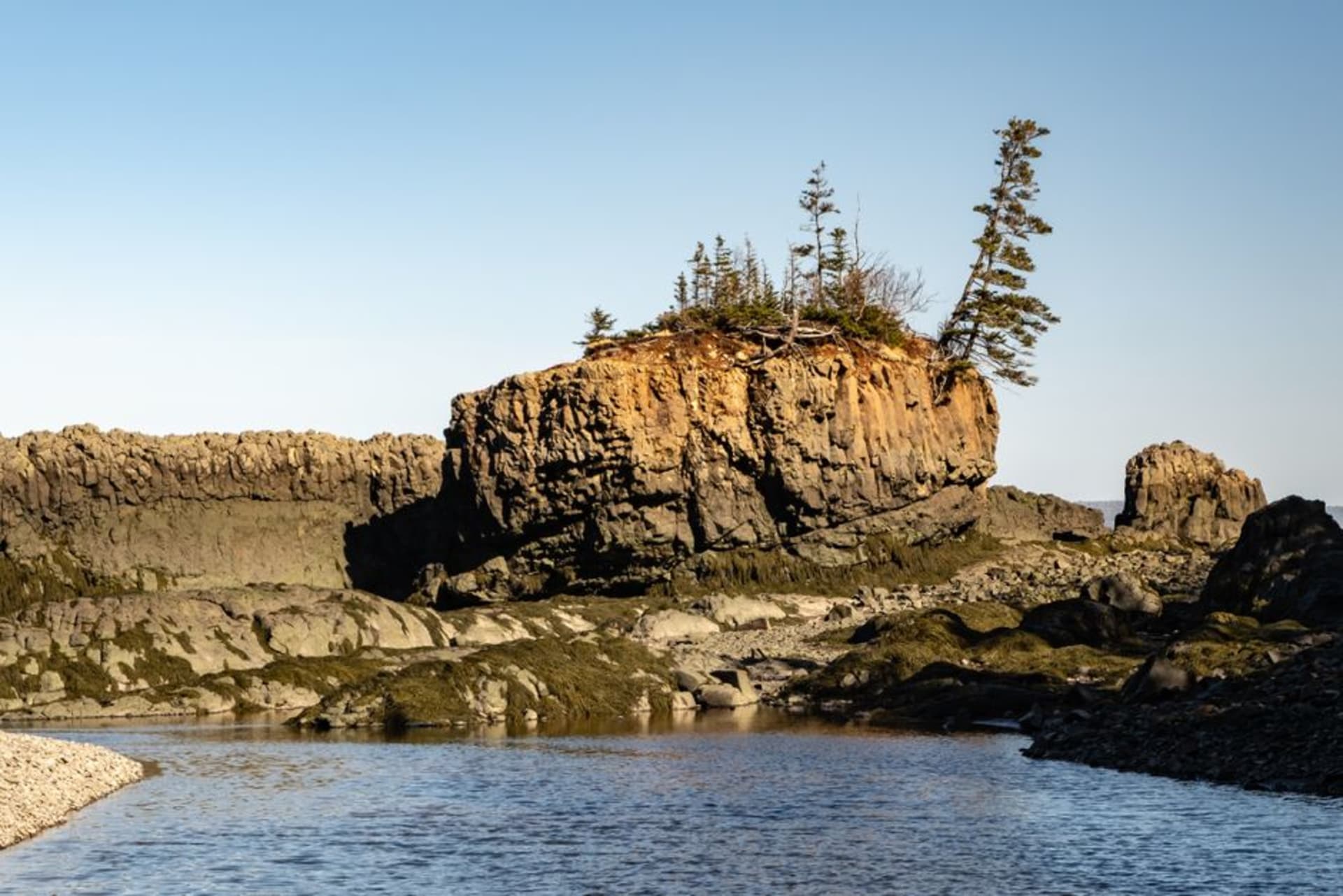
Bay of Fundy
"I have never watched the ocean disappear before. Here, twice a day, it just leaves."
The bay where the Atlantic breathes twice a day, moving more water than every river on Earth combined and rewriting the coastline every six hours.
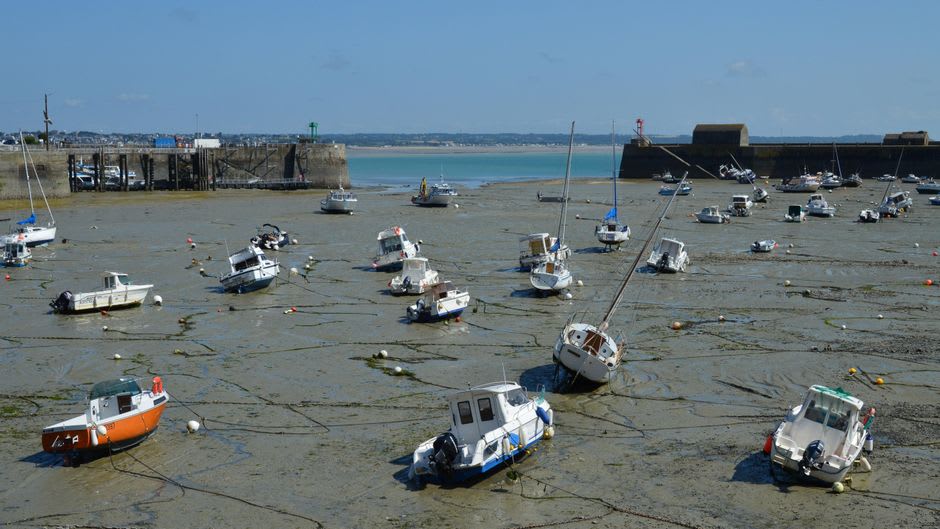
I first understood the Bay of Fundy not by looking at it, but by standing in a parking lot that should have been underwater. A guide in Alma, New Brunswick, pointed at a row of fishing boats slumped sideways on wet mud, hulls resting where six hours earlier there had been eight metres of ocean. That is the fact everyone quotes about Fundy — up to sixteen metres of tidal range, the highest on the planet — but no number prepares you for watching a working harbour empty itself like a bathtub with the plug pulled. I grew up on the Atlantic coast of France, where the tides at Mont-Saint-Michel are considered dramatic. Fundy makes the Channel look like a swimming pool with a slow leak.
The bay itself is the whole show here, not any single stop within it. Hopewell Rocks, the Fundy Trail, the whale-watching boats out of St. Andrews — they are all just doorways into the same tidal machine, a funnel-shaped body of water squeezed between New Brunswick and Nova Scotia that happens to resonate at almost exactly the same frequency as the tide itself, amplifying the swing to absurd proportions. Twice a day, roughly one hundred billion tonnes of seawater moves in and out. That is more than the combined flow of every freshwater river on Earth. You do not feel the number. You feel it when the fishing boats tilt.
Riding the Tidal Bore in Moncton
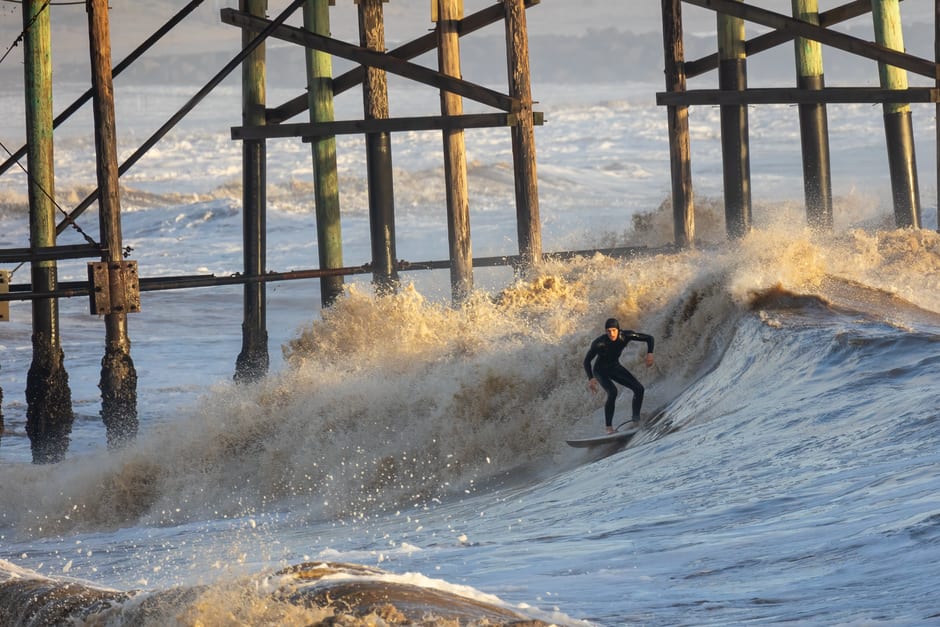
The strangest afternoon I spent in New Brunswick was on the Petitcodiac River in Moncton, waiting with a small crowd for what locals call the tidal bore — a wall of incoming tide that pushes upriver against the current, sometimes as a visible wave you can surf. I watched surfers in wetsuits paddle out onto a river that, twenty minutes earlier, had been a trickle of brown water threading through mudflats. Then the bore arrived, a low ridge of churning water maybe knee-high, and they were up and riding it for what felt like an impossibly long ride upstream, against the current, on a wave that never breaks and never stops. It is one of the only places on Earth where you can surf a river tide for kilometres. Nobody in France believed me when I described it.
What the Tides Bring
The nutrient load stirred up by that twice-daily churn is why the bay is thick with life — plankton blooms that draw in some of the largest concentrations of whales on the Atlantic seaboard. I took a boat out of St. Andrews in August and within an hour was watching finback whales surface so close I could hear the exhale before I saw the spout, a sound like a held breath released all at once. Minke whales, harbour porpoises, and occasionally right whales pass through the same waters that, a few hours later, will be exposed seafloor at Hopewell Rocks sixty kilometres up the coast. It is the same tide doing both things.
When to go: July through September for whale watching and the warmest water; check tide tables before planning any single day, since the bay’s rhythm dictates everything else. Aim to see both a low and a high tide at the same spot within one visit — it is the only way the scale actually registers.